Plan around the whole matchday route
A football trip is more than the journey to a stadium seat. Think through each stage: leaving home, boarding transport, reaching accommodation, getting to the ground, moving through entrances and concourses, and returning after the final whistle. A route that looks short on a map may include stairs, steep streets or a long walk from the nearest drop-off point. Identifying those stretches before you pack makes it easier to decide what must stay close at hand.
Check accessibility information with the relevant transport operators, accommodation and venue rather than assuming arrangements will be the same everywhere. Ask specific questions that affect your plans: whether an accessible entrance has a separate location, where a lift serves, how far a drop-off point is from your entrance, and whether a companion arrangement requires advance booking. Keep any confirmation where you can find it without searching through your luggage.
Pack mobility aids for use, not just transport
Start with the equipment you rely on during an ordinary day, then consider what a longer matchday adds. Depending on your setup, useful items might include a cane tip, a small repair item supplied for your aid, a cushion, a rain cover or a bag that attaches securely without obstructing wheels or controls. Pack only what you know how to use, and give the most important items a consistent place so a travel companion can find them too.
If you will hand over an aid during any part of the journey, make a simple record of its make, model and any features that need careful handling. A few clear photos can help you explain how it folds or where it should be lifted. Label detachable parts and carry small essentials separately when permitted. Before departure, ask the transport provider how it handles mobility aids and what information it needs; procedures and space can vary by service.
Weather deserves its own check. Rain can make grips and bags slippery, while a cold evening can make standing outside less comfortable. Keep a lightweight layer or cover accessible rather than buried in your main bag. At a stadium, you may have limited space around your seat, so choose compact items that can be stowed without blocking a walkway.
Build a dependable charging kit
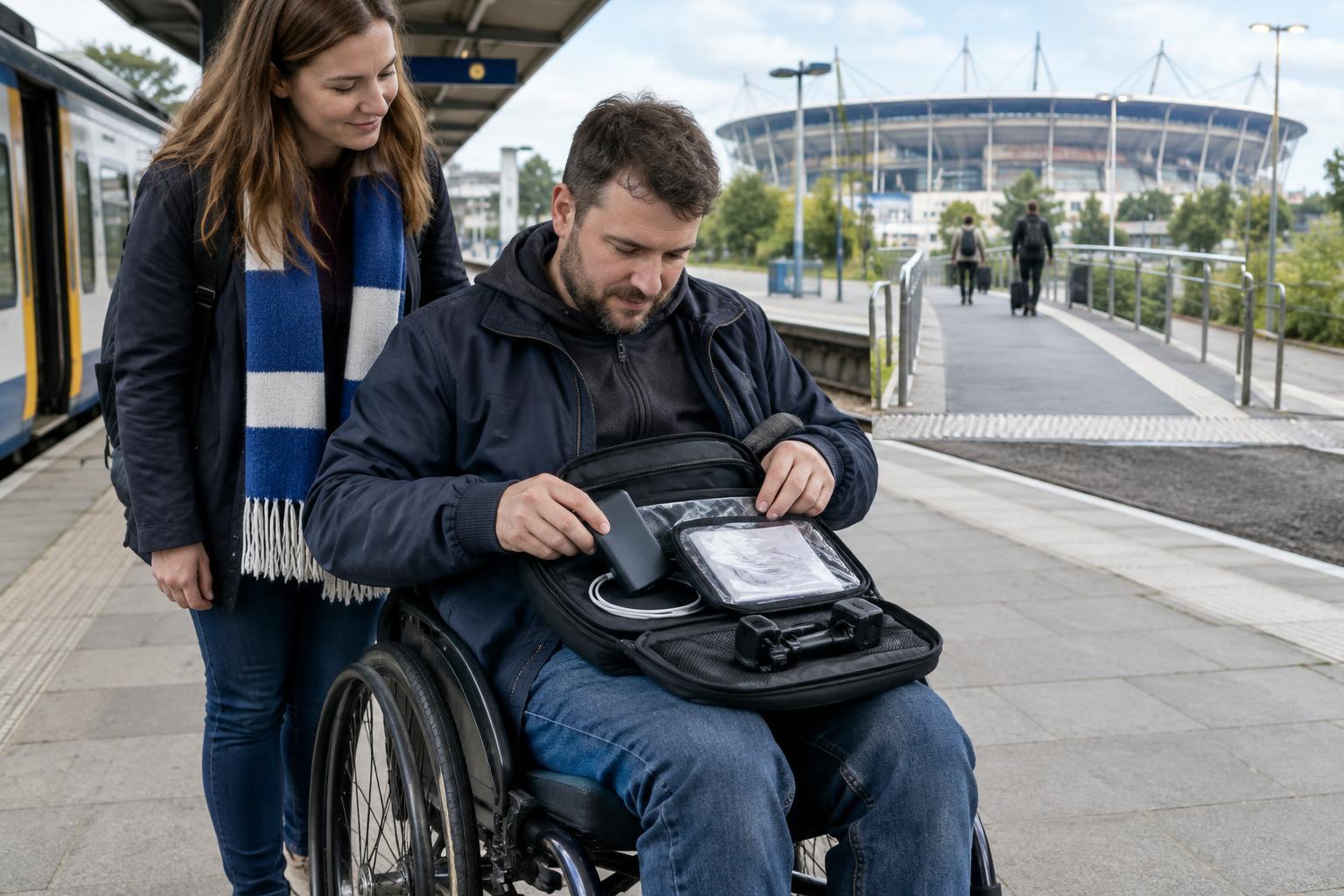
Phones often carry tickets, maps, booking details and contact numbers, so a low battery can create several problems at once. Pack the correct cable, plug and any adapter needed for your destination. If you use powered mobility equipment or another rechargeable accessibility device, check its charging requirements and bring the components intended for that equipment. A small label on similar-looking cables can prevent mix-ups in a shared hotel room.
Charge devices before travel and identify a realistic charging opportunity at your accommodation. Do not count on finding a usable socket at a stadium or on every train. If you carry a power bank or a device with a substantial battery, check the rules of each carrier before packing it; restrictions can differ, especially for air travel. Keep charging essentials in a bag you can reach during delays, subject to the carrier’s requirements.
Keep useful documents together and accessible
Create a compact set of the details you may need on the road: travel bookings, accommodation address, match entry information, accessibility arrangements, assistance confirmations and contact numbers. Save offline copies on your phone and consider a paper copy of the most important details in case your device runs out of power. Check that names and booking references match the information you have provided to each operator.
If an operator or venue has requested documentation for a particular arrangement, confirm what it accepts before you leave. Requirements can differ, and bringing extra paperwork does not guarantee an arrangement that has not been confirmed. Keep sensitive information private: carry what is genuinely useful, avoid leaving documents visible in shared spaces, and store digital copies behind your phone’s usual security.
Do a final check before setting off
The evening before departure, lay out the items you will need first: mobility aid, charged devices, cables, documents, weather protection and a small bag for matchday. Check that you can reach each item without unpacking everything. If someone is travelling with you, agree on a meeting point and share the booking details they would need if you became separated.
Leave some flexibility in the plan. Crowds, queues and route changes can make even a carefully planned trip slower than expected. Allowing time between connections, knowing an alternative route and keeping essentials close will not remove every obstacle, but it can make an unfamiliar football city easier to navigate and leave more energy for the match itself.