Start with the whole journey, not just the turnstile
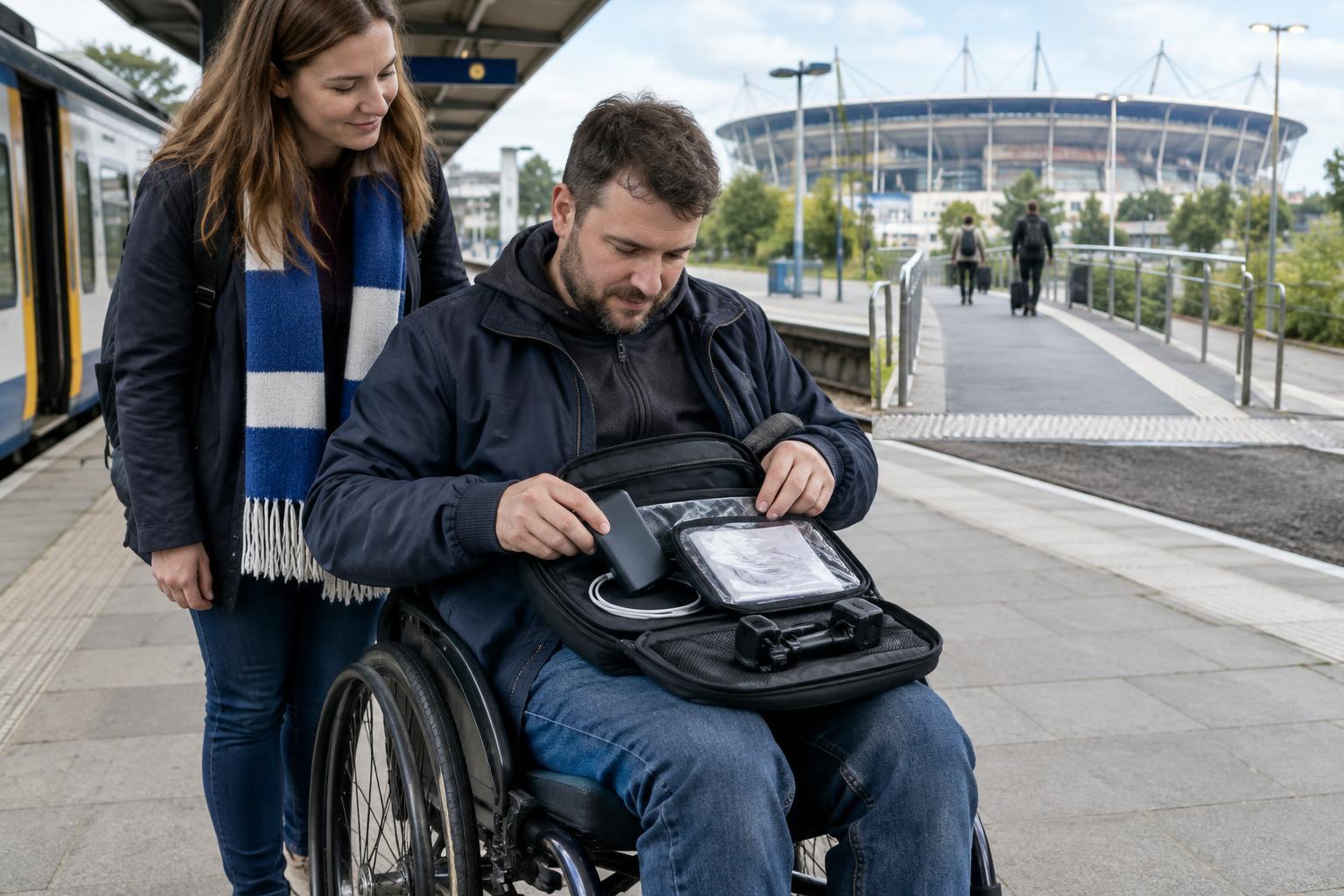
When planning a trip around a match, think about every point where your bag might be checked: departure airport, border crossing, train station and stadium entrance. The rules and procedures at each can differ. A medicine permitted on your journey may still prompt questions at a venue, particularly if it comes with needles, liquids or equipment that would otherwise be restricted.
Make a list of what you need during travel, on match day and in the days afterward. Allow for ordinary disruption, such as a delayed train or a long queue after the final whistle, without changing your prescribed dose. If a medicine has special storage needs, plan how you will meet them from door to door rather than assuming a hotel or venue can provide suitable storage.
Check the rules before you pack
If your trip crosses a border, check the entry and transit requirements for every country on your route. Medicines that are routine at home may be regulated differently elsewhere, and some prescription drugs may require additional documentation or advance permission. Check with the relevant official authorities well before departure, especially for controlled medicines. A prescription alone may not satisfy every requirement.
Also read the stadium’s current visitor information. Look for its bag policy, prohibited-items list and any process for declaring medication or bringing medical equipment. If the guidance is unclear, contact the venue or event organiser through its published channels and describe what you need to carry. Keep any reply available offline for match day, while remembering that security staff will still apply the venue’s procedures at the gate.
Keep medication identifiable and easy to explain
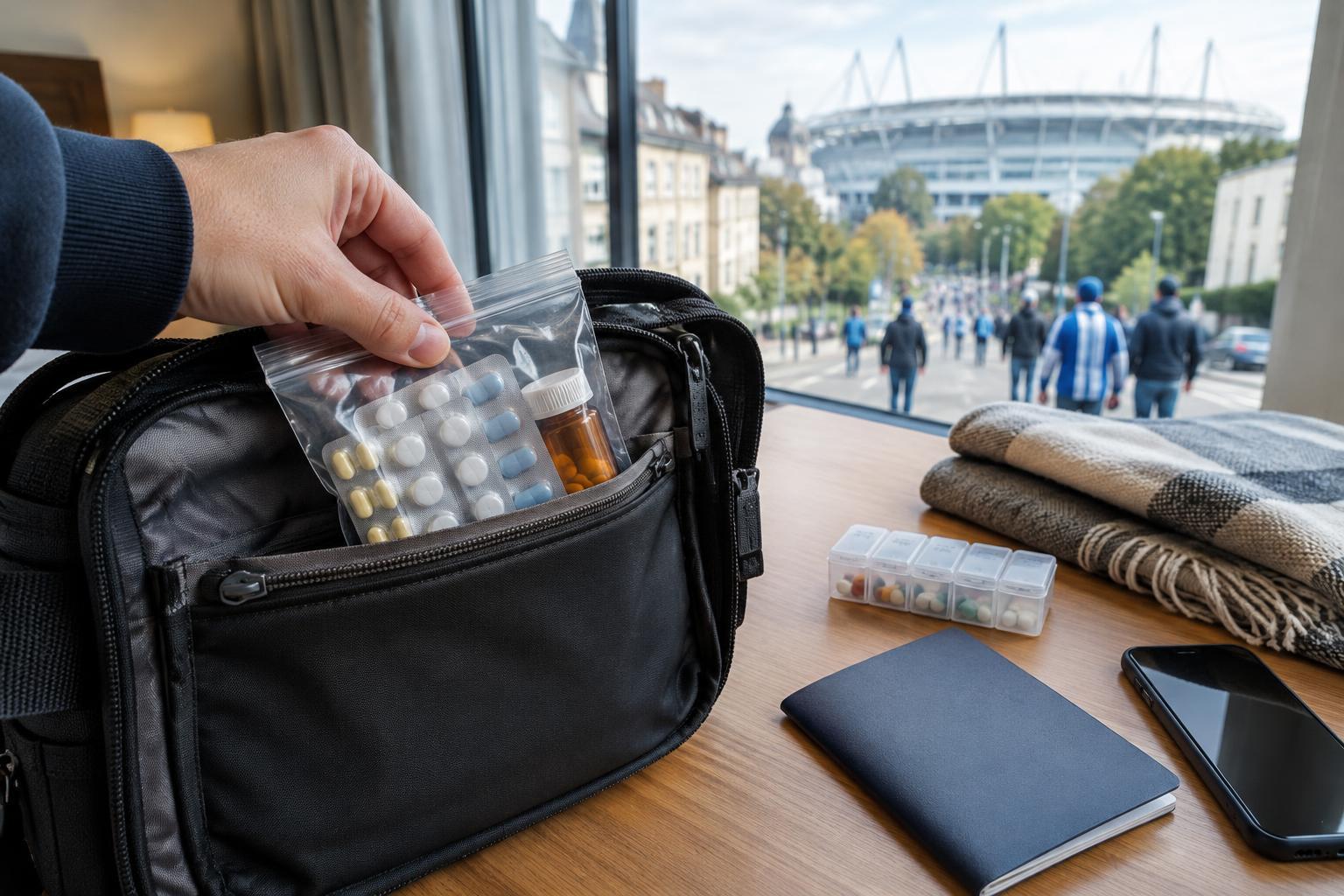
Where practical, carry medicine in its original labelled packaging. A pharmacy label can help connect the medicine to your name, while the printed container can help identify the product and its strength. Avoid relying only on loose tablets in an unmarked pouch, even if a small organiser is convenient during the rest of your trip.
Bring a copy of your prescription or another relevant document if one is available, and check whether your destination requires a particular form or language. If you use injections, devices or supplies that might attract attention during a search, ask your prescriber or pharmacist what documentation would accurately describe them. Keep paperwork together, but separate from the medicine, so you can reach it without unpacking your entire bag.
For flights, keep medication you may need during the journey in hand luggage rather than checked baggage, subject to the airline’s and airport’s rules. That helps you retain access if a checked bag is delayed. Check liquid and equipment procedures in advance, and pack anything fragile or temperature-sensitive according to the guidance you have received for that product.
Make stadium checks simpler
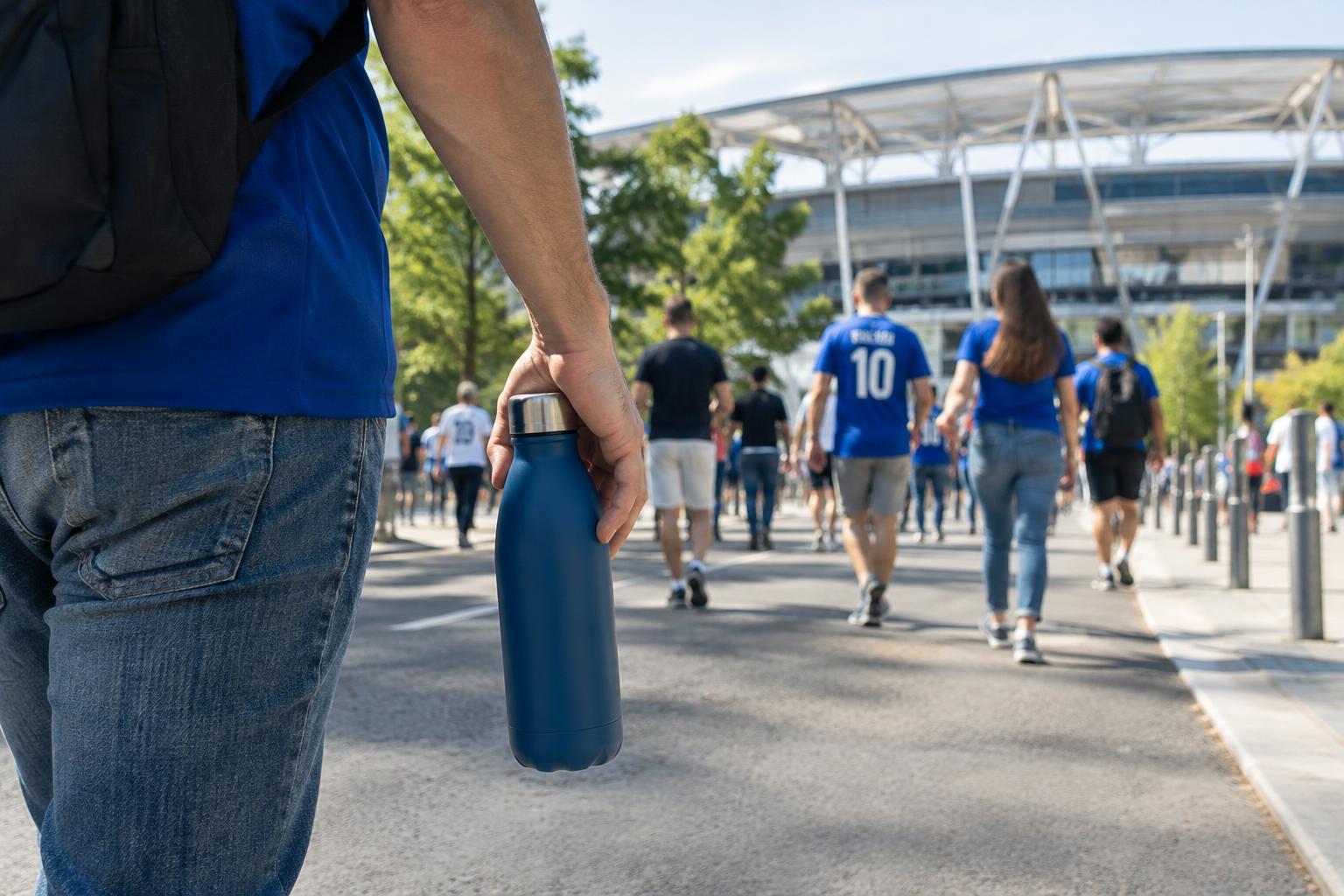
On match day, use a bag that meets the venue’s size and style rules. Put medication and supporting documents in a clearly organised pocket so they are easy to show if requested. Arriving with extra time leaves room for a conversation with security without the pressure of an approaching kick-off. Be ready to explain what you are carrying plainly; there is no need to share more personal detail than the check requires.
Do not assume that an item accepted at an airport will automatically be accepted at a stadium. If you need to bring something outside the usual bag or item policy, seek the venue’s guidance beforehand rather than hoping to resolve it at the turnstile. Likewise, do not leave essential medication in a locker or vehicle if you may need it during the match. Consider how you will reach it from your seat, especially if concourses become crowded at half-time.
Build a small contingency plan
Save the generic name of each medicine, your prescription details and the contact information for your usual pharmacy or prescriber somewhere you can access offline. Product names can vary between countries, so a clear record may be more useful than remembering a brand name alone. Keep a separate record of any documentation you carried in case a bag or phone goes missing.
Finally, check your supplies before leaving home, including any devices, batteries or accessories you depend on. The aim is not to pack for every imaginable problem. It is to make the likely parts of a football trip—travel delays, bag checks and a long match day—less disruptive. For questions about your treatment or a medicine’s storage and use, speak with a qualified healthcare professional; for permission to carry it across a border or into a venue, consult the relevant authorities and venue.