Start with three different sets of rules
A short football trip can seem made for hand luggage: a change of clothes, a scarf, a phone charger and room for something from the club shop. But “allowed in the cabin” is not one rule. Your airline sets bag sizes, weight limits and the number of pieces you can bring. Airport security decides what may pass through screening. Rules for your destination and return journey may also affect what you can bring home.
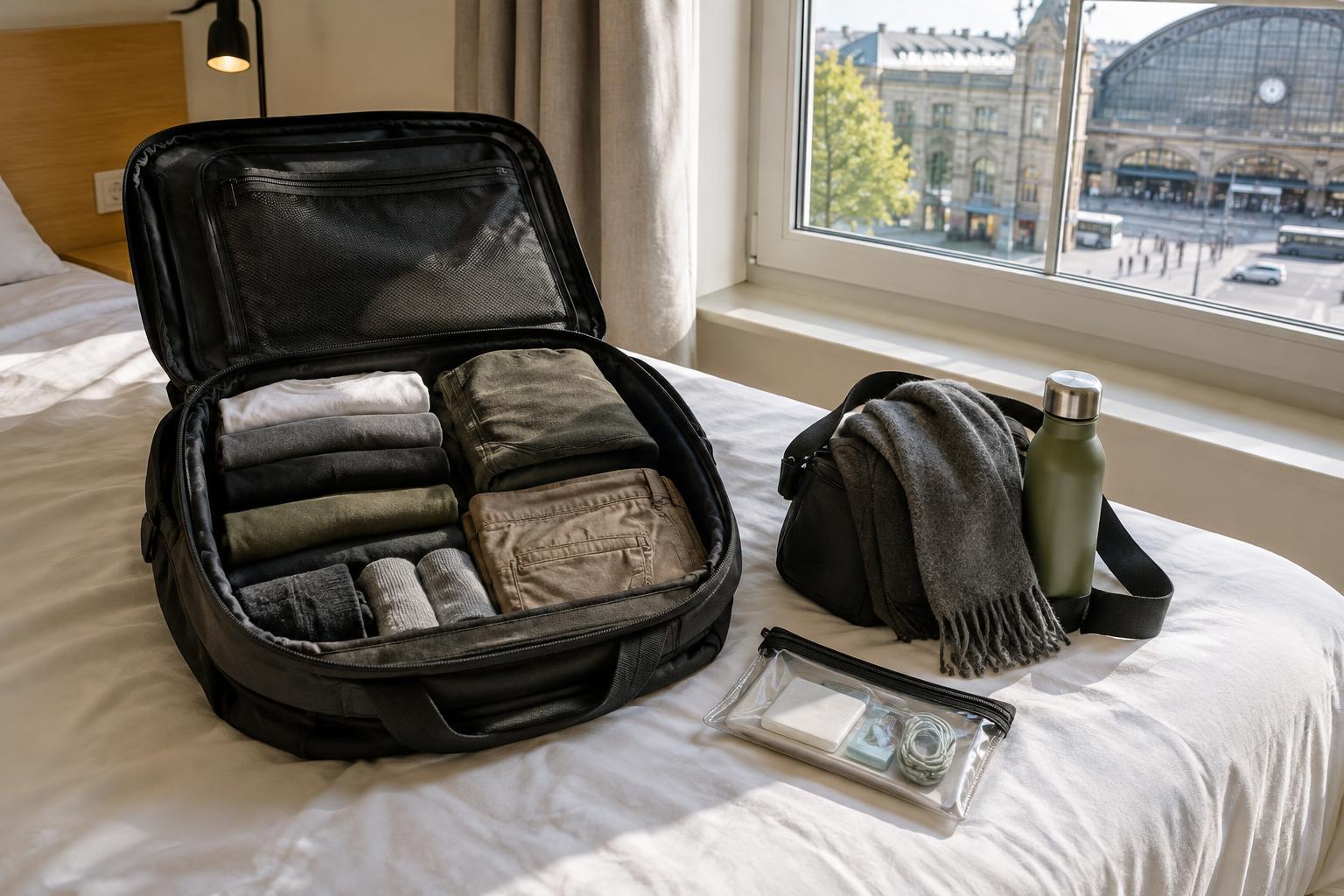
Check your airline’s baggage allowance before packing, especially if you have a basic fare or a tight connection. Then check the security guidance for every airport you will depart from, including the one you will use on the way home. Screening procedures can differ between airports, and a bag accepted on the outbound flight may still need repacking for the return. Leave a little spare space so you can reach liquids and electronics without emptying everything at the checkpoint.
Pack toiletries for the stricter checkpoint
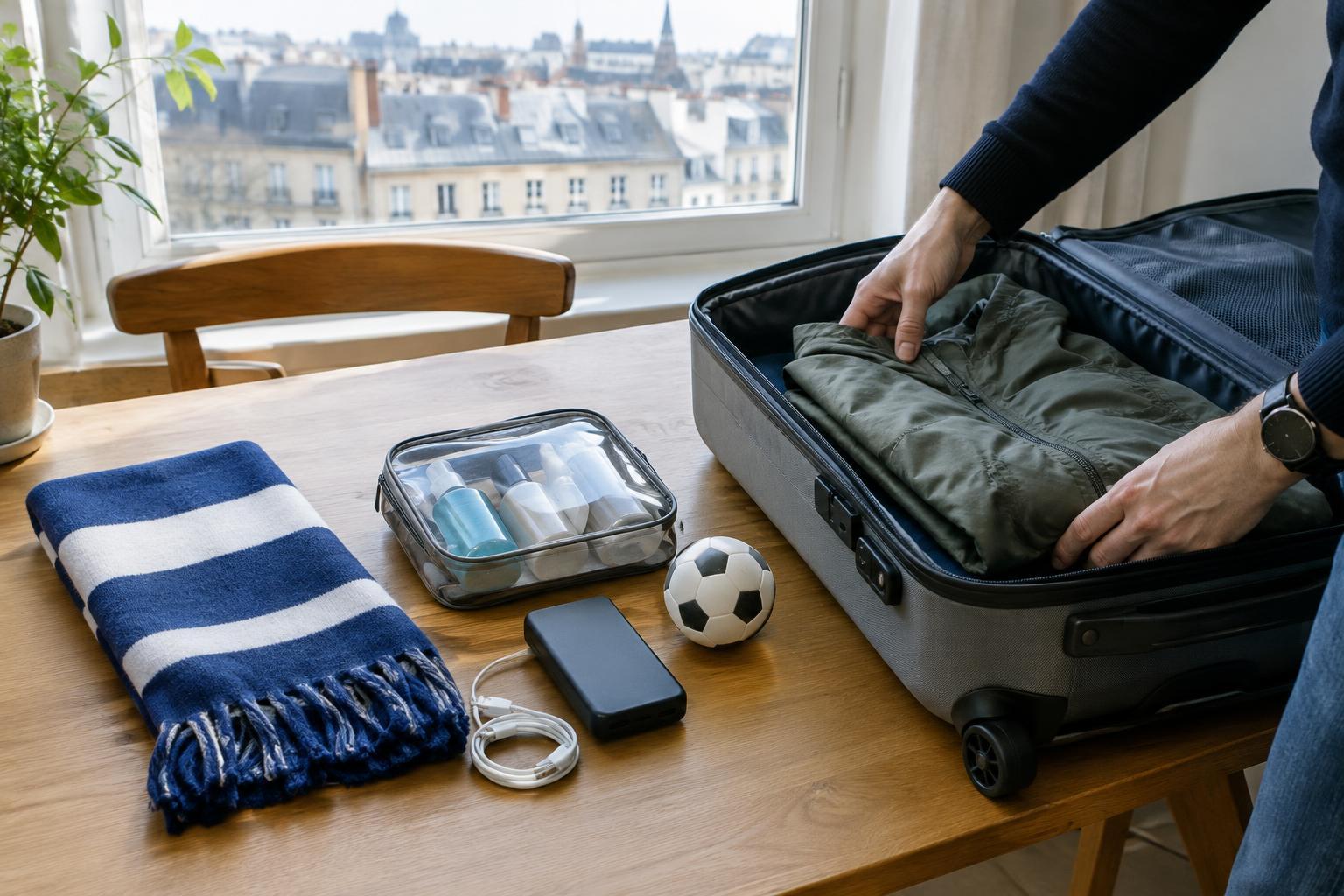
For a simple cabin-bag plan, choose small containers for shampoo, sunscreen, deodorant, toothpaste and other liquids, gels or pastes. Many airports apply a limit of 100 ml per container and ask travellers to fit those containers in a single transparent, resealable bag of about one litre. Some airports use different screening equipment or procedures, so treat that familiar arrangement as a useful packing baseline, not a promise that every checkpoint works alike.
The size printed on the container matters more than how much product remains inside it. A nearly empty full-size bottle may still be refused where a container-size limit applies. Solid alternatives, such as a bar of soap, can reduce the number of liquids you carry. If you pack aerosol deodorant, check both airline and security rules for permitted toiletry aerosols; restrictions can cover the size, total quantity and protection of the spray button.
Put anything you may need to show at security near the top of your bag. That saves time when you are travelling in a group or heading straight from the airport to a match. If you buy a liquid souvenir after security, keep its receipt and any sealed packaging required for a connection, but check the rules at your transfer airport before assuming it will be accepted there.
Keep batteries accessible and protected
A phone, camera and power bank can be essential on a long football day, from navigating to the ground to finding your train afterward. Power banks and loose spare lithium batteries generally belong in cabin baggage rather than checked luggage. Keep them where you can reach them, and protect exposed terminals so they cannot touch keys, coins or other metal objects. Original packaging, individual sleeves or terminal covers can help.
Battery capacity limits vary by airline and battery type. Look for the watt-hour (Wh) rating on a power bank or camera battery, and ask the airline before travelling with an unusually large one or several spares. Do not assume that an item is permitted simply because it fits in your bag. If your cabin bag is taken at the gate to go in the hold, remove power banks and loose spare batteries first and carry them with you, following the crew’s instructions. Check your airline’s rules if you plan to use or charge a power bank during the flight.
Choose souvenirs with the return flight in mind
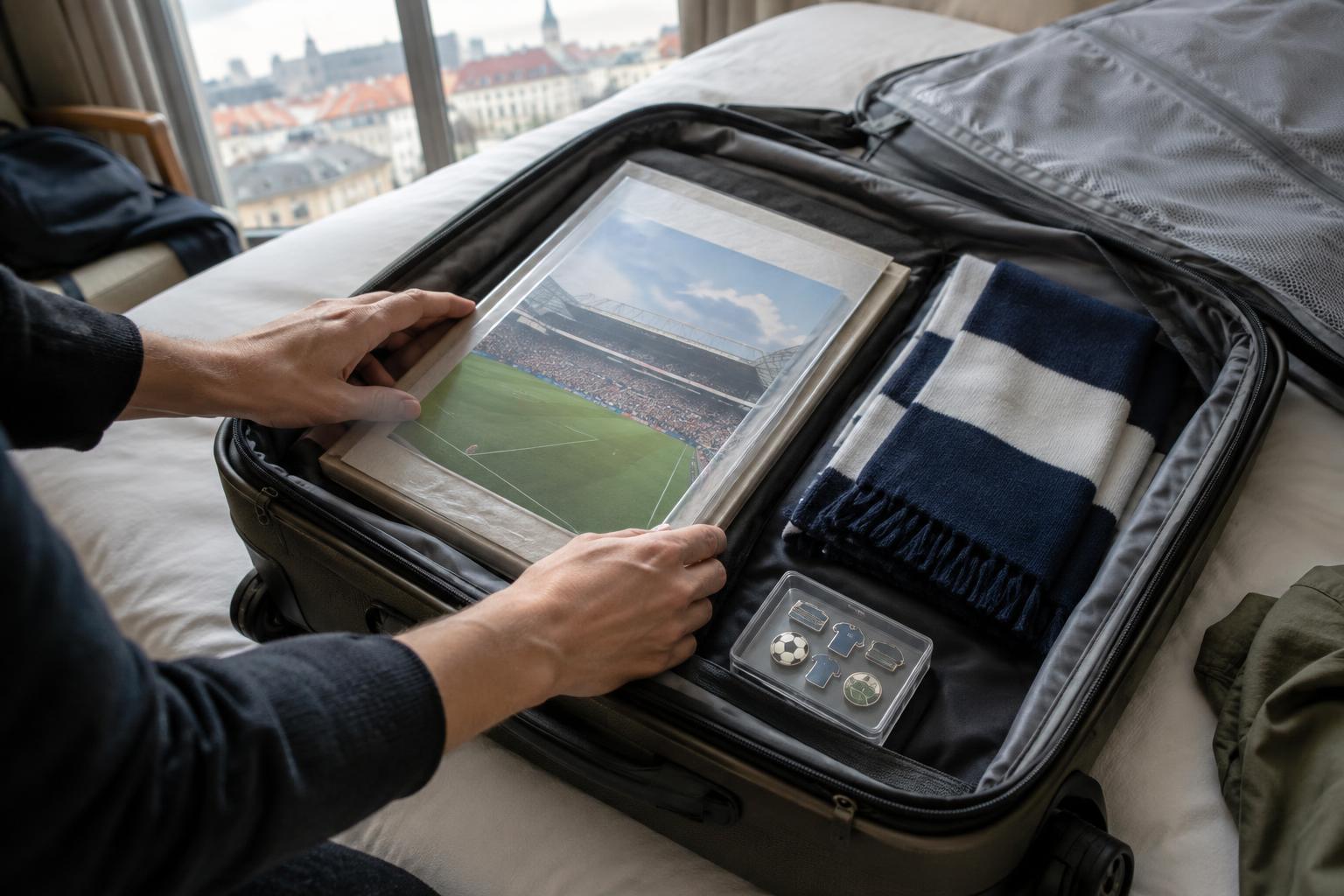
A shirt, scarf, enamel pin or match programme is usually easier to pack than a bulky keepsake. Protect paper programmes from rain and bent corners with a flat folder. Wrap a mug or other fragile purchase in clothing, while remembering that cabin space is limited and security staff may need to inspect it. If a souvenir pushes your bag beyond the airline’s allowance, you could face a gate charge even though the item itself is permitted through security.
Think twice before buying anything sharp, heavy or shaped like a weapon. Flagpoles, large metal objects and sporting equipment may be restricted in the cabin, even when bought as memorabilia. Pyrotechnics such as flares are not ordinary souvenirs to pack for a flight. Food and drink purchases need separate thought: liquids may face security limits, while some foods can be subject to restrictions when you cross a border. Check the rules for the countries on your route before buying something you cannot easily leave behind.
Do a five-minute check before leaving for the airport
Before the return journey, lay out your purchases beside the bag rather than squeezing them in one by one. Confirm that the bag still closes and meets your fare’s size and weight allowance. Separate your small toiletries, find the ratings on spare batteries, and move any power banks out of baggage that might be checked. Keep travel documents, medication and anything you need during the flight in a place you can reach.
Finally, look up the current guidance from your airline and departure airport for anything unusual. That last check is more useful than relying on what happened on a previous football trip. A little room in the bag—and a willingness to leave an awkward souvenir in the shop—can make the journey home much simpler.