Plan around the full matchday
A football trip can turn an ordinary meal routine upside down. You might leave early for a stadium tour, eat between train connections or spend hours near a ground where the food choices are unfamiliar. If you have food allergies, think through the whole day rather than only the match. Identify when you can eat a reliable meal, how long you may be away from your accommodation and what you will do if a planned stop is closed or too busy.
Before travelling, review your usual allergy-management plan with an appropriate healthcare professional if you need guidance specific to your situation. Check that any medication you normally carry is accessible, within its use period and packed according to the instructions you have been given. Keep essential items in your day bag rather than in luggage you may not be able to reach.
Make translation cards clear and specific
A translation card can help you explain an allergy when you do not share a language with restaurant staff. It should name the ingredients you need to avoid, including relevant local names, and ask about ingredients, preparation and possible cross-contact. If a small amount could be a problem for you, the card should communicate that clearly. A vague statement such as “I cannot eat nuts” may not give a kitchen enough information about which foods or preparation methods concern you.
Ask a fluent speaker or a reputable translation service to check the wording where possible. Save a copy on your phone and carry a printed version in case your battery runs low or mobile service fails. Show the card before ordering, not after food arrives, and allow time for staff to ask the kitchen. If the answer is uncertain or communication is difficult, choose another option rather than treating the card as a guarantee of safety.
Carry snacks you already know
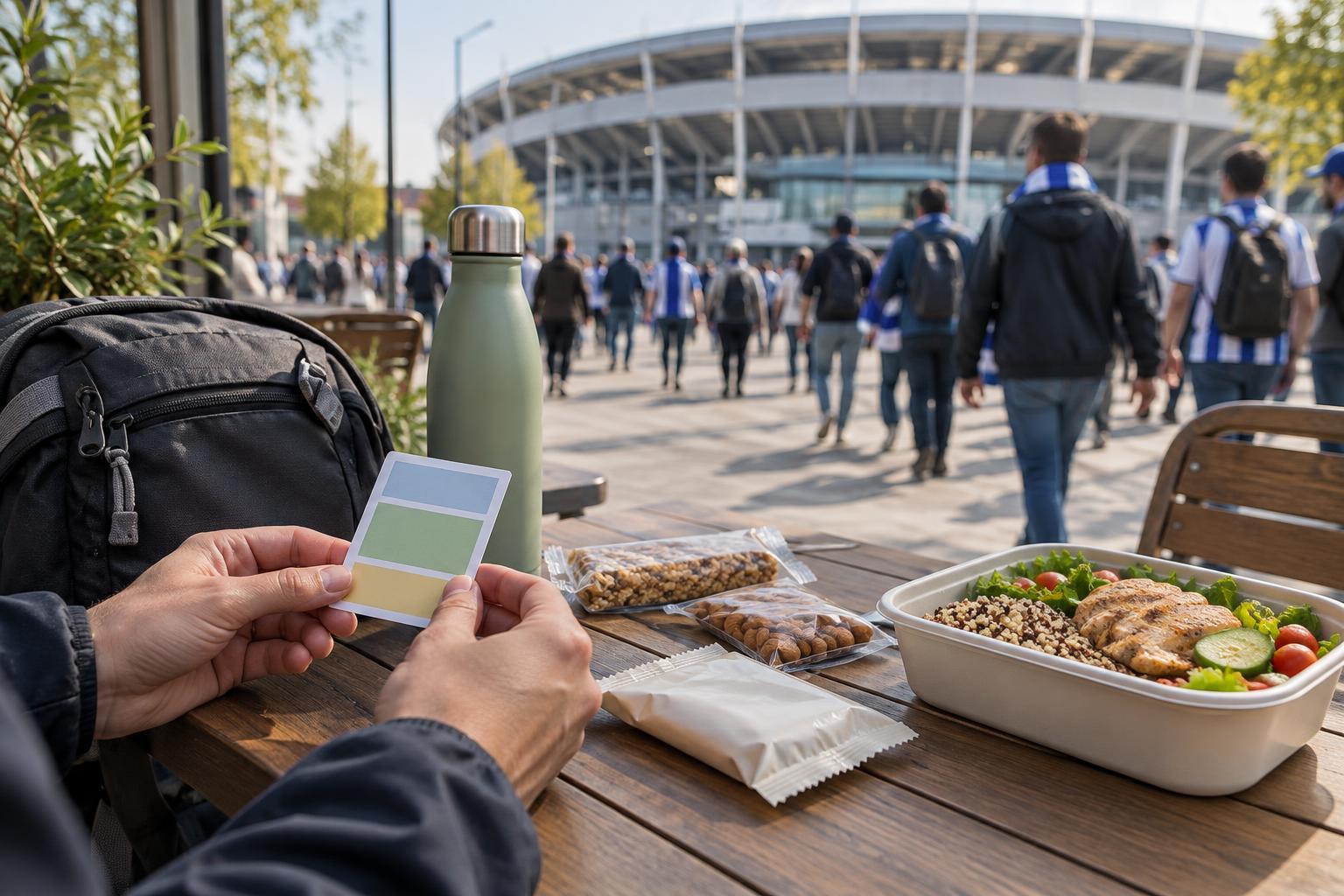
Familiar snacks can bridge the gap between meals when a train is delayed or a food queue moves slowly. Pack products you already use and can identify confidently, rather than experimenting with unfamiliar substitutes on the road. Keep them in their original packaging when practical so ingredient information remains available. Consider how heat, crushing or a long day in a bag might affect what you bring.
Check transport rules and any border requirements before packing food, particularly for international travel. Stadiums may also restrict outside food or the size of bags, and policies can vary by venue and event. Look up the relevant venue guidance ahead of time. If the policy is unclear, ask the venue about bringing food needed for an allergy and make a backup plan that does not depend on getting a snack through the gate.
Choose meals before the rush
Matchday streets can be crowded, noisy and difficult places to have a detailed conversation about ingredients. Where possible, eat at a calmer time and choose a place where staff can check with the kitchen. Looking at a menu in advance can help you prepare questions, but a menu description alone may not account for substitutions or shared preparation areas. Confirm the details when you order, even if you have eaten at the same type of restaurant elsewhere.
Build a short list of possible meal stops near your accommodation, transport route and stadium, then keep a flexible alternative in mind. Do not assume that a familiar dish is made the same way in every city. If you are travelling with friends, tell them how much time you may need to ask questions and why a last-minute change of restaurant might be necessary. That small conversation can make group decisions much less stressful.
Keep the plan usable inside the stadium
Before you set out, check the venue’s current bag and food policies, the route to your entrance and where you could get help if needed. Stadium concessions may offer limited ingredient information during a busy interval, so it can be sensible to eat beforehand rather than rely on finding a suitable meal inside. If you do buy food at the ground, ask the same questions you would anywhere else; branding or a familiar-looking snack does not replace checking its ingredients.
Let a travel companion know where you keep your essential items and what you would want them to do if you could not speak for yourself, in line with your own emergency plan. Save your accommodation address and local emergency contact information where you can find them without an internet connection. The aim is not to script every moment of the trip. It is to make the predictable parts easier, leaving more attention for the journey, the supporters and the match.