Make room before you leave
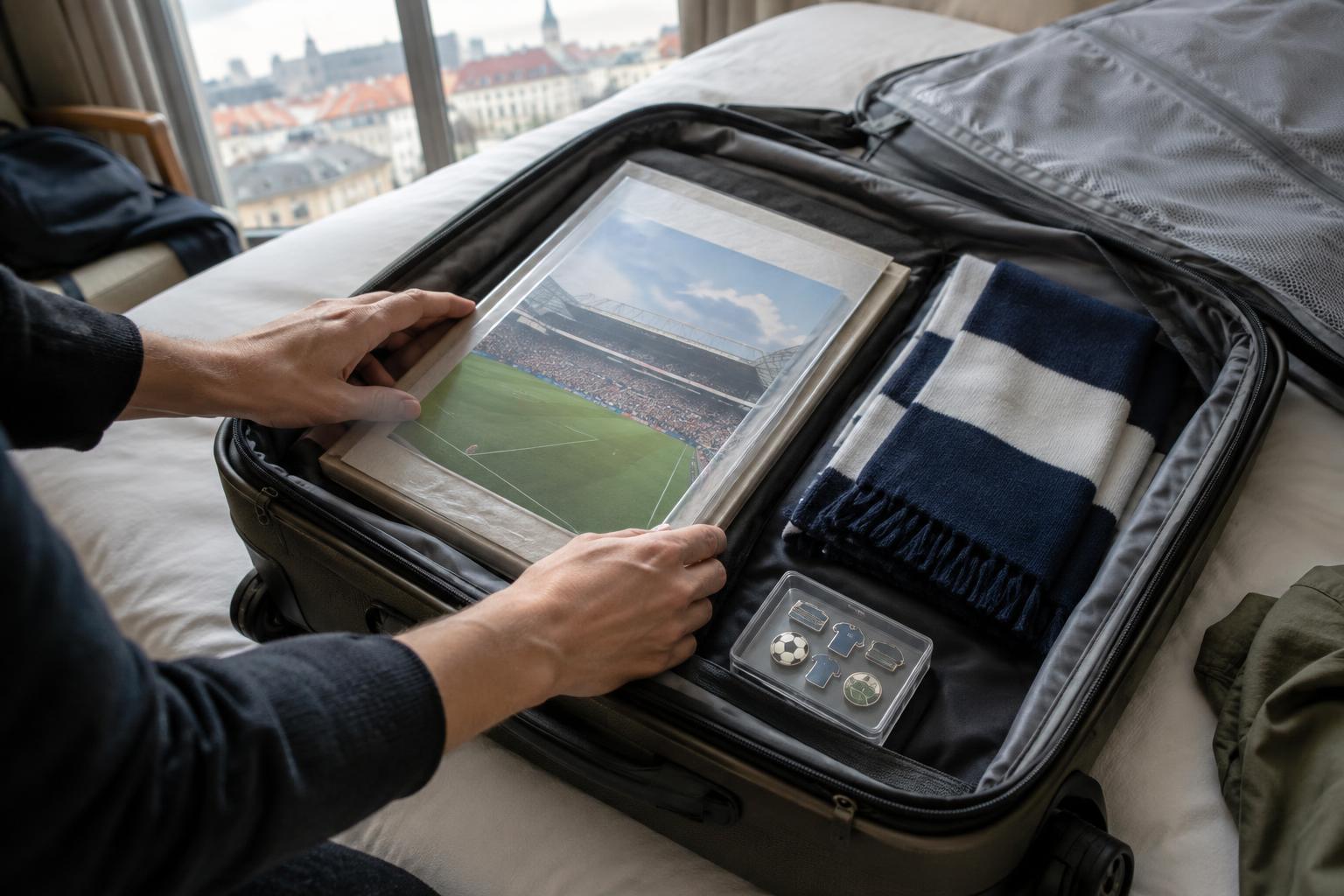
The safest time to plan for souvenirs is before your bag is full. Leave a flat space for programmes and a small pouch for pins, badges and other loose items. A lightweight document sleeve, two pieces of clean cardboard and a resealable bag take up little room but give you several ways to protect a purchase. If you expect to buy a scarf, leave enough space that you will not have to force your luggage shut on the return trip.
Keep packing materials together so they are easy to reach after a match. A programme carried loose through a crowded station can pick up bent corners before it ever reaches your suitcase. You do not need a specialist collector’s case for an ordinary trip; the aim is to keep paper flat, metal from catching on fabric, and damp items away from everything else.
Keep programmes flat, dry and separate
Match programmes are vulnerable to creases, rain and pressure from the objects around them. Slide a programme into a sleeve or clean folder as soon as you can. For extra support, place it between two pieces of cardboard slightly larger than the programme. Check that the edges of the cardboard are smooth and that tape or sticky labels cannot touch the cover.
In a backpack, put the protected programme against a flat interior surface rather than beside a water bottle or under a packed lunch. In a suitcase, lay it between layers of clothing without heavy shoes or toiletries pressing directly on top. A plastic bag can help during a wet journey, but do not seal visibly damp paper inside one for hours. Let it dry gently in a safe place first, without putting it against a heater or trying to flatten it while wet.
Contain pins before they catch or disappear
Pins are small enough to get lost in a pocket and pointed enough to snag a scarf or tear a programme. Fasten each backing securely, then put the pins in a small rigid tin or case. If they can move around inside, wrap them individually in a little soft cloth or place them in separate compartments. A pouch works too, provided the pin points are covered and cannot push through its sides.
Avoid attaching new pins to the outside of a travel bag for the journey home. They may look good on display, but a strap or outer pocket can rub against seats, overhead storage and other luggage. If you are flying, check your carrier’s baggage guidance and applicable airport security rules before deciding where to pack items with sharp points. Requirements can vary, and keeping pins easy to inspect may save you from rummaging through a tightly packed bag.
Pack scarves for the condition they are in
A dry scarf is usually forgiving: fold it loosely or roll it, then tuck it among soft clothing. Keep it away from uncovered pins, open zips and anything that might stain it. If the scarf has tassels, place them inside the fold rather than leaving them trapped in a suitcase zip. An older or delicate scarf may benefit from its own clean fabric bag.
A scarf worn through rain or a lively match needs a different approach. If possible, let it dry before packing it with paper souvenirs or clean clothes. When there is no time, place it in a separate bag for the journey and take it out promptly when you arrive. That temporary barrier helps protect your programme, but leaving damp fabric sealed away can create an unpleasant smell. Check any care label before washing a scarf, particularly if it has embroidery, patches or printed details.
Do one last check before heading home
Before leaving your accommodation, gather souvenirs from coat pockets, day bags and bedside tables. Confirm that programmes are flat, pin backs are attached and scarves are dry or separated from the rest of your luggage. Put the most fragile items where you can find them without unpacking everything; that also makes it easier to move them if a bag needs rearranging.
Once home, unpack the souvenirs rather than leaving them compressed in your travel bag. Give a programme a clean, dry place to lie flat, return pins to a secure container and air out any scarf that was worn on matchday. The trip may be over, but a few minutes of care will make those small reminders much nicer to revisit.