Think beyond the time spent in the stadium
A matchday often starts well before kick-off. You might walk from a station to your accommodation, explore the city, travel to the ground, climb to your seat and stand in a queue on the way home. Even a trip built around one match can involve several different surfaces and a lot of time on your feet. The best footwear is therefore not necessarily the shoe that looks most at home in a stadium photo. It is the pair you can comfortably wear for the whole route.
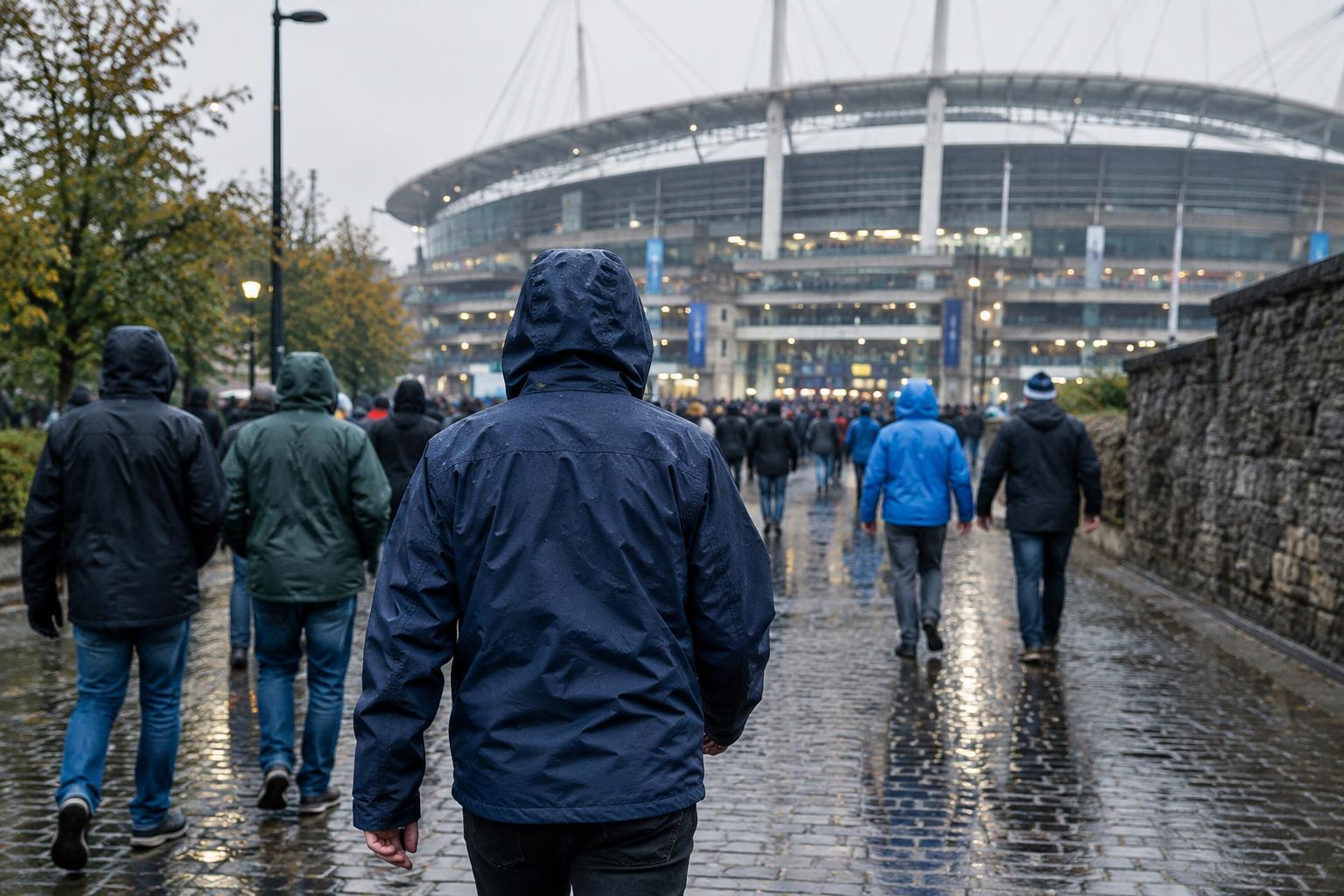
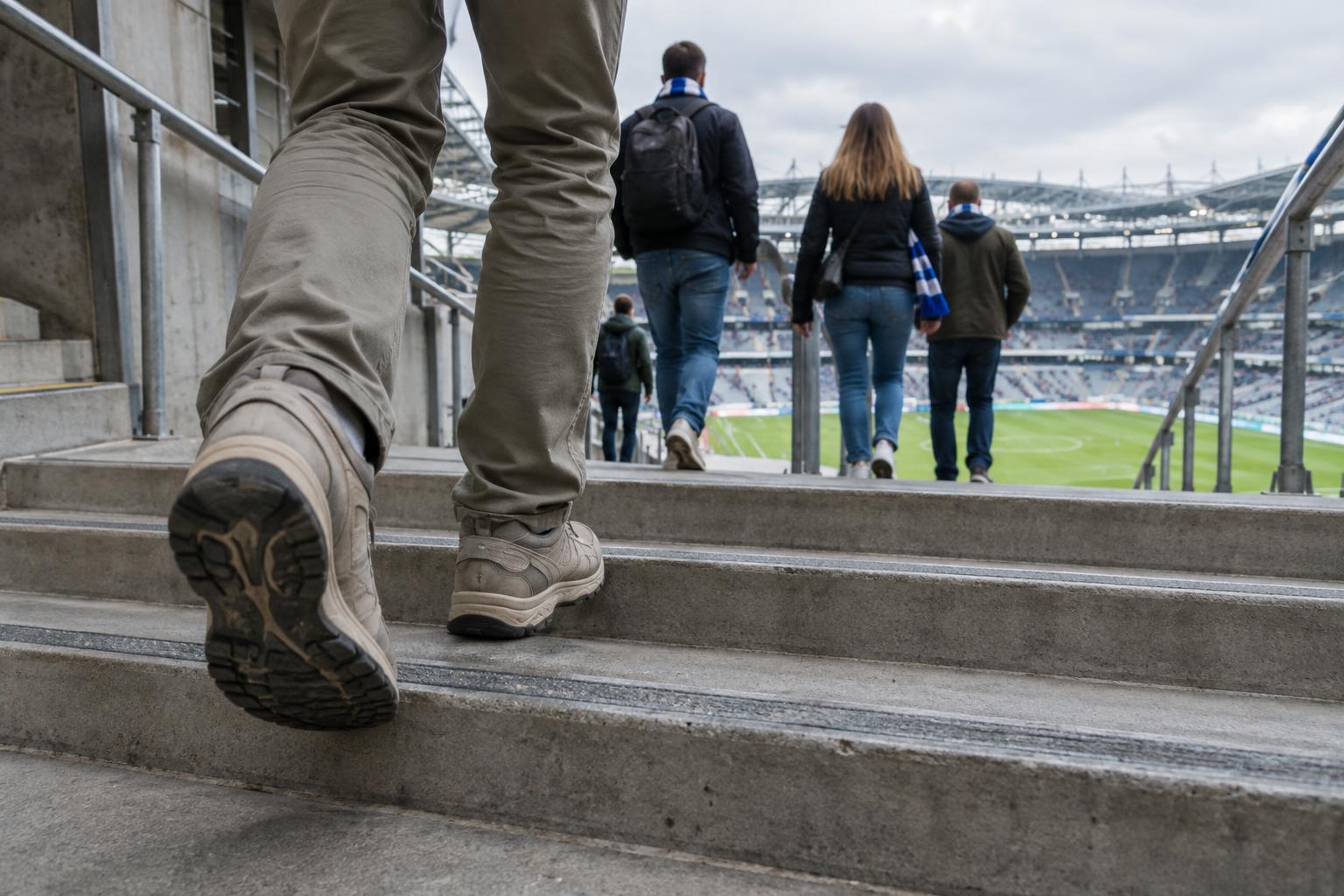
Before packing, picture your longest likely day rather than your shortest walk. Consider cobbled streets, station platforms, steps, pavement, and whether you expect to stand for long stretches. You do not need specialist hiking boots for an ordinary city break, but a thin-soled shoe that feels fine for a short errand may become less appealing after a full day out.
Choose a fit you can trust
Comfort begins with fit. Your toes should have room to move without your foot sliding forward when you go downhill or descend stairs. The heel should feel secure, and the upper should not pinch across the widest part of your foot. Try shoes on with the socks you intend to wear, preferably after you have been on your feet for a while. Walk around, turn, and test a few steps if you can. A shoe that feels awkward indoors is unlikely to improve during a long matchday.
Look for a balance of cushioning, support and flexibility that suits you. A sole that absorbs some impact can make hard pavements more pleasant, while enough grip helps on smooth steps or damp streets. Too much bulk can feel tiring; too little structure may leave you wishing for a different pair. There is no universally comfortable model, so give more weight to your own experience than to a label such as “walking shoe.”
Avoid making a newly bought pair your only option. Wearing shoes on several ordinary walks before departure gives you a chance to notice rubbing, pressure or slipping. It also lets you check whether your socks bunch up inside them.
Plan for stairs, crowds and changing weather
Stadium approaches and concourses can be busy, so shoes that stay securely on your feet are a practical choice. Laces should be tied and tucked away from your path; loose slip-ons can feel less reliable on stairs. Check the tread, too. A worn, smooth sole may offer less confidence on wet paving, even if the rest of the shoe still looks serviceable.
Weather calls for a trade-off. Water-resistant footwear can help in rain, but a heavier or less breathable pair may feel uncomfortable on a warm day or indoors. If the forecast is uncertain, consider how quickly your shoes dry and whether you can carry spare socks. You cannot guarantee dry feet throughout a trip, but you can avoid relying on footwear you already know becomes uncomfortable when damp.
If you use insoles or need a particular type of footwear for comfort, build your packing plan around what has worked for you before. A football trip is a poor time to experiment with a major change.
Pack one dependable pair, then add a useful alternative
For a short trip, your most dependable walking shoes deserve space on your feet during travel. If you pack a second pair, give it a clear purpose: a lighter option for a relaxed evening, a more weather-resistant pair, or simply a comfortable backup if the first pair gets wet. Two pairs that serve the same purpose add weight without much benefit.
Socks matter as much as they may seem like an afterthought. Bring pairs that stay in place and feel comfortable in your chosen shoes. A spare pair in a day bag can be welcome after rain or a particularly long walk. If luggage space is tight, prioritise dry socks over an extra pair of shoes you are unlikely to wear.
Finally, check your footwear against the rest of the itinerary. A museum visit, a steep route to a viewpoint and a match may all fit into one day. Shoes that can handle each part let you travel lighter and spend less time thinking about your feet.