Start with the journey, not the stadium
Your phone may work hardest before the match begins. Directions, transport updates, messages, photos and digital booking details can all draw on the same battery. Charge your phone fully before leaving, then think through when you will next have a reliable chance to plug it in. A long trip, an afternoon exploring the host city and an evening kick-off call for a different plan from a short journey straight to the ground.
Before you set off, download any maps or travel information you may need offline and save essential booking details somewhere you can find them without searching through messages. If a ticket or travel pass is held in an app, check its instructions in advance rather than assuming a screenshot will be accepted. Lowering screen brightness, using Wi-Fi where appropriate and closing an app that is draining the battery can help you conserve power without making your phone difficult to use.
Choose a power bank you will actually carry
A power bank is most useful when it fits your day bag and has enough charge for the phone time you expect to need. Check its stated capacity alongside its size and weight: a larger model may offer more backup power, but it also takes up more room. Make sure its ports match your cable, and charge the bank itself before matchday. A small backup that is ready to use is better than a larger one left empty at your accommodation.
Check the rules for every part of your trip. Stadium entry policies can differ, and an item allowed on a train may not be permitted inside a ground. Look at the venue’s current bag and battery rules before travelling, and do not rely on being able to leave a prohibited item at the gate. If you are flying, check your airline’s requirements for carrying spare batteries and power banks. Keep the bank protected from damage, heat and moisture during the day.
Pack the right cable and a simple fallback
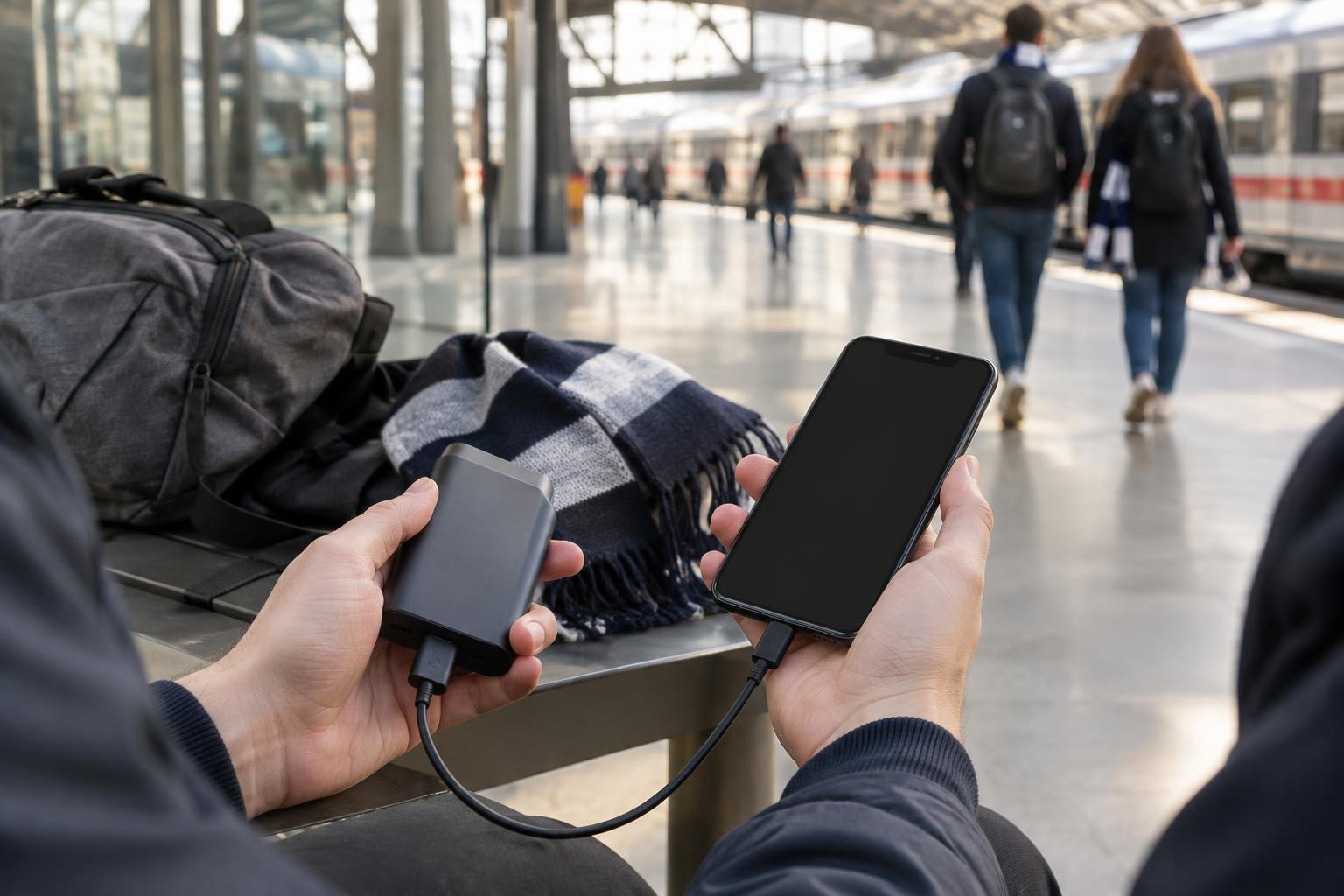
A cable is easy to forget and awkward to replace in a busy station area. Pack one that fits your phone and power bank, and test the combination at home. A short cable is convenient in a pocket or small bag; a longer one can be useful at a café or in accommodation. Whatever its length, avoid a frayed or unreliable cable. If you depend on your phone for navigation or entry, a spare cable can be a worthwhile addition.
Keep charging gear together in an accessible pouch so you do not have to empty your bag in a queue. Bring a wall charger if your plans include an overnight stay or a long stop somewhere with a suitable socket, but treat public outlets as a bonus rather than the centre of your plan. It also helps to agree on a meeting point with companions in case a phone runs flat or mobile service becomes difficult to use near the ground.
Charge considerately in shared spaces
Charging on the move should not get in anyone else’s way. On a train or in a café, keep cables close to your seat so they do not cross a walkway or trail across a table. Ask before using a socket that appears to belong to a business or another passenger’s space, and move on when you have enough charge if others are waiting. Avoid leaving your phone or power bank unattended while it charges.
Around a stadium, space is limited and people may be moving quickly through queues and concourses. Connect your power bank before joining a crowd if you can do so safely, then tuck the cable away. Do not stop suddenly to plug in a device or block an entrance while checking its charge. If a charging point is provided, follow the posted guidance and give others room to use it.
Save enough battery for getting home
It is tempting to spend the last of your charge on photos after the final whistle, but the journey back may be when you need your phone most. You may want to check a route, contact your group or find the address of your accommodation. Keep an eye on your battery during the match and top it up before it reaches a level that makes you anxious about the return trip.
A good matchday charging plan is deliberately ordinary: a charged phone, a tested cable, a permitted and charged power bank, and a little battery held in reserve. None of it needs to interrupt the experience of being there. Once the essentials are covered, you can put the phone away and enjoy the walk to the ground, the noise in the stands and the journey through the city.