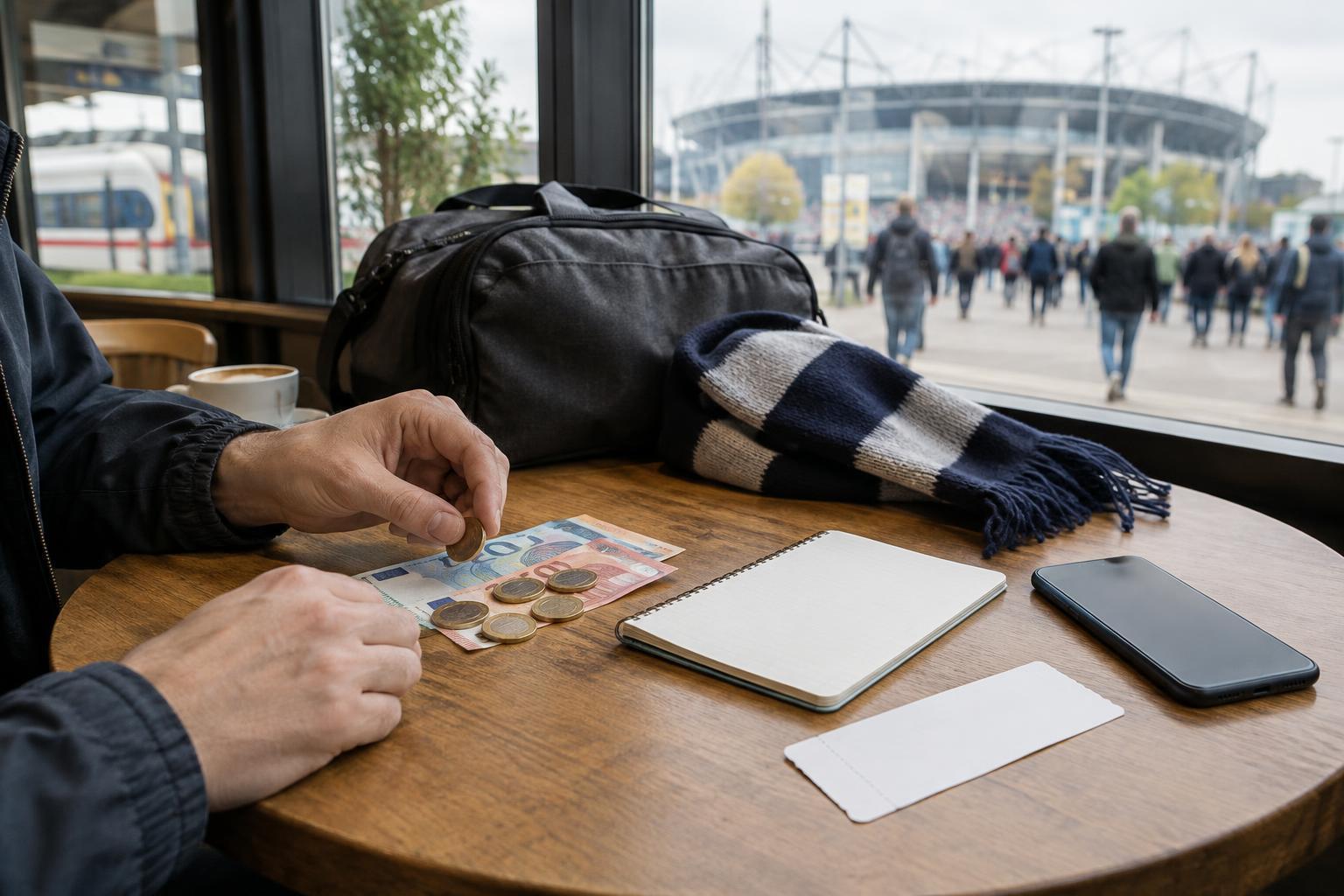
Start with the trip, not the ticket price
A useful football trip budget begins with a simple itinerary: which match you hope to attend, where you would travel from, how many nights you would stay and whether you want time to explore the host city. Write down the full cost for each traveller, rather than splitting shared expenses before you know who is going. If the match date or your ticket is not confirmed, treat the plan as provisional.
Make a list with five headings: match costs, long-distance transport, local transport, lodging and daily spending. Add a separate contingency fund. For each item, record an estimated amount and a note explaining where the estimate came from. This makes it easier to update the budget as plans become firm, and it shows which choices have the biggest effect on the total.
Allow for the full cost of attending the match
A ticket estimate depends on the competition, the fixture and the seating options available. Check the relevant club, venue or competition’s official information for prices and sales procedures. Until you know what you can buy, use a range rather than building the whole trip around the cheapest possible seat. Do not treat a ticket as secured until you have completed the purchase and received confirmation.
Matchday spending can extend beyond admission. Consider the journey to and from the stadium, food or drinks, and anything you might choose to buy at the ground. Check venue rules before budgeting for a bag or other items you plan to bring; storage or a return trip to your lodging could add expense. Merchandise is optional, but if you know you will want a scarf or shirt, give it its own line in the budget.
Compare transport by total journey cost
A low fare does not always mean a low-cost trip. When comparing flights, trains, coaches or a drive, include baggage, seat reservations where relevant, transfers, parking and the cost of reaching your accommodation. Note arrival and departure times too. A late arrival might mean an extra taxi; an early departure might mean paying for another night nearby or leaving before you have enjoyed the city.
Then plan movement within the destination. Look up the route between your lodging, the station or airport, and the stadium. A place on the edge of town may be cheaper to book but more expensive and tiring to travel from each day. If you hope to visit more than one city, price those journeys separately instead of assuming they will fit within a general transport allowance. Keep some flexibility in your itinerary in case match arrangements affect when you need to travel.
Choose lodging and a realistic daily allowance
For accommodation, compare the total stay rather than the headline nightly rate. Check taxes or fees shown during booking, cancellation terms, whether breakfast is included and how many nights you actually need. Location matters: a walkable neighbourhood or straightforward public transport connection may justify a higher room price. Sharing can reduce the per-person cost, but agree in advance how the bill will be divided if someone changes plans.
Build daily spending from your habits. Estimate meals, drinks, local travel and any sightseeing you want to do on non-match days. A traveller happy with a supermarket breakfast and a casual dinner will spend differently from someone planning restaurants and nightlife. Give each day its own allowance, especially if a travel day includes airport food or a long connection. Keep optional activities visible in the budget so they do not quietly consume money set aside for essentials.
Add a buffer, then test the total
Once you have a subtotal, add a contingency fund for changes and small expenses you have missed. The amount should reflect how much uncertainty remains: an unconfirmed ticket, flexible travel plans or several connections call for more room than a simple trip with most costs already paid. If you are crossing a border, check any entry requirements and account for relevant document, payment or currency-conversion costs without assuming they are the same for every traveller.
Finally, compare your estimated total with what you are comfortable spending. If it is too high, change one variable at a time: shorten the stay, choose a different departure point, consider another lodging area or reduce optional spending. Keep the match itself at the centre of the plan, but avoid making non-refundable bookings that depend on a ticket you do not yet have. A good budget will not predict every expense; it will help you make decisions without losing sight of the full trip.