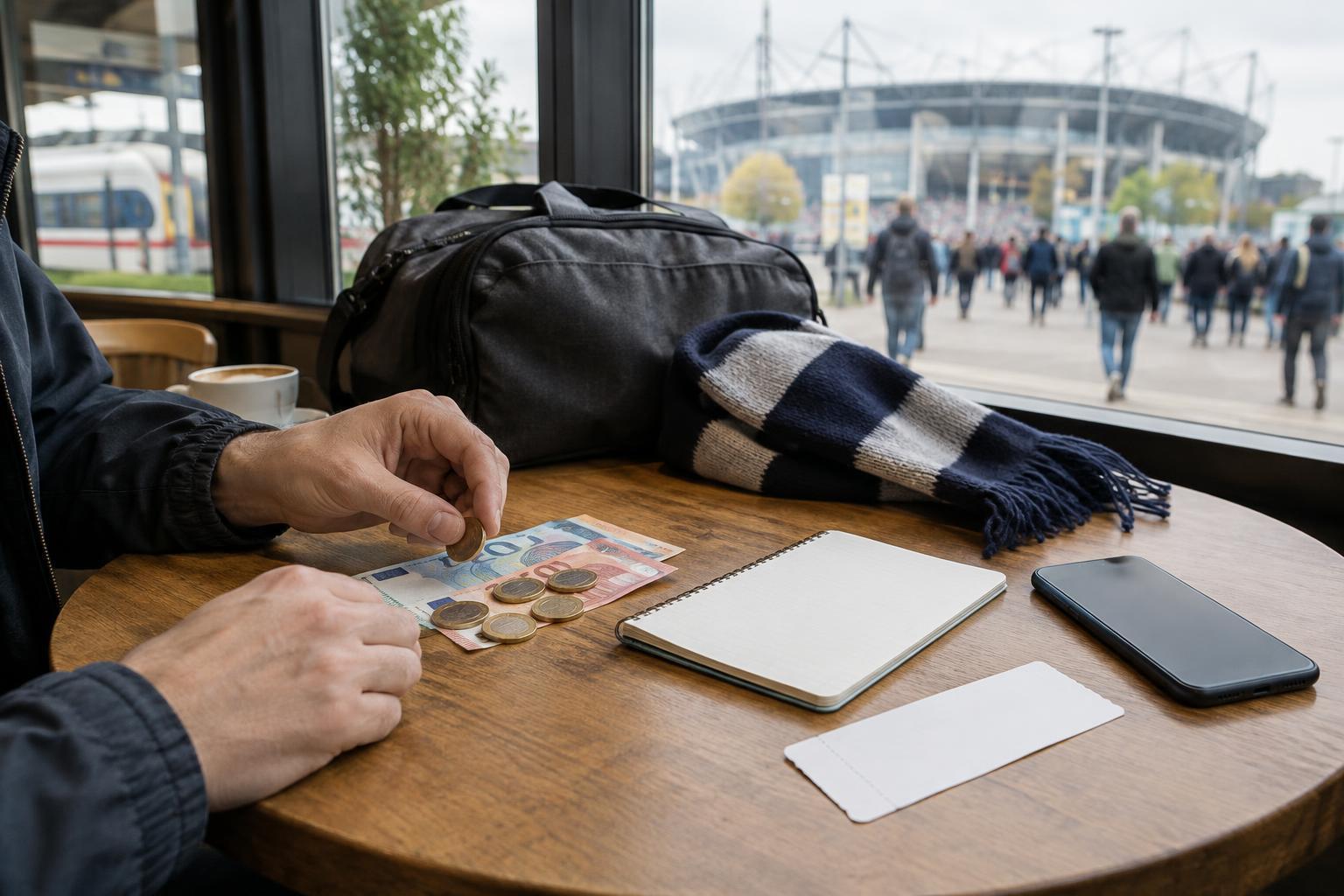
Treat the fixture as a plan, not a fixed point
A match can move to another time, another day or, less commonly, another venue. If your trip depends on being in one seat at one precise hour, even a small change can affect your transport and accommodation. You do not need to plan for every unlikely scenario. You do need to know which parts of your itinerary could change and which would be costly to move.
Before booking, sketch two versions of the trip: one with the match as first announced and one with it shifted by a day. Note when you must arrive, when you must leave and how far you could reasonably travel if the venue changed. This quick exercise shows whether a tight connection or early departure is worth the risk.
Compare booking terms before comparing prices
The lowest upfront price is not always the least expensive option if plans change. For flights, trains and coaches, look at the rules for changing the date or time, along with any fare difference you would have to pay. For accommodation, check the cancellation deadline, whether changes depend on availability and whether you must pay in advance. Save the terms that apply to your specific booking rather than relying on a general description of the provider’s policies.
A flexible booking is only useful if its deadline fits your trip. A room that can be cancelled until several days before arrival may not help with a late fixture change. You might choose a refundable first night near a transport hub, then book later nights once your route is clearer. Another option is to accept a firmer booking because you would still enjoy visiting the city without the match. The right choice depends on both your budget and how much uncertainty you are comfortable carrying.
Leave space around matchday
When possible, avoid arranging your only arrival connection for shortly before kick-off or your departure for immediately after the final whistle. A buffer gives you time to handle ordinary travel delays as well as a changed fixture. It can also make the trip more enjoyable: you can walk the neighbourhood, find your route to the ground and eat without rushing.
If extra nights are not practical, identify your hard limits before committing. Could you take a later train home? Would an extra night require time off work? How late could a match finish while still allowing you to reach your accommodation? Knowing these answers helps you choose between a compact, lower-cost itinerary and one with more room to adapt. Keep the route from the stadium to your lodging in mind, especially if a new kick-off time would change your late-evening travel plans.
Make a backup plan you would actually want
A backup day need not imitate matchday. Choose two or three activities that suit your interests and do not require a rigid schedule: exploring a different district, visiting a local museum, taking a self-guided walk or trying a café away from the stadium. Check opening times closer to departure, and avoid filling every spare hour with prepaid reservations. If the match goes ahead as planned, these ideas can remain optional.
For a venue change, think in travel ranges rather than trying to predict a replacement ground. Decide what distance you would willingly cover on the day and what would require an overnight stay. Keep a small list of transport options and suitable areas to stay in, but wait for confirmed details before making new non-refundable purchases. If the revised plan no longer works for you, a worthwhile city break can still be a better outcome than a frantic journey.
Keep your information and documents easy to reach
As departure approaches, check match details through the competition, club or ticket provider relevant to your booking. If you receive a change notice, read what it says about admission and any action required; do not assume that a ticket automatically carries over or becomes refundable. Contact the relevant provider when the terms are unclear.
Store booking references, confirmation messages and cancellation deadlines in one place you can access while travelling. A simple note with your original itinerary, the last date to change each booking and the provider’s contact route can save time when decisions are urgent. The aim is not to make a football trip risk-free. It is to make a change manageable, so the match remains a highlight rather than the only way the journey can succeed.