Make the fixture your anchor, not your entire plan
A single confirmed fixture gives a football trip a clear purpose. Record the teams, venue and announced kick-off time, then check the competition or club’s official communications for any conditions attached to that information. A listed match can still be moved, and a confirmed fixture does not mean you have a ticket. Treat the date and location as your planning anchor while keeping the surrounding arrangements as flexible as your budget allows.
Before looking at flights, decide what would make the journey worthwhile beyond ninety minutes. You might want time to explore the neighbourhood around the ground, visit a club museum if one is open, or spend an unhurried evening in the city. Choosing one or two priorities helps you resist the temptation to fill every free hour with another destination. It also makes the trip satisfying if a transport disruption or schedule change reshapes a day.
Secure the matchday basics first
Work out how you can obtain a valid ticket before committing to expensive, non-refundable travel. Use the club, competition or an authorised ticket channel where applicable, and read the terms for eligibility, identification, transfer and entry. Availability and rules vary by fixture. If you have not secured a ticket, consider whether you would still enjoy the trip as a visit to the city, or whether you should wait before booking.
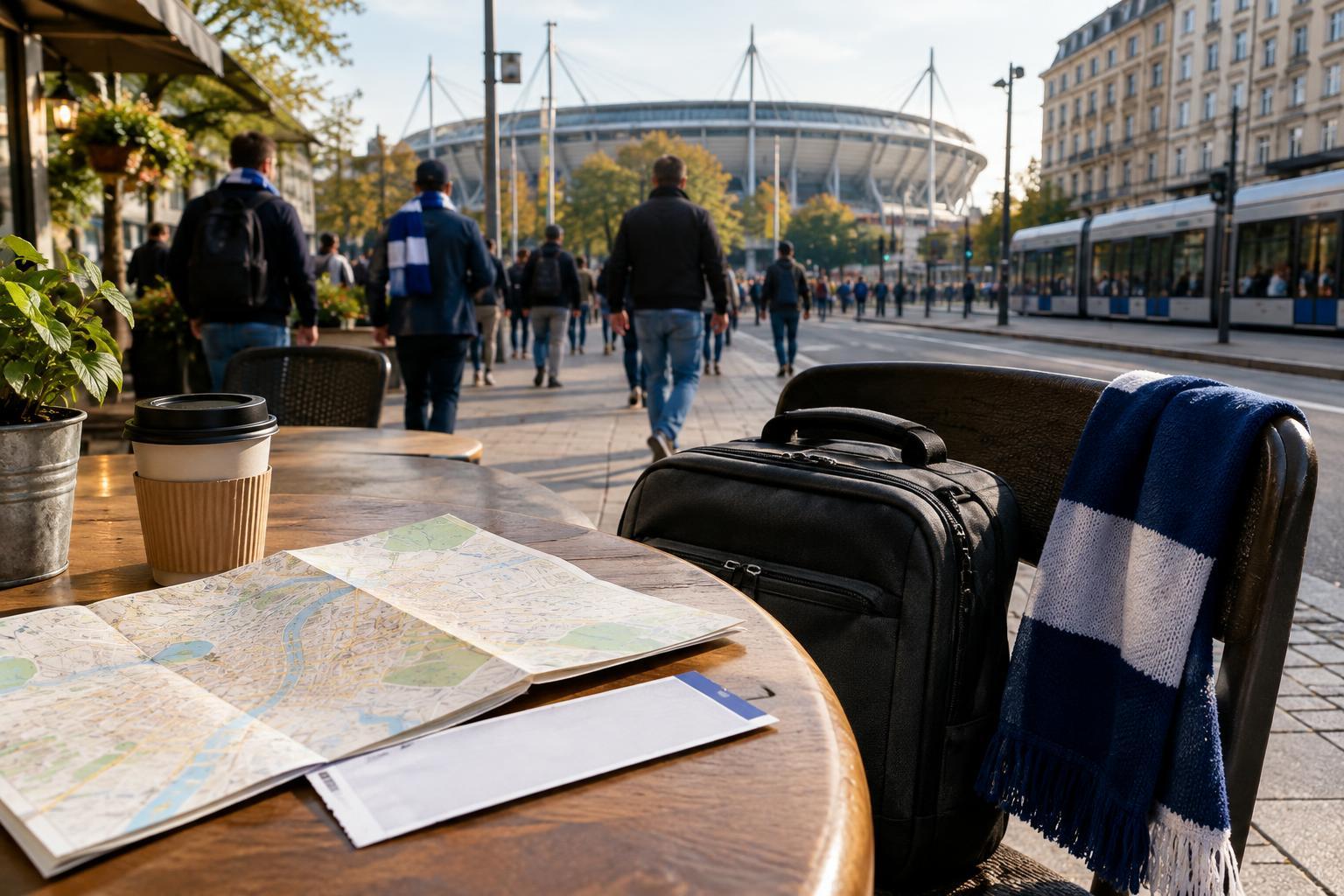
Next, locate the stadium on a map rather than assuming it sits in the city centre. Check the likely journey from your accommodation, the available public transport routes and where you would go after the final whistle. Allow extra time for queues, security checks and finding the correct entrance. If you hope to experience the atmosphere around the ground, leave a generous window before kick-off instead of scheduling a museum visit or a long lunch right up against it.
Build a buffer on both sides of the game
Whenever possible, arrive in the host city before matchday. A missed connection is easier to absorb when you have a spare evening than when your train is due in shortly before kick-off. The same principle applies after the match: an early departure the next morning may be manageable, but it leaves little room for a late finish, a slow exit from the stadium or a tired traveller.
Sketch the trip as a short sequence: arrival and orientation, a less crowded day for your main city activity, matchday, then departure or onward travel. The exact length depends on your time and budget, but the order matters. Put fixed commitments around the fixture sparingly. If you are connecting from another European city, check the complete door-to-door journey, including transfers to and from stations or airports, rather than comparing departure times alone.
Choose a base that makes the day easy
The closest room to the stadium is not automatically the best base. A place near a useful station or transit line may simplify both sightseeing and matchday travel. Compare the route to the ground with the route back at the likely end of the evening, especially if the stadium is outside the central districts. Look at check-in and luggage arrangements too; somewhere to leave a bag can make arrival and departure days much easier.
Keep your non-match plans geographically sensible. Group sights, meals and walks by area so you spend more time in the city and less time crossing it. Leave some space for the unplanned parts of football travel: a conversation in a café, a look through a local bookshop, or simply watching the streets change as supporters head towards the ground. Respect local residents and remember that not everyone sharing a train or square is there for the match.
Recheck the plan, then keep matchday simple
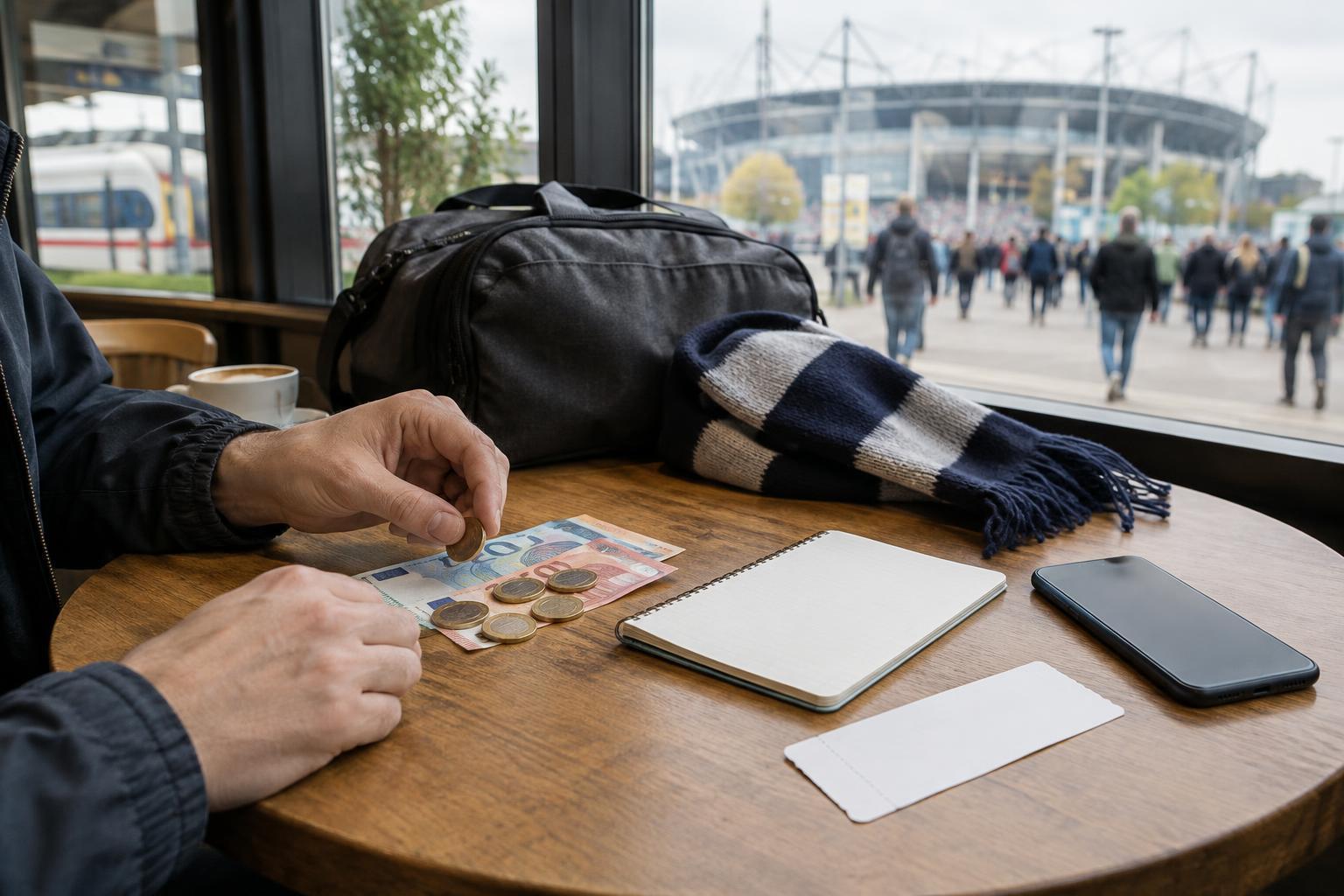
As departure approaches, recheck the fixture details, your ticket instructions, accommodation booking and transport arrangements through the relevant providers. Save the information you will need if your connection drops: your booking references, accommodation address, stadium entrance details and a route back. Check entry requirements and travel documents that apply to your own journey, and give yourself time to resolve questions before leaving home.
On matchday, carry what you need and check the venue’s bag policy rather than assuming a daypack will be allowed. Wear comfortable shoes, dress for the weather and keep your ticket and identification accessible if the entry rules require them. Eat and drink before you are rushed, and agree on a meeting point if travelling with others. With the practical details handled, you can pay attention to the reason you came: the city, the supporters and the game itself.