Start with the event and the person named
A ticket can feel like the final piece of a football trip, but it deserves a careful read before you book the rest of your day around it. Open the ticket or confirmation in the account where it was issued, rather than relying only on a screenshot or a message from someone else. Check the teams, venue, event date and stated start time. If you are visiting an unfamiliar city, make sure the venue is the one you intend to reach; clubs and competitions may use different grounds for different fixtures.
Next, look for a name on the ticket and any instructions about identification, transfers or guest details. Requirements vary by event, so do not assume that a ticket is freely transferable or that a small spelling difference will be accepted. If the ticket was booked for a group, check whose name appears on each ticket and whether each person needs their own account, device or document. Resolve unclear details through the issuer’s stated support route while there is still time to act.
Translate the seat details into a meeting plan
Section, block, row and seat numbers tell you more than where to sit. They can determine which side of the stadium you approach and whether friends holding separate bookings can enter together. Compare every ticket in your group: seats in the same general stand are not necessarily adjacent, and nearby-looking block numbers may have separate approaches. If sitting together matters, confirm the actual seat assignments before travel rather than expecting to rearrange them inside.
A seating plan, when provided by the venue or ticket issuer, can help you understand the layout. Look closely at labels such as upper tier, restricted view or standing area, and read any conditions attached to your purchase. If someone in your group has accessibility needs, check the specific arrangements for their ticket and contact the relevant venue or issuer team about uncertainties. A general map cannot confirm that a particular route, lift or seat will meet someone’s needs.
Treat the gate as part of the route
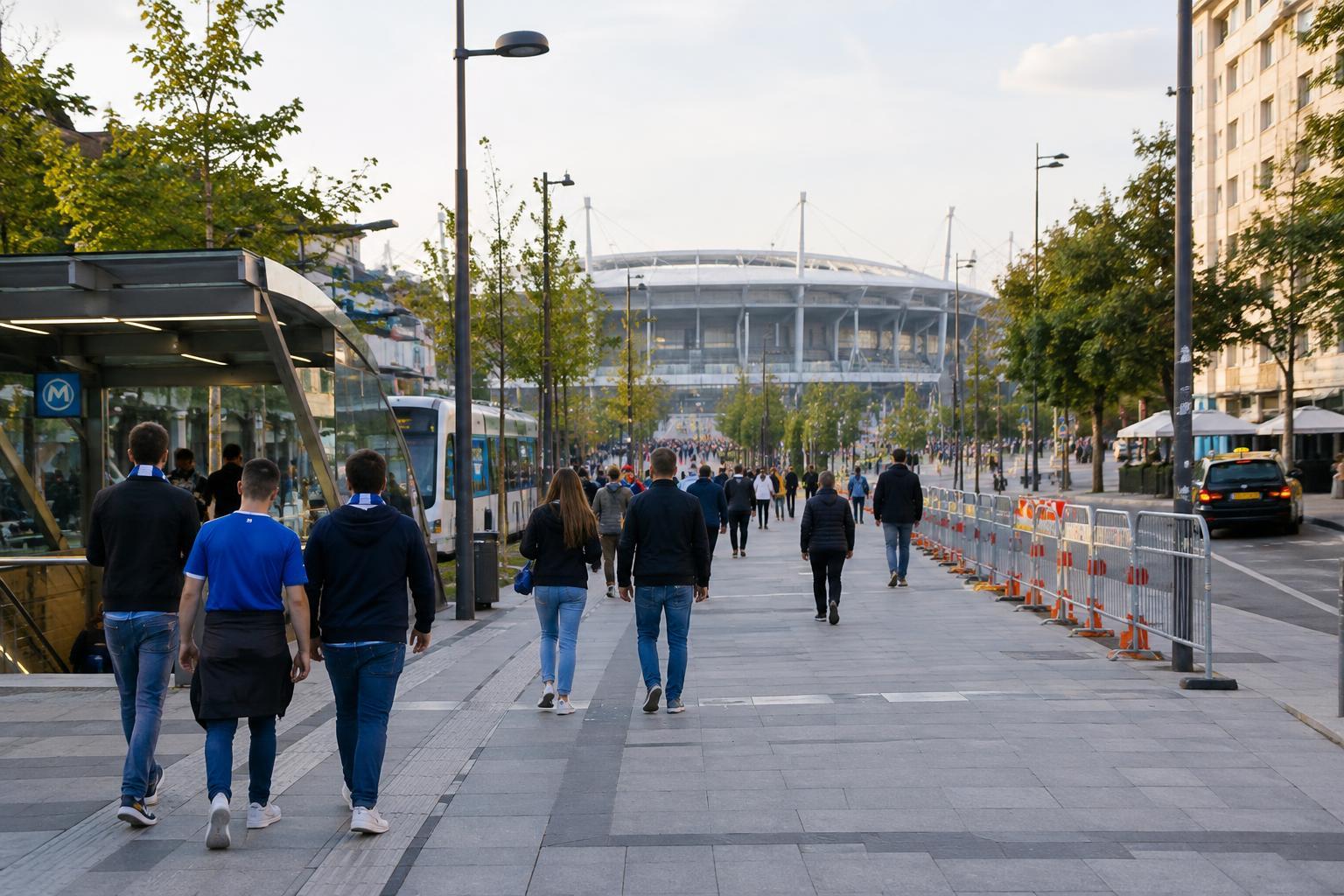
The stadium address gets you to the area; the entry gate gets you to the right queue. Your ticket may list a gate, turnstile, entrance colour or approach route. Note that detail before choosing a station, parking location or meeting point. Walking around a large stadium can take longer than expected, especially when entrances sit on opposite sides or surrounding streets have crowd controls.
Read any arrival and bag instructions that accompany the ticket. These may specify an entry window, prohibited items or a maximum bag size. Rules can differ between venues and events, and instructions sent closer to the match may clarify the route. Leave enough flexibility in your plans to follow the information for your particular fixture. If your group has different gates, choose a meeting point outside the stadium for after the game instead of assuming you will all exit together.
Know how the ticket will reach you
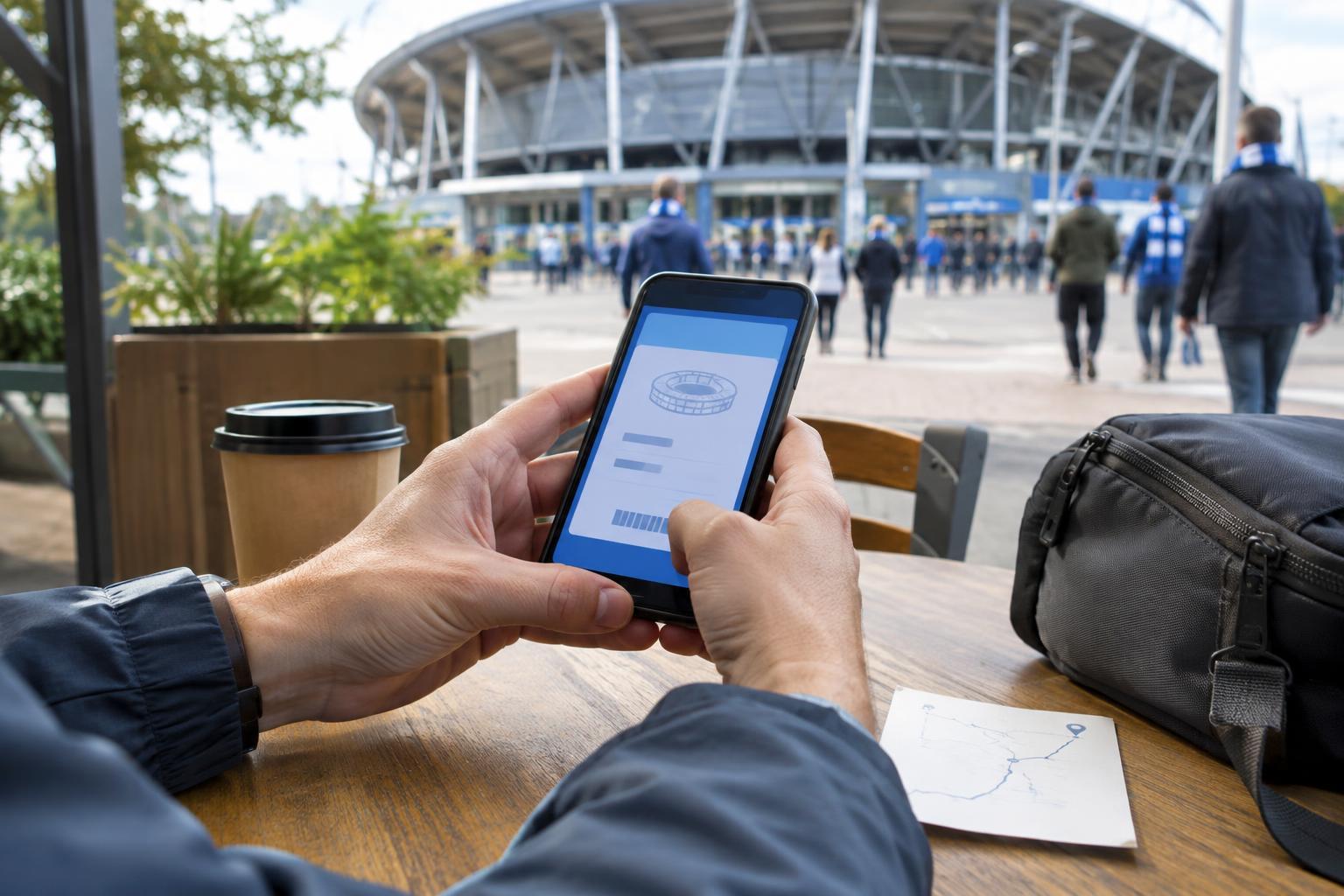
A booking confirmation is not always the item that admits you. Find out whether entry uses an in-app ticket, a mobile wallet pass, a PDF, a physical ticket or another method specified by the issuer. Check when the usable ticket is expected to become available and whether you must accept a transfer. Some digital tickets may need to be opened in a particular account or app; a screenshot may not work if the entry code changes or if the issuer requires an active pass.
Before departure, sign in to the required account, check that you can access the ticket and review any instructions for using it offline. Charge your phone and consider a power bank if your ticket depends on a device. If the permitted format is physical, put the ticket somewhere secure but easy to retrieve at the entrance. Keep your purchase reference separately for support, without treating it as a substitute for the admission ticket.
Make one final check before matchday
A short review the day before travel can catch problems that were easy to miss when you booked. Confirm that each traveller knows which ticket is theirs, how to access it and where they need to enter. Recheck the event details and issuer messages for any changes or additional instructions. Save the venue address and an outside meeting point, and allow time to navigate from your transport stop to the assigned entrance.
If something does not match, pause before setting off and use the ticket issuer’s or venue’s official help information. Avoid posting a visible barcode or order reference while asking for help online. Ticket details are practical travel information, but they can also be sensitive. Reading them early gives you the best chance of sorting out a question calmly rather than discovering it at the turnstile.