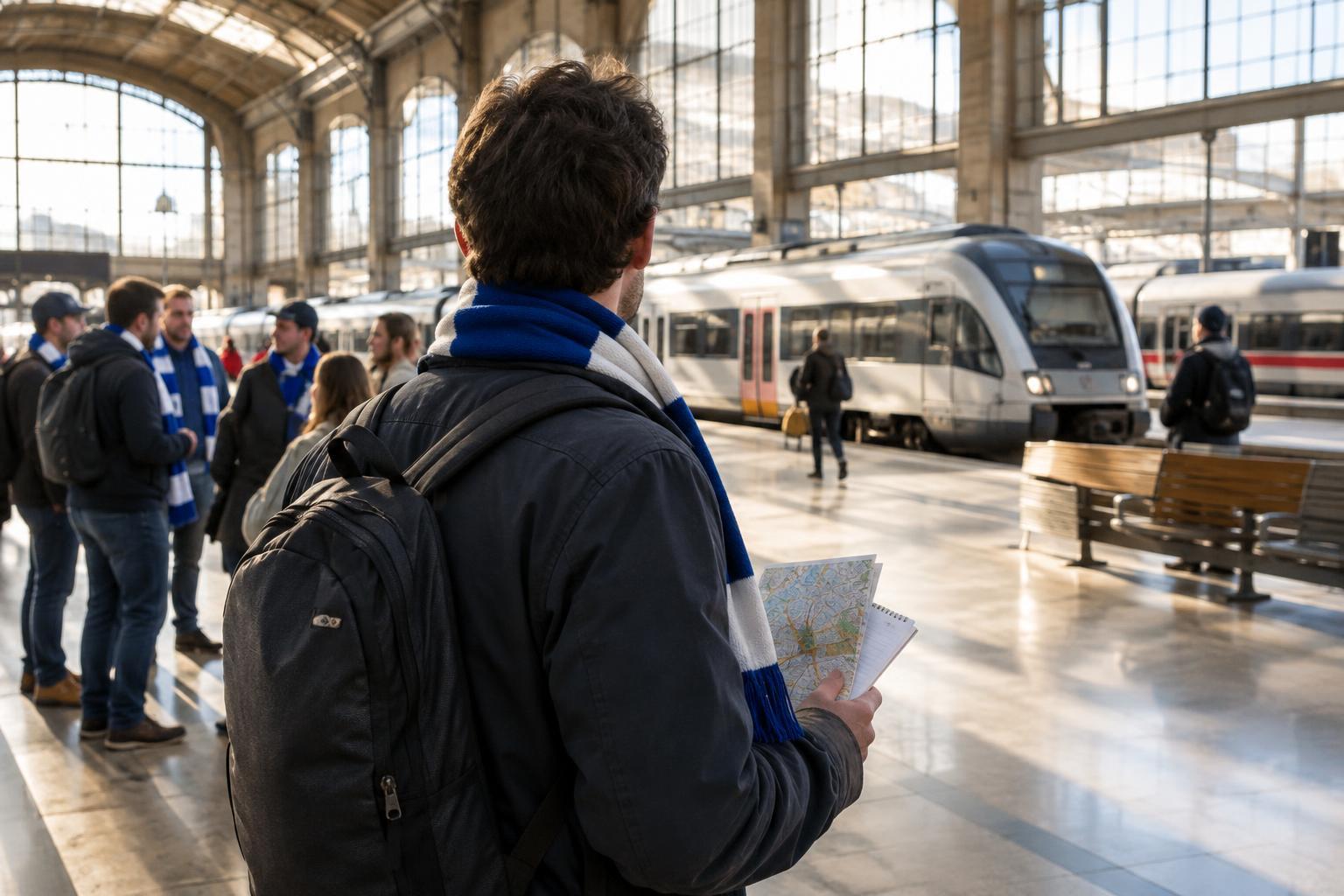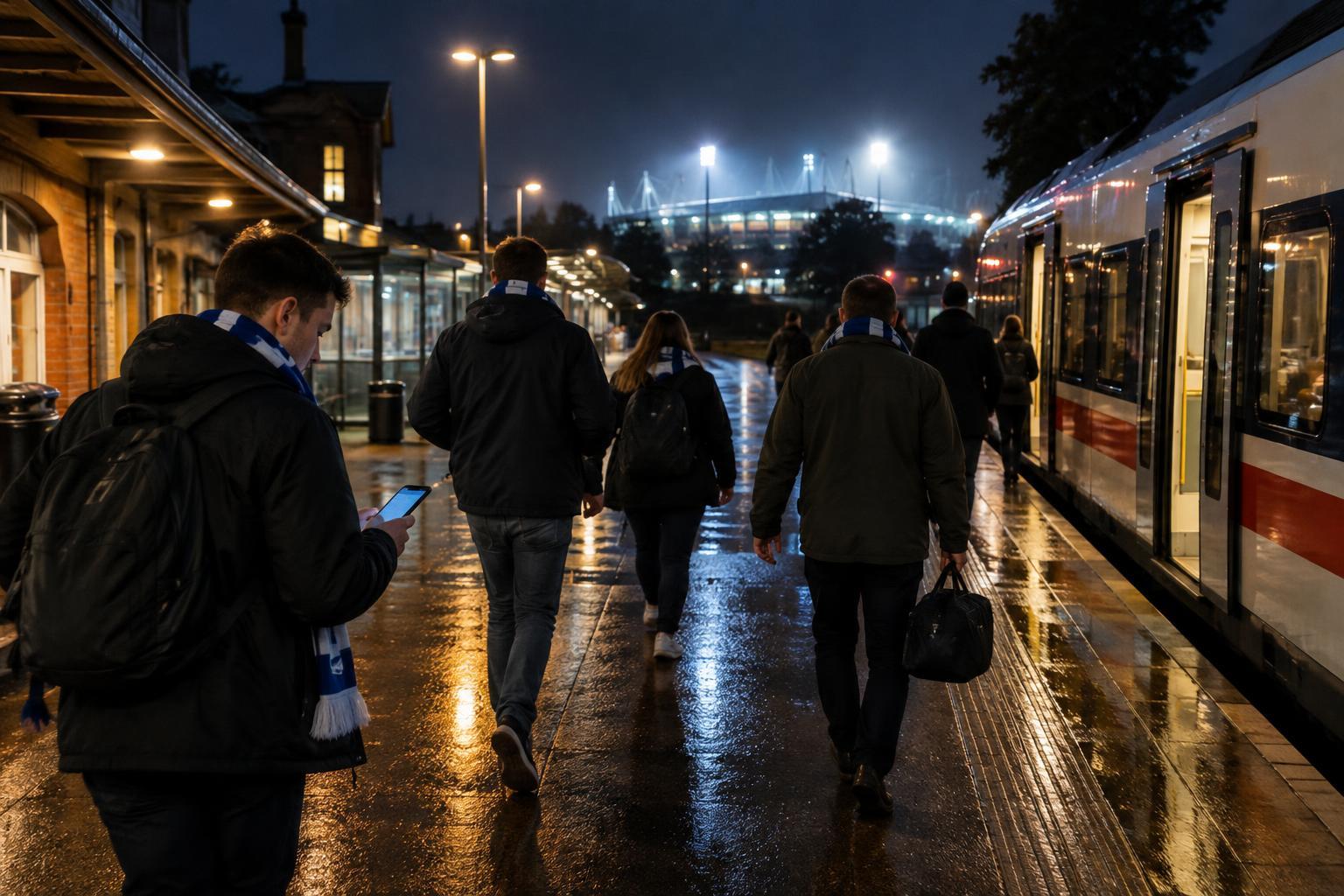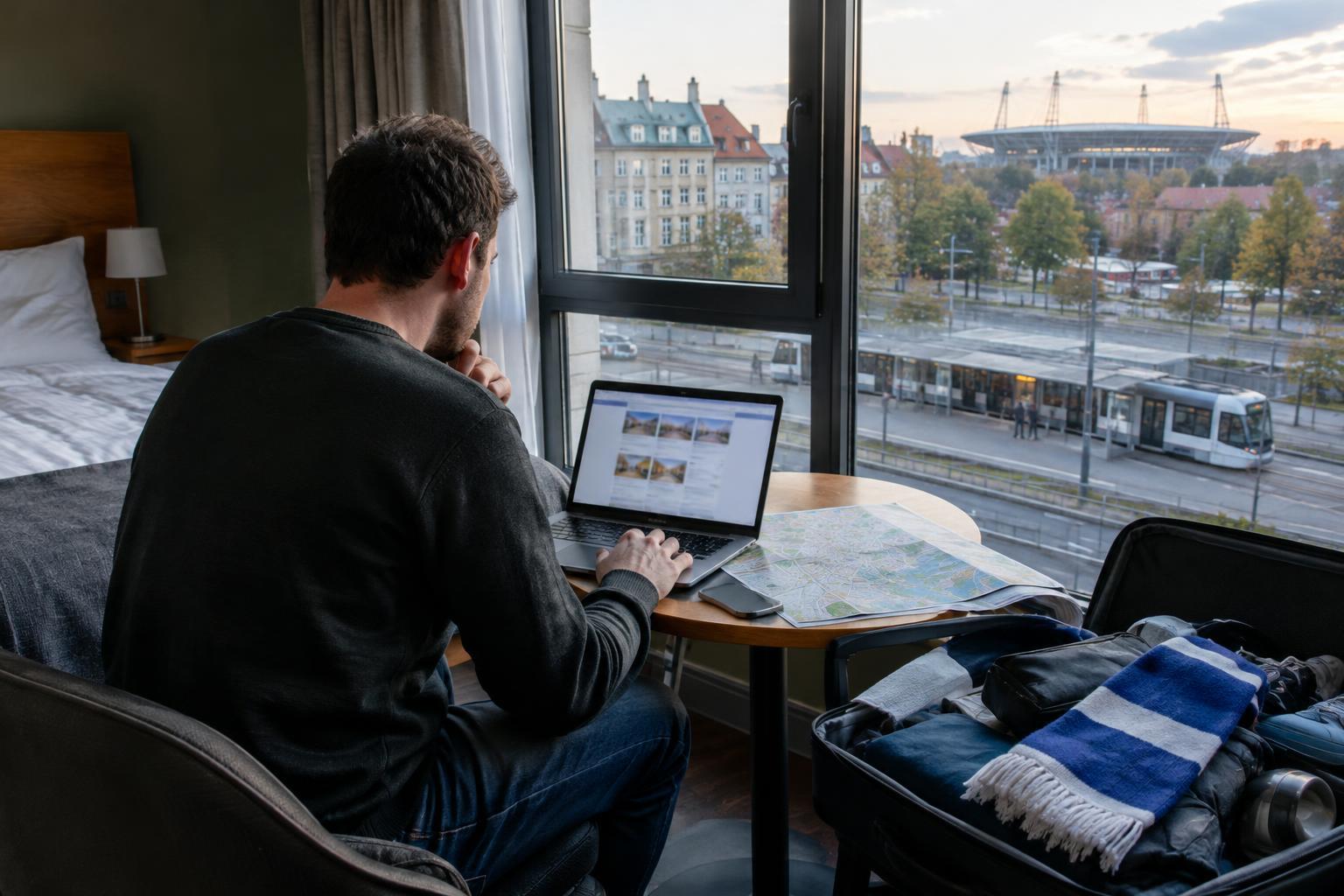
Plan backwards from the journey home
A same-day trip looks simple when the outward journey fits neatly on a map. The harder question is what happens after the match. Start with the scheduled kickoff, allow time for the full game and a slow exit, then work out how you will get from your seat to the station, airport or pickup point. Do not treat the final whistle as your departure time.
Check the last realistic service home, not just the last service listed. A train that leaves soon after the expected end of a match may be useless if the station is across town or crowds are moving slowly. If the return depends on making one connection with no workable alternative, an overnight stay is worth serious consideration.
Build in room for ordinary delays
Football trips rarely run to a perfect timetable. Added time, queues at exits, busy local transport and a missed connection can each use up a small buffer. Consider the whole chain of travel: stadium to local stop, local stop to main terminal, and main terminal to home. A route with several transfers needs more margin than a direct journey.
For flights, include the time needed to reach the airport and complete the steps required by your airline and airport. For a drive, think about traffic near the ground and whether you will be alert enough for the full trip back. If a modest delay would leave you stranded or driving while exhausted, staying overnight is usually the more comfortable plan.
Check the transport details again close to travel, particularly for evening fixtures or services with limited departures. If the match time could change, avoid building an inflexible return around an assumed kickoff until your plans are firm.
Weigh the real cost of each option
A hotel room can make an overnight trip appear much more expensive, but compare complete plans rather than headline prices. A same-day return might involve a costly late train, airport transfer, taxi after local services stop or parking for many hours. An overnight stay may let you use a more convenient departure the next morning.
Write down the costs you can reasonably estimate for both options, including accommodation, transport, meals and any booking conditions that matter to you. Then consider the cost of a failed plan: could you afford a replacement journey or last-minute room if you missed the return? This is not a reason to book a night for every game. It is a way to spot when a small saving relies on everything going right.
Account for the day you will actually have
Distance alone does not decide whether a day trip is sensible. An early departure followed by a late kickoff can leave little time to eat properly, find the ground and enjoy the host city. If you are travelling with children, someone with mobility needs or a group moving at different speeds, extra time may be especially valuable.
Your next-day commitments matter too. A return that gets you home in the early hours may be possible but leave you unfit for work, study or a long drive the following morning. An overnight stay offers a less hurried exit from the ground and a chance to travel home after some rest. Conversely, a nearby match with frequent return services and no early start the next day may be well suited to a same-day plan.
Make a decision—and a fallback plan
Choose a same-day trip when you can identify a comfortable route home, allow meaningful time after the match and still have a usable fallback if one leg goes wrong. The case for staying overnight grows stronger when the fixture is late, the return relies on the last departure, connections are tight or you would have to rush out before the end to make it work.
Before booking, save the addresses and departure points you will need, and check how you would reach them if your preferred local transport is busy. Keep essentials such as identification, medication you normally carry and a phone charger accessible rather than buried in luggage. If you decide to stay, pick accommodation with a journey from the ground you understand; a cheap room can be inconvenient if getting there after the match is difficult.
The best plan is not necessarily the fastest one. It is the one that lets you enjoy the football without spending the second half worrying about the journey home.