Choose the ground before you plan the day
A football trip to Dublin works best when you start with a fixture rather than a sightseeing route. The city’s grounds are spread across several neighborhoods, each with its own character and transport options. Check the host club’s official fixture and ticket information before booking travel: dates, kick-off times and venues can change, and a ground may host different types of matches.
Aviva Stadium, near Lansdowne Road in Dublin 4, is the city’s largest football venue and hosts Republic of Ireland internationals alongside other events. It offers a very different visit from a club ground. If you want to see domestic football, look at clubs such as Bohemians, Shelbourne, St Patrick’s Athletic and Shamrock Rovers. Choosing between them is less about finding a single “best” ground than deciding which fixture and part of Dublin fit your trip.
North Dublin: Phibsborough and Drumcondra
Dalymount Park, the home of Bohemians, sits in Phibsborough, north of the city centre. The surrounding streets have cafés, shops and places to eat, so it is easy to make the match one part of an afternoon in the area. Arrive with time to find your entrance and take in the neighborhood without treating its residential streets as an extension of the stadium.
Shelbourne’s Tolka Park is in nearby Drumcondra. The two grounds can both feature in a football-focused walk around north Dublin, though visiting the outside of a ground is no substitute for checking whether a match or tour is available. Drumcondra has a rail station and bus connections; for either venue, check the route to the particular entrance shown on your ticket rather than relying on a map pin at the centre of the pitch.
If you plan to eat before kick-off, allow a little flexibility. A popular match can make nearby places busier than they look on an ordinary afternoon. Spending money at local businesses and keeping entrances and pavements clear are simple ways to be a considerate visitor.
Inchicore and Tallaght: two different matchdays
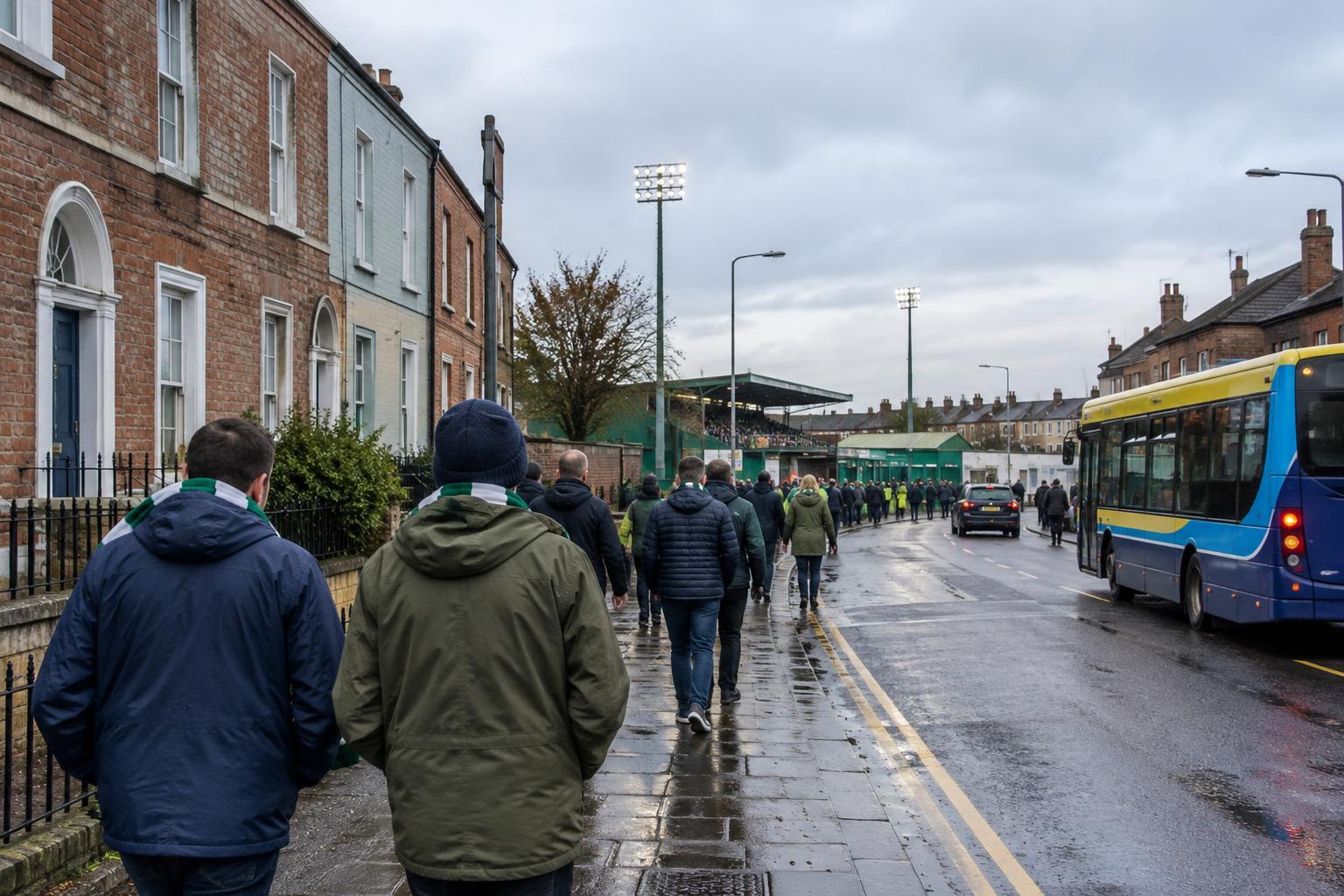
Richmond Park, home of St Patrick’s Athletic, is in Inchicore to the west of the city centre. Its neighborhood setting makes it worth thinking through your return journey before the match, especially if the final whistle will come late. Check bus routes and stop locations for your direction of travel, and leave time to walk out with the crowd rather than expecting an immediate departure.
Shamrock Rovers play at Tallaght Stadium, southwest of the centre. Tallaght is a destination in its own right, not a quick detour from the central sights. The Luas Red Line serves Tallaght, with a walk from the stop to the stadium; buses may also suit your starting point. Build in time to orient yourself when you arrive and confirm the last practical connection back if you are travelling in the evening.
These grounds offer useful contrasts for a visitor: Inchicore lends itself to a neighborhood-led outing, while Tallaght asks for a more deliberate cross-city journey. Neither requires a complicated itinerary if you settle your ticket, route and return plan in advance.
Use Dublin’s transport network without rushing
For an Aviva Stadium event, Lansdowne Road DART station is close to the ground. The Luas is useful for some journeys, particularly towards Tallaght, while buses fill many of the gaps between rail and tram routes. No single mode serves every ground equally well. Check current operator information on the day, including service changes, and compare the full door-to-door journey rather than just the nearest stop.
Walking can be a pleasant part of a Dublin matchday, but check the distance and weather first. Bring a light waterproof layer and comfortable shoes, and keep your phone charged for tickets and route checks. If you use a contactless payment method or travel card, confirm that it works for the services you intend to take; do not assume one fare covers every leg.
After the match, the closest stop may be crowded. Sometimes a short walk to another suitable stop makes for a calmer journey, but follow any event-day directions and use well-lit routes. Give yourself a margin if you have a train, coach or other fixed connection to catch.
Make room for the place around the match
A satisfying Dublin football day need not involve racing between stadiums. Pick one match, choose a nearby area for a meal or a walk, and leave enough unscheduled time to notice where you are. Phibsborough, Drumcondra, Inchicore and Tallaght are lived-in neighborhoods, not just backdrops for photographs.
Buy tickets through the host club or another authorized seller, read any ground rules before setting out, and check whether bag restrictions apply. With those basics handled, you can focus on what makes a football trip memorable: the journey to a ground, the streets around it and the experience of watching a game in its own corner of Dublin.