The whistle ends the match, not the experience
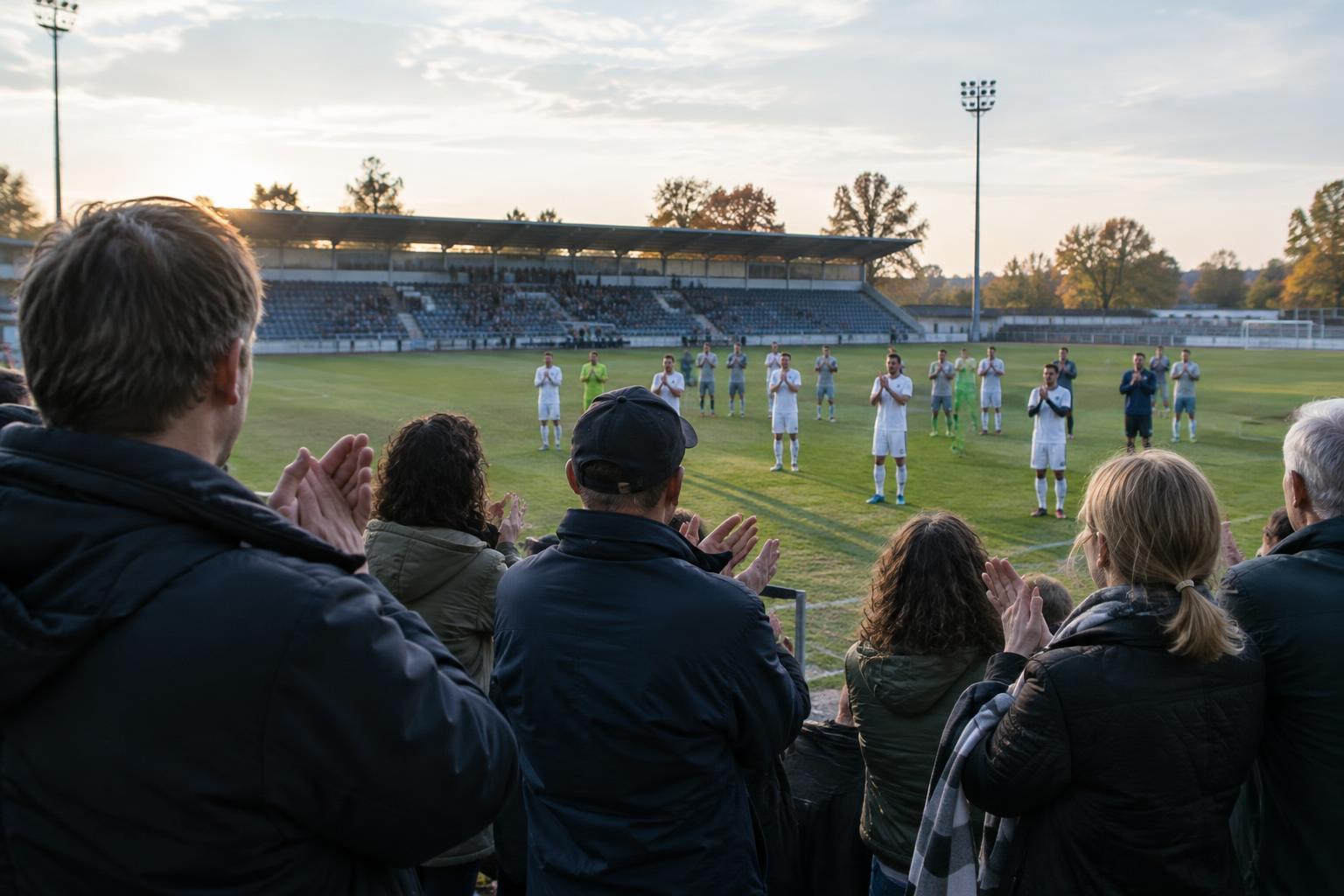
The final whistle settles the result, but it rarely empties a stadium at once. Some supporters rise to applaud; others stay to sing, reflect or watch the players cross the pitch. The mood can shift quickly. A late win may bring a burst of noise, while a difficult defeat may leave the stands quiet before applause begins. If you are visiting a ground for the first time, those few minutes can tell you as much about its supporter culture as the match itself.
There is no single script for what happens next. Customs vary between clubs, countries, competitions and individual matches. Even regular rituals may be shortened when players are exhausted, the weather is poor or stadium staff need to clear an area. Rather than expecting a particular ceremony, give yourself a moment to observe what the people around you do.
What applause can mean
Applause after full time is not always a verdict on the score. Supporters may thank their team for its effort, recognize an individual performance or acknowledge opponents who played well. After a frustrating result, a brief round of clapping can still be a gesture of solidarity. Silence, too, can have several meanings: disappointment, fatigue or simply a crowd waiting to see what happens next.
Watch how applause moves around the ground. One section may start clapping as players approach, while another may respond to a gesture from the pitch. You do not need to guess exactly what every reaction means. If you want to join in, a straightforward clap is usually less likely to feel out of place than copying a chant whose words or significance you do not know.
When players turn toward the stands
Players often acknowledge supporters before leaving the field, perhaps by clapping, waving or walking toward a section of the crowd. A team may gather together to face its travelling fans, especially after an away match. These gestures can feel especially personal when a long journey, a difficult performance or a memorable result is shared by the people on both sides of the barrier.
Acknowledgment is not a promise of a close interaction. Players may head straight to the tunnel for many ordinary reasons, and access near the pitch is controlled by the venue. Stay in your permitted area, leave aisles clear and follow staff directions rather than moving toward an exit or barrier in search of a photograph. If you are taking pictures from your seat, be mindful of people behind you who are trying to see.
Songs that linger beyond full time
Some of the most memorable post-match moments come from songs that continue after play has stopped. A familiar refrain may be sung once more as the players applaud, or a smaller group may keep a rhythm going while the rest of the ground begins to leave. Travelling supporters sometimes remain together to sing as they wait for their section to be released.
For a visitor, listening first is good etiquette. Chants can carry local history, rivalry or language that is not obvious from a catchy tune. Join only when you understand what you are singing and feel comfortable doing so. It is also fine to stay quiet: attentive presence is part of the atmosphere, not a failure to participate.
Make room for the ending
If your travel plans allow it, avoid scheduling your departure so tightly that you must rush away at the whistle. A few extra minutes can let you take in the final exchanges between stands and pitch. It also gives you time to check your belongings and identify the appropriate route out. When you do leave, expect stairs, concourses and nearby streets to be busy, regardless of how calm the stands seemed moments earlier.
Above all, treat the post-match period as a shared space rather than a performance staged for visitors. Let local supporters set the tone, respect those processing a loss and avoid blocking views or walkways to capture the scene. Whether the ending is loud, subdued or somewhere between the two, paying attention can turn the last few minutes at the ground into a lasting part of the trip.