Get oriented before you arrive
Dortmund’s main railway station, Dortmund Hauptbahnhof, is a useful starting point for visitors arriving by train. The city centre lies nearby, while the stadium area is farther south, close to the Westfalenhallen exhibition grounds and Westfalenpark. That layout gives you a choice: spend time in the centre first, or head toward the ground and explore the surrounding streets before kick-off.
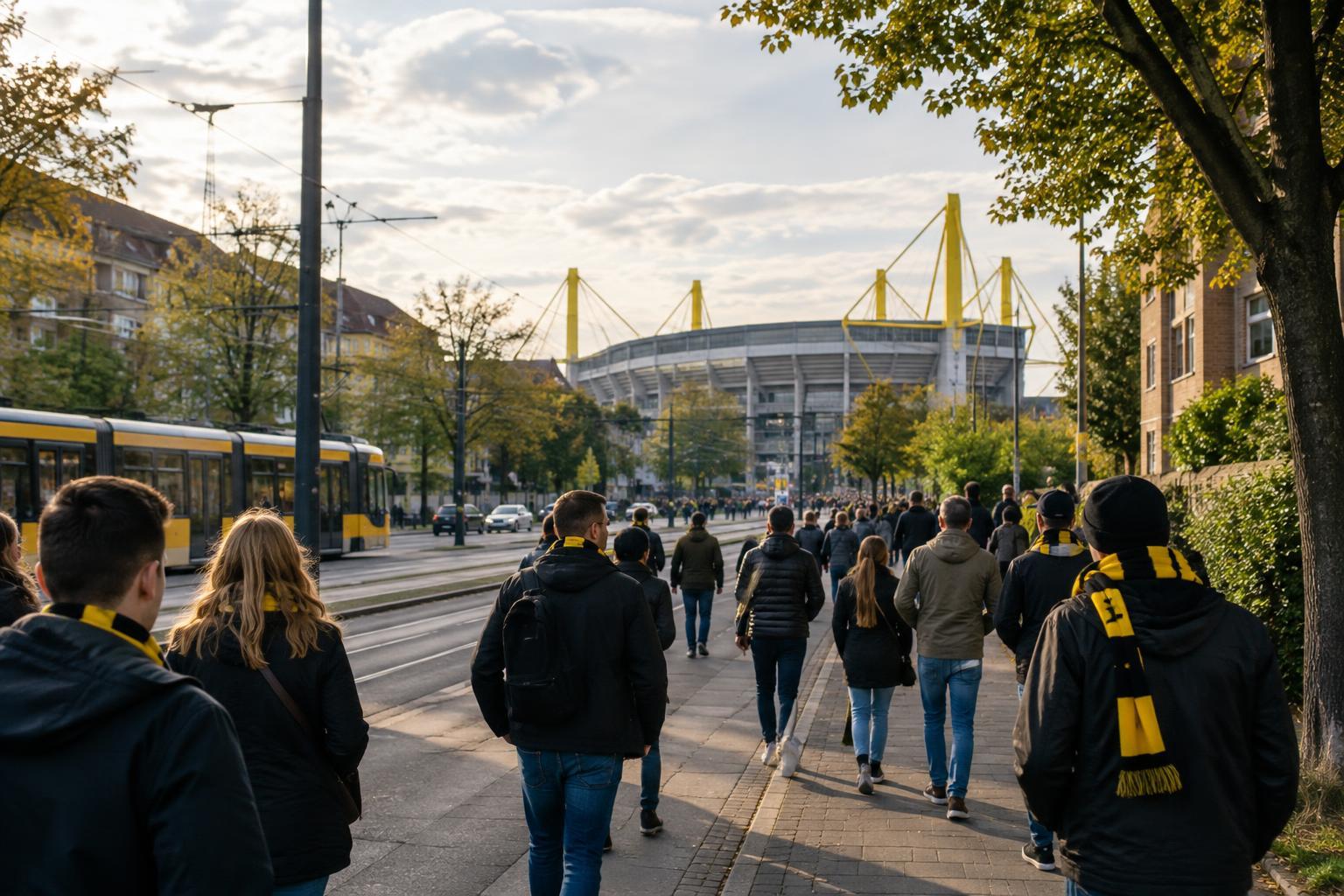
Check the venue named on your booking before setting out. Borussia Dortmund’s home ground is commonly called Signal Iduna Park and is also known as Westfalenstadion, but the city may host other football events at different venues. Save the venue address and your entrance details somewhere you can access without mobile data. If you are travelling with others, agree on a meeting point outside the busiest station or stadium exits.
Choose a route that leaves room for delays
Local trains and light rail offer a practical way to reach the stadium district from the centre. Services, stops and crowd arrangements can differ by event, so check the local transport information for your match rather than relying on an old route guide. A match ticket should not automatically be treated as a transport ticket; any fare entitlement depends on the event and ticket terms.
Walking is another option if you have time and are comfortable covering the distance. It makes the change from shopping streets to residential blocks and matchday gathering spots part of the experience. Use a map to judge the route from your starting point, and remember that the final approach may be slower as more people converge on the ground. If accessibility is a priority, check the venue’s current guidance for step-free approaches and entrances before travelling.
Make time for the city, not just the stadium
A Dortmund matchday need not begin at the turnstile. The compact centre works well for a meal, a coffee or a short wander before you join the flow toward the ground. The Kreuzviertel, between the centre and stadium area, is another place to look for cafés and places to eat. Opening hours and capacity can change on event days, so it is wise to have more than one option in mind.
Food and drink spots closest to the stadium are likely to be busy before a major fixture. Eating earlier may give you a calmer break and more time to find your entrance. Matchday crowds are part of the atmosphere, but they also share streets with residents and businesses. Keep doorways clear, follow local directions and allow people who are not attending the game space to get through.
Plan your entry before joining the crowd
Check your ticket or booking confirmation for the correct entrance, section and any arrival instructions. Approaching the wrong side of a large stadium can add an unnecessary walk, particularly when crowd-control routes are in place. Allow time for security checks, queues and a final visit to facilities before taking your place. If you want to browse stalls or photograph the exterior, do that before you are pressed for time.
Travel light. Venue rules on bags, prohibited items and storage may vary by match, and there may be no convenient place to leave something refused at the gate. Pack only what you need, with your ticket, identification if required, payment method and weather layer easy to reach. Comfortable shoes matter as much for standing in queues and walking between stops as they do for exploring the city.
Give the journey home its own plan
The trip away from the stadium often takes longer than the trip in. Many supporters leave at once, and station approaches or platforms may be managed to keep people moving safely. Before the match, look up more than one way back to your accommodation or onward train. If you have a fixed departure, leave a generous buffer rather than assuming you can reach the platform immediately after the final whistle.
There is no need to treat the exit as a race. Some visitors prefer to wait nearby until the first rush has eased, provided their onward plans allow it. Others walk part of the way toward the centre before joining public transport. Choose what suits your group, the weather and the current event guidance. A little flexibility at the end of the day makes it easier to enjoy the football without spending the closing minutes worrying about the journey back.