What a stand is for, not just where it is
A football seat gives you a view of the pitch, but it also places you among people with a shared relationship to the club. In a home end, that relationship may be expressed through familiar songs, flags, standing traditions or the rhythm of a weekly routine. An away end brings together visiting supporters who have made the trip and often arrive ready to sing throughout the match. Neither description fits every ground or every game: a quiet afternoon in one stadium can feel intense in another.
For a neutral visitor, the useful question is not which end is more authentic. It is what kind of participation each area expects. Some sections are designed around active support, while others offer a more mixed crowd and an easier place to watch, listen and learn.
How home and away crowds differ
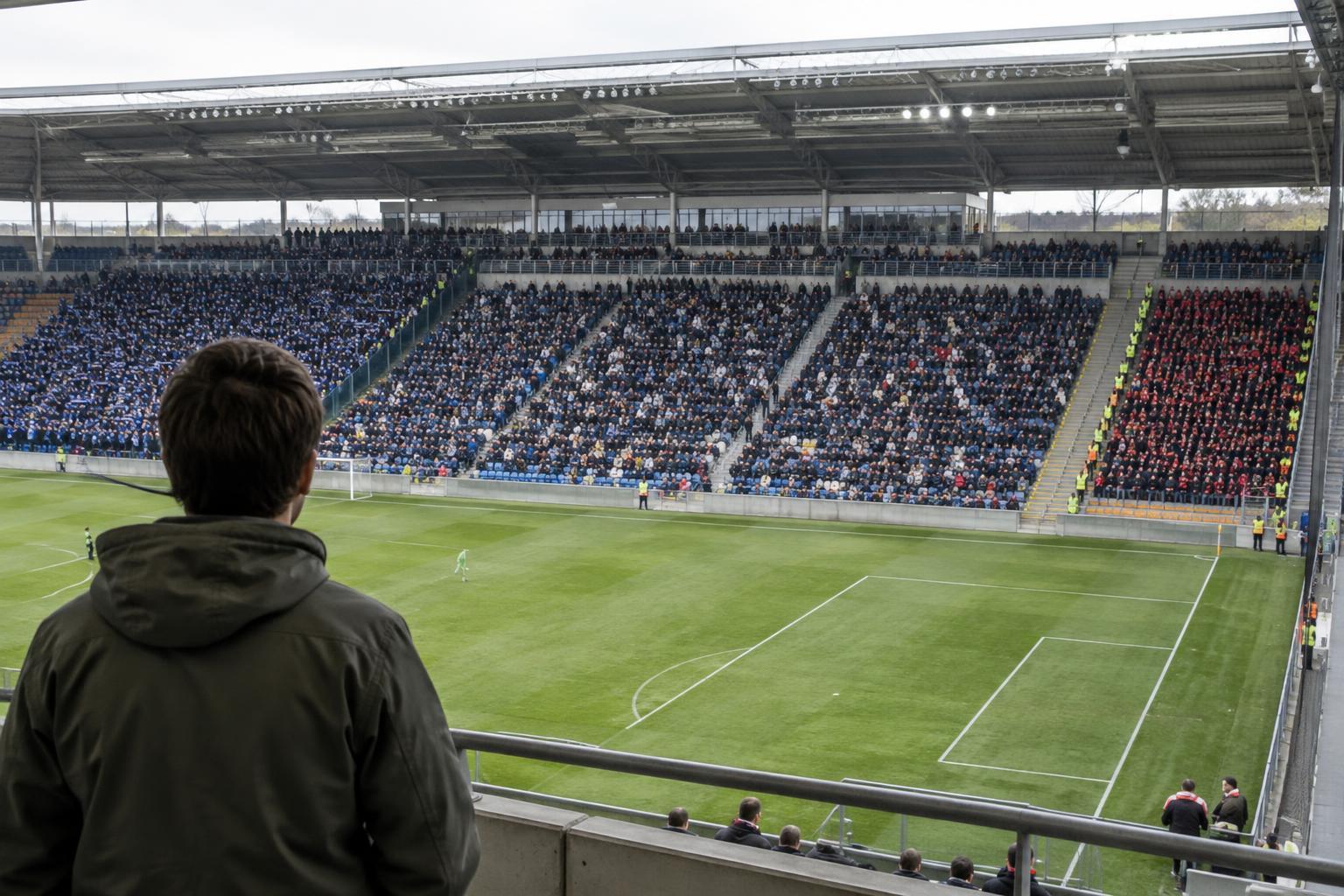
Home supporters occupy most of the stadium, so the home crowd is rarely one uniform group. A section behind the goal may lead chants, while a side stand may include families, long-time season-ticket holders and occasional visitors. Songs and gestures can carry local meaning that is not obvious on a first visit. If you want to join in, listening before copying is usually more comfortable than trying to perform as a regular.
The away section tends to have a clearer shared purpose: support the visiting team together in unfamiliar surroundings. That can produce concentrated noise and strong reactions, especially during a close match. It is not, however, a sightseeing section for anyone seeking the loudest atmosphere. Access may be restricted by ticket type, and wearing home colours there would be inappropriate. Rules and layouts vary by club and competition, so check the information for the specific match rather than assuming all away ends work alike.
The boundary between sections matters even when the mood is friendly. Stadiums may use separate entrances, concourses or exit arrangements. Treat those arrangements as part of the visit, not as an inconvenience to work around.
Choosing a seat as a neutral
If you are not supporting either team, a general home section away from the most vocal end may be a sensible starting point, where neutral attendance is permitted. Before booking, read the venue’s seating guidance and any match-specific conditions. A label such as “family area” or “singing section” tells you more about the expected experience than a seat’s distance from the centre line alone.
Once inside, you do not have to pretend to be a home supporter. Polite interest is enough. You can enjoy a good passage of play without loudly celebrating an away goal in a home section, just as you would avoid leading unfamiliar chants for effect. If you are travelling with someone who supports one of the teams, choose a permitted section where they can comfortably follow the match and observe its rules on colours and behaviour.
It is also worth planning for your own comfort. A lively section may involve prolonged standing, obstructed views from raised scarves or flags, and a volume that makes conversation difficult. A calmer seat does not make the experience less connected to the club; it may give you more room to notice how the whole ground responds.
Reading the room on match day
Arrive with enough time to find the correct entrance and ask a steward if a sign or route is unclear. Follow instructions about bags, banners, photography and movement between areas. A ticket for one section is not an invitation to explore another, even if an empty seat looks tempting.
Supporter humour can be sharp, and songs may refer to rivalries or local history you do not know. There is no need to repeat words you cannot place. Watch how people around you behave, keep your reactions measured, and give others space to support their team. When taking photos, avoid treating individual supporters as props; a quick image of the wider scene is different from filming someone at close range without regard for their comfort.
After the final whistle, the exit can be as revealing as the match itself. Some people leave immediately; others stay to applaud the team. Follow the route for your section and allow extra patience if crowds are held or directed separately. The best neutral visit is not one where you blend in perfectly. It is one where you understand whose space you are sharing and leave room for them to experience the game in their own way.