A continental competition takes shape
The tournament now known as the European Championship began as the European Nations’ Cup. Its first edition concluded in 1960, giving Europe’s national teams a competition of their own alongside the World Cup. Henri Delaunay, a French football administrator who had advocated for a European national-team tournament, is commemorated in the name of its trophy.
The early competition looked very different from a modern month-long finals. Teams played qualifying ties over two legs, usually one match at home and one away. Only four reached the final stage, which consisted of two semifinals, a third-place match and a final in one host country. For supporters, the decisive trip was therefore to a compact set of matches rather than a tour through weeks of group games.
1960: A four-team finish in France
Qualifying for the first European Nations’ Cup began before 1960. Participation was not universal, and the route to France ran through knockout ties rather than qualifying groups. Spain withdrew before its quarterfinal against the Soviet Union, leaving the Soviet side among the four teams at the final stage.
France hosted that final stage, joined by the Soviet Union, Yugoslavia and Czechoslovakia. Yugoslavia beat France in a high-scoring semifinal, while the Soviet Union defeated Czechoslovakia. In the final in Paris, the Soviet Union beat Yugoslavia 2–1 after extra time to become the first champion.
The inaugural edition established a pattern that lasted through the 1970s: qualifying did most of the work of reducing the field, and the host staged only the closing four-team tournament. It is an important distinction when looking back at early results. A country could travel a long way toward the title without playing a single finals match until the semifinals.
1964: More entrants, the same small finals
The second edition ended in Spain in 1964. More countries entered than in the inaugural competition, but the essential format remained: knockout qualifying followed by a four-team final stage. Spain, the Soviet Union, Hungary and Denmark reached the semifinals. The host beat Hungary after extra time, and the Soviet Union defeated Denmark to set up a final between the winners of the first two editions.
Spain won that final 2–1 in Madrid. The result is part of the tournament’s history, but so is the structure around it. Hosting the final stage did not mean hosting a sprawling championship from its opening match. Most participating nations played their tournament fixtures elsewhere, across separate qualifying dates. Anyone tracing an early team’s journey needs to look beyond the host city to understand how it got there.
1968: A new name and a different route
The competition adopted the European Championship name for the 1968 edition. Qualifying also changed: teams played in groups, with group winners advancing to two-legged quarterfinals. The winners of those ties went to the four-team final stage in Italy. This brought a familiar group-table element into the route to the finals, even though the finals themselves remained brief.
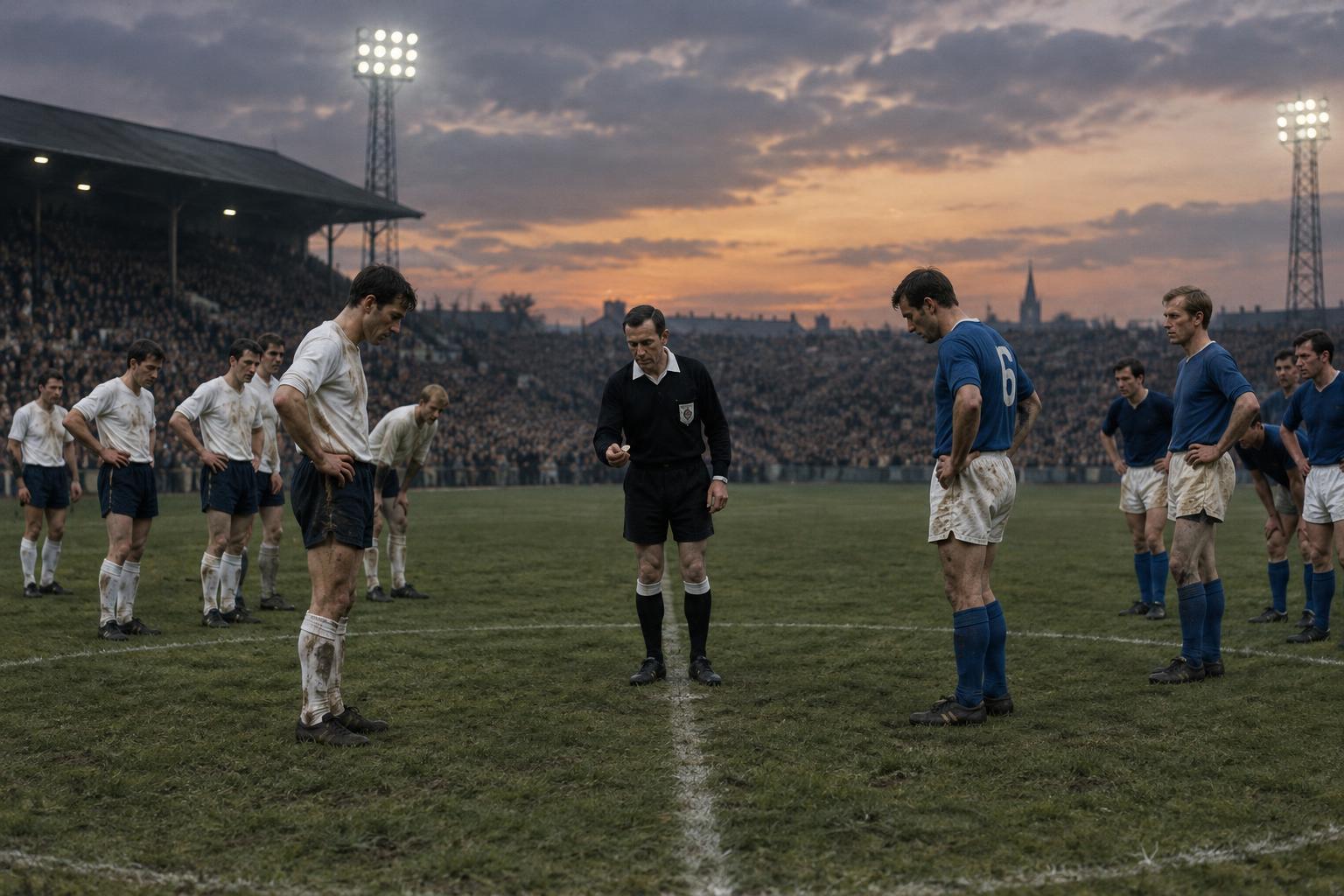
That edition also shows how match rules could shape early tournament history. Italy’s semifinal against the Soviet Union ended level after extra time, and Italy advanced by a coin toss. The final against Yugoslavia finished level too, but it was settled by a replay rather than a shootout. Italy won the replay 2–0. These were not features of every early match; they are reminders that today’s familiar methods for deciding ties were not yet applied in the same way.
How to read the early editions today
The four-team final stage continued for several more editions before the finals expanded to eight teams in 1980. That makes an early European Championship appearance a different achievement from one in a later, larger tournament. Reaching the semifinals in 1960, 1964 or 1968 meant reaching the finals at all.
For a football-focused trip, this history offers a useful way to see a host city. A famous final stadium is only one stop in the story: qualifying took place across the continent, while a small number of venues hosted the concluding matches. Understanding that split makes old scorelines easier to follow and helps explain why the first championships left such concentrated memories of places like Paris, Madrid and Rome.