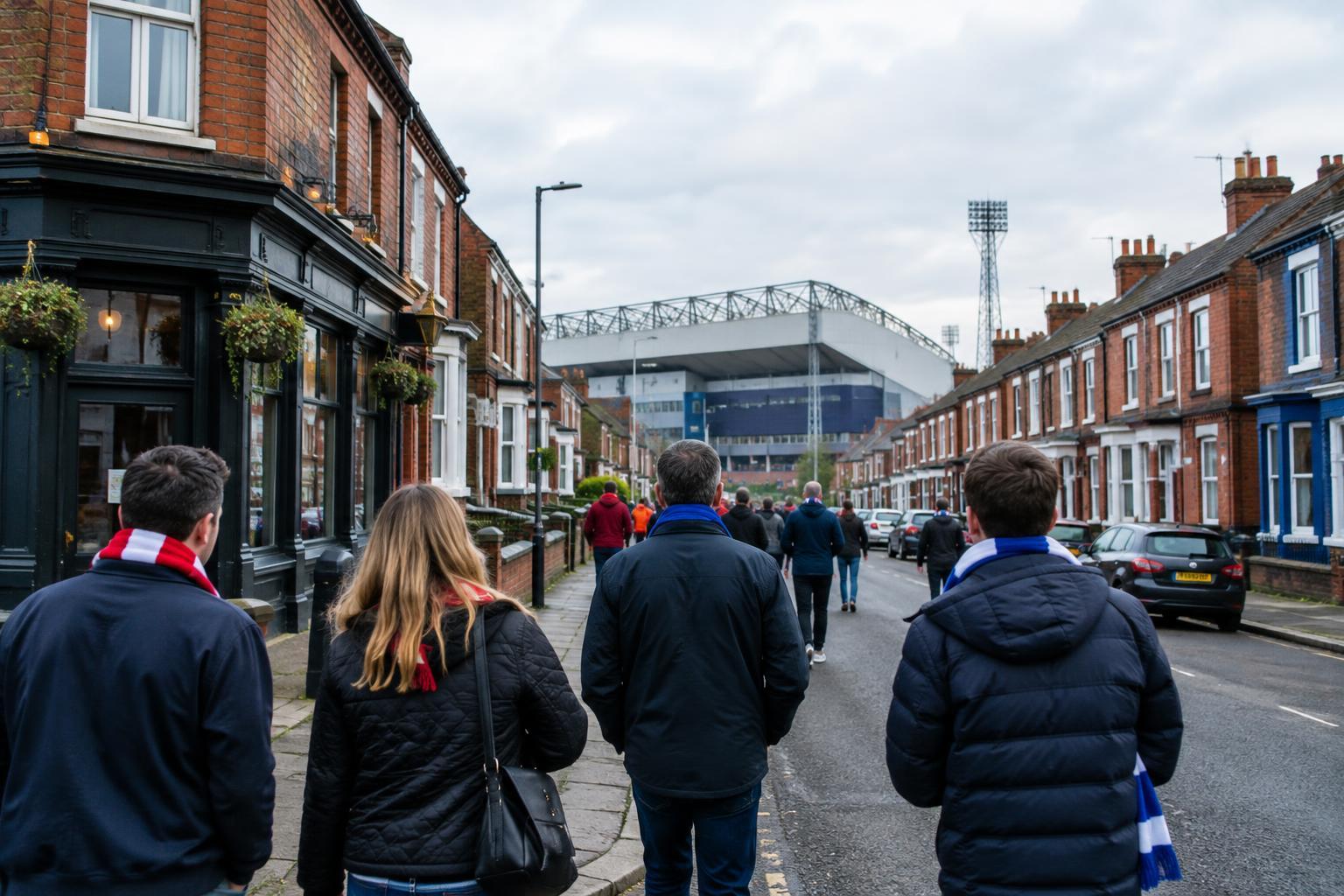
Start with Liverpool’s two football neighbourhoods
Liverpool is a rewarding city to explore through football because its best-known grounds are part of residential neighbourhoods, not isolated entertainment districts. Anfield lies northeast of the centre, while Goodison Park stands across Stanley Park in Walton. Looking at both on a map helps explain the clubs’ long, intertwined histories and gives you a more grounded visit than a quick photograph at each stadium.
Make the city centre your practical base if you are arriving by train or staying overnight. Liverpool Lime Street is a useful starting point for onward travel, and the central area offers places to eat before you head toward the grounds. Leave time for the journey back, especially after a match, when crowds can make the trip slower than it looked on the way in.
Plan Anfield around the experience you want
Anfield is Liverpool FC’s home and a working stadium, so a matchday visit and a non-matchday visit feel very different. For a match, check the club’s current ticket and entry information directly, and note which entrance applies to your seat. Security checks, road restrictions and busy pavements can all add time. Arriving early also lets you take in the streets around the ground without rushing past the people who live there.
If you do not have a match ticket, a stadium tour or a walk around the exterior can still make a worthwhile trip. Tours and access may change around fixtures or other events, so verify availability before travelling. Keep entrances and residential doorways clear when stopping for photographs, and treat the surrounding streets as a neighbourhood rather than an open-air museum.
Visit Goodison Park as part of the city’s football history
Goodison Park was Everton’s long-standing men’s first-team home, making it an important stop even though it is no longer the place to assume you will see an Everton men’s home match. Check Everton’s current venue information before building a trip around a fixture, tour or other access to the ground. A historic stadium can remain meaningful to visit without offering the same experience it once did on a Saturday afternoon.
The walk between Goodison Park and Anfield through the Stanley Park area is a useful way to grasp how close the two grounds are. Allow time for crossings and for finding your way at either end; do not treat a map’s straight-line distance as a promise of a quick walk. In daylight, the park also gives you a pause between two busy sets of streets. Use signed paths and check park access and conditions if you plan to cross later in the day.
Choose transport that leaves room for crowds
From central Liverpool, local buses are often the most direct public-transport option for the stadium areas. Routes and matchday arrangements can change, so check a current journey planner and the relevant club’s travel guidance before setting off. Merseyrail can also get you part of the way: Sandhills is one station visitors may consider for Anfield, and Kirkdale is an option for the Goodison Park area. Neither should be mistaken for a stadium entrance; expect a further walk or a connection.
After a match, be patient with queues and consider walking a little way before choosing your onward route, where it is safe and permitted to do so. A taxi or rideshare may not save time beside a crowded ground, and pickup points can be affected by traffic controls. If you are driving, look up current parking rules rather than assuming a nearby residential street is available. Public transport or a planned walk is usually simpler for a first visit.
Build a day that works without a fixture
A football trip need not depend on getting into a stadium. You could spend a morning in the centre, travel to one ground, walk toward the other via Stanley Park, then return for an evening meal. That plan leaves space to notice the clubs’ place in everyday Liverpool: the scale of the stands, the surrounding houses and the distance supporters travel on foot.
Pack for a changeable day with comfortable shoes and a light waterproof layer. If you are attending a match or tour, check the venue’s current bag policy before leaving your accommodation. Most importantly, keep your schedule flexible. A Liverpool football visit is better when there is time to navigate, stop and take in the neighbourhoods, rather than trying to race between landmarks.