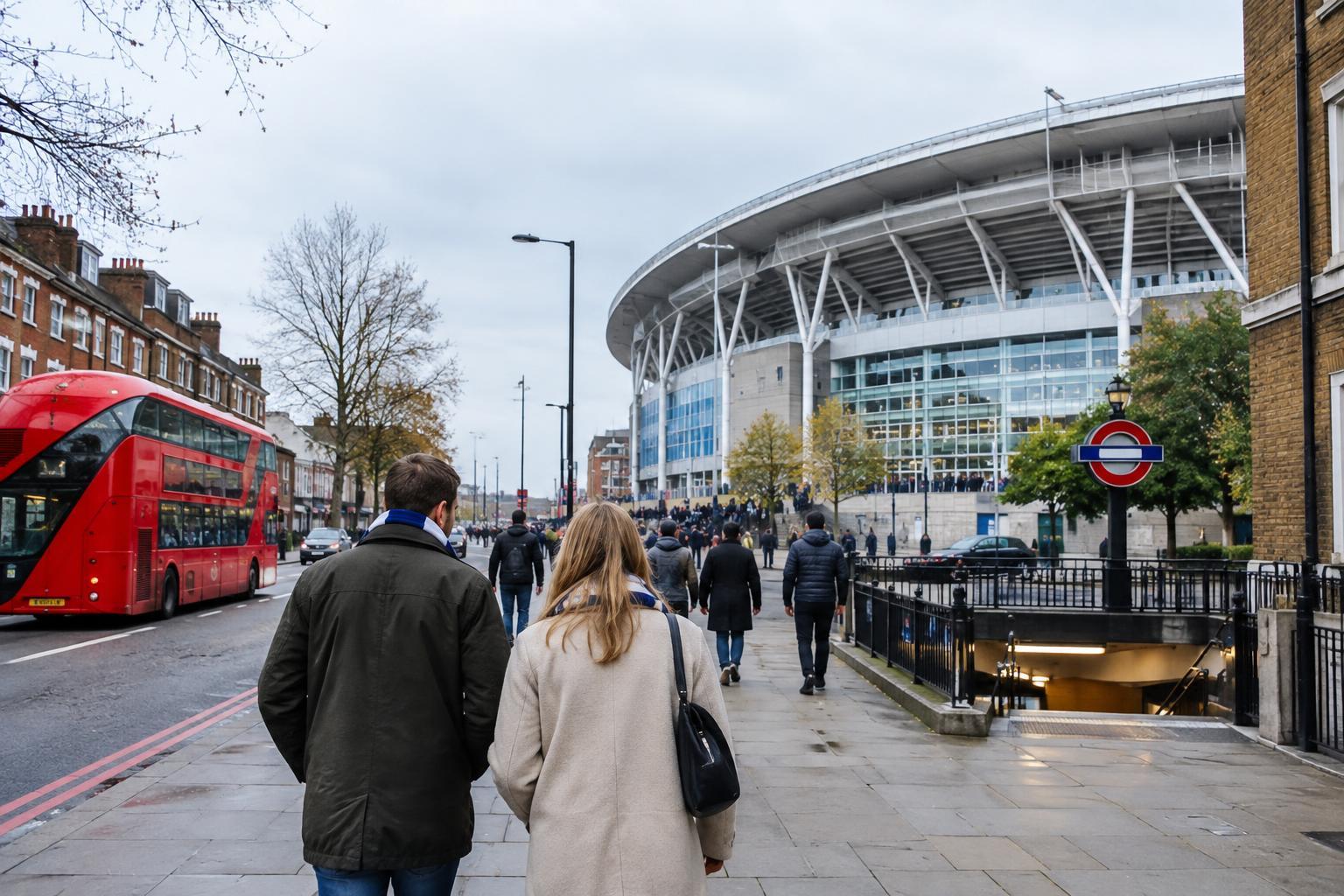
Choose your base around the match that matters most
There is no single best neighborhood for a London football trip. Clubs and grounds are spread across the capital, and a hotel described as “central” may still be a long journey from the match you came to see. Start with your main stadium, note which part of London it occupies, and work outward. Arsenal and Tottenham are in north London; Chelsea and Fulham are in the west; West Ham is in the east; Crystal Palace is in the south. Wembley, which hosts a range of football events, sits to the northwest.
If you have one match and want a relaxed day, staying near the ground can make the journey home simpler. If your plans include several grounds or sightseeing across town, a well-connected station may matter more than proximity to any one stadium. Compare the whole trip rather than the straight-line distance on a map: a hotel near a useful rail or Underground connection can be easier than one that looks close but requires several changes.
Match neighborhoods to the rest of your itinerary
King’s Cross and Euston make practical bases for visitors who expect to move around London by public transport, particularly if they also arrive or leave by rail. Waterloo and London Bridge offer other connection-rich starting points, with plenty to explore on non-match days. These areas can be convenient for a mixed itinerary, though they are not necessarily the quickest choice for every ground.
For a trip focused on west London football, look at neighborhoods around Hammersmith or Fulham as well as more central options. Stratford may suit an east London match and offers connections for exploring elsewhere. For a north London fixture, compare routes from candidate hotels to the particular stadium rather than assuming all northern neighborhoods are interchangeable. Accommodation prices, street noise and the feel of an area can vary even within a short walk, so inspect the immediate surroundings as well as the station name.
Plan from your door to the correct stadium entrance
A useful match-day route has four parts: your accommodation to a station, the cross-city journey, the walk to your entrance, and the return trip. Search for the entrance or stand shown on your match information, not just the stadium’s central map pin. Large grounds can have approaches on different streets, and the nearest station may not be the most convenient one for your gate.
London journeys often combine Underground, Overground, National Rail, buses and walking. A route with one comfortable change may be preferable to a theoretically faster journey with several tight connections. Check the operator’s latest service information before setting out, especially if you are travelling in the evening or on a weekend. Keep a second route in mind in case a station is busy or a service is disrupted. Contactless payment is widely used on London transport, but check the payment and fare rules for the services you intend to take.
Allow for the crowd, not just the timetable
The journey to a ground may feel straightforward until the final stretch, when supporters converge on a few pavements, crossings and station exits. Give yourself time to find the entrance, pass any checks and take in the area without rushing. If you want to visit a pub or food spot beforehand, confirm its location relative to your route; crossing to the other side of a stadium can take longer than expected in a crowd.
After the match, nearby stations may be busy and pedestrian routes may be managed differently from the way in. Follow local signs and staff directions rather than relying only on the route you used earlier. If you are not in a hurry, walking to a station farther from the ground or pausing for food may make the return more comfortable. Be especially careful with a late train or other fixed departure: leave a generous margin rather than assuming you can board the first service.
Build a football day with room to wander
A London football trip is more enjoyable when it is not packed minute by minute. Explore the neighborhood around the ground, but remember that residential streets are part of someone else’s daily life. Keep entrances clear, dispose of rubbish properly and be considerate when taking photographs. Club shops, stadium tours and nearby attractions may have different access arrangements on match days, so check directly before making them the centerpiece of your plan.
For a multi-match visit, group activities by area where possible. A west London afternoon before a west London fixture will usually feel calmer than crossing the city twice for a short stop. Save a flexible window for the unexpected: a longer walk, a transport change or a conversation that makes the trip memorable. The aim is not to master every route in London, but to choose a sensible base and give each football day enough breathing space.