The meal is part of the journey
A football match rarely begins when the teams walk onto the pitch. For many supporters, it starts with a familiar journey, a meeting place and something to eat. The food may be simple: a hot snack eaten standing up, a sandwich carried toward the ground or a meal at a table before the crowd gathers. What matters is the routine around it. Eating gives friends time to catch up, visitors a chance to settle into the city and everyone a reason to pause before the noise of the match.
These routines vary even within the same city. Some groups prefer to eat close to the stadium; others meet in a neighborhood they know and travel to the ground together. An away supporter might have a completely different route. Rather than looking for one supposedly definitive matchday dish, notice how people use food to mark time: the early lunch, the stop on the way in and the late bite before heading home.
What a stall can tell you about a place
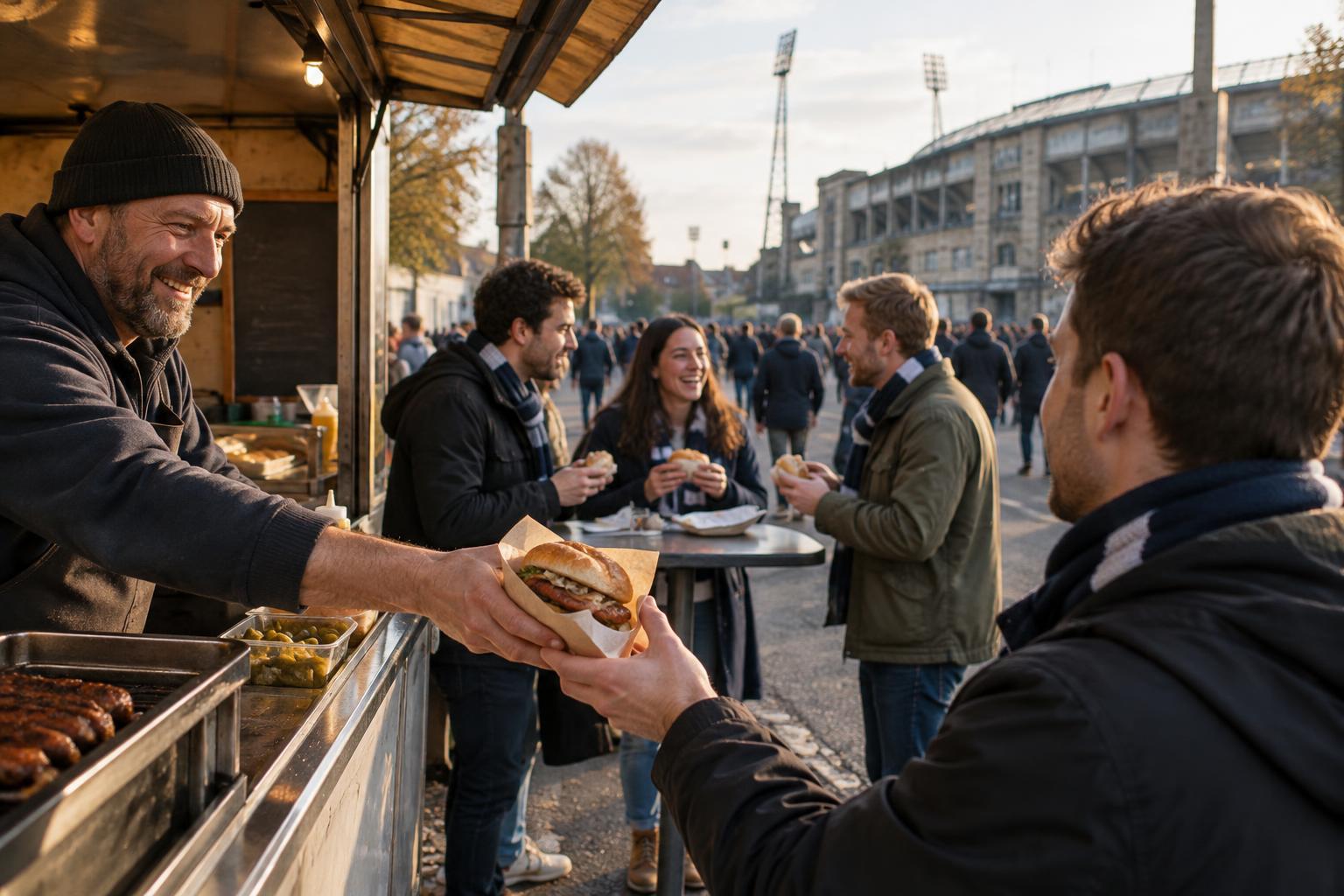
Food stalls suit matchday because they work at the pace of a moving crowd. You can often order quickly, eat without a reservation and carry on toward the stadium. In one city the natural choice might be a filled roll; elsewhere it could be a grilled snack, a savory pastry or a local street-food specialty. The exact menu depends on the neighborhood, the venue and the people serving it. A stall near a ground is not automatically a long-standing supporter institution, but one that draws returning customers may become part of their personal matchday map.
If you are visiting, leave time to look before joining a queue. Check the menu and prices, and decide whether you can eat comfortably before reaching the entrance. A busy stall is not a guarantee of quality, but it can show you what is practical for people heading to the match. Keep the queue moving, have a payment method ready and step aside to eat. Small courtesies matter when the space around a ground becomes crowded.
Shared meals create room for conversation
A sit-down meal offers something a quick snack cannot: time. Supporters can talk through the journey, compare memories of earlier matches or welcome someone attending for the first time. Food can also make a mixed group easier to bring together. Not everyone knows the chants or the club’s history, but most people can join a conversation about what to order and where to go afterward. The table becomes a meeting point before everyone moves into the stands.
For a visitor, a meal with local supporters can be a generous introduction to their routines, but it should not be treated as a performance arranged for tourists. Listen more than you direct the conversation, and let people choose how much football they want to discuss. If you are planning a group meal yourself, agree on a place and meeting time that leave enough margin for travel and entry. The best pre-match meal is less enjoyable if the whole table spends it watching the clock.
Try local favorites without chasing a checklist
A football trip is a good opportunity to taste something associated with the host city or region, but local food is not confined to the stadium perimeter. Bakeries, markets, cafés and modest restaurants may fit your schedule better than a stand on the busiest route. Ask for recommendations if the conversation arises naturally, and be open to different answers. One supporter’s essential stop may be another’s occasional treat; habits can change with budget, company and the weather.
Choose what suits you rather than ordering a dish just because it appears in a travel guide. If you have dietary needs, check ingredients directly with the seller when possible, especially for sauces, fillings and shared cooking equipment. A simple fallback snack can be useful if your options near the ground are limited. Enjoying local food does not require taking a risk with something you cannot eat.
Plan around the match, not just the menu
Food is easiest to enjoy when it has a place in the day’s plan. Check the route to the stadium, allow for queues and consider whether your group would rather eat before traveling or after arriving nearby. Stadium rules on bringing in food and drink can differ, so check the venue’s guidance rather than assuming you can carry leftovers inside. Keep your bag manageable and dispose of packaging where it belongs, particularly on crowded residential streets.
After the final whistle, a shared meal can give a trip a gentler ending. It offers a chance to talk about the match while the immediate rush disperses, provided the choice of venue also works with your journey home. Whether you find a memorable local specialty or simply return to a convenient counter, the tradition lies in making room for each other. Matchday food is at its best when it connects the game to the people and streets around it.