Start with the route, not the price per gigabyte
Mobile data becomes especially useful on a football trip when plans change: a delayed train, a new meeting point, a stadium entrance you cannot find or a ticket that needs to load in an app. Before buying anything, list every country you expect to visit, including transit stops where you might need a connection. Then estimate how you use your phone. Messaging and maps generally need less data than video calls, streaming or uploading long clips from the stands.
Look beyond the headline price of each option. Check which countries are covered, how long the allowance lasts, whether the advertised data amount is a total allowance or a daily limit, and what happens when you use it up. If you plan to share a connection with a laptop or another traveller, check whether hotspot use is allowed. The cheapest plan on paper is not much help if it stops working at your next border.
Roaming: the simplest choice when your home plan fits
Roaming lets you keep using your existing SIM, number and usual messaging setup. There is no new profile to install and no need to swap a tiny card at a station. For a short trip with modest data needs, that convenience may be worth paying for. Start by checking your provider’s terms for each destination rather than assuming that a regional label covers your full itinerary.
Pay particular attention to data limits, fair-use rules and charges once an allowance is exhausted. Coverage and pricing can differ between nearby countries, so check every leg of the trip, not just the first match city. If your provider offers a travel pass, compare its validity period with your travel dates. A pass that expires midway through the journey can leave you paying a different rate just when you are trying to navigate home.
Travel eSIMs: convenient, but check the details
A travel eSIM is a digital mobile plan installed on a compatible phone. Many travellers like it because they can arrange data before departure without removing their home SIM. A regional eSIM may be particularly handy when a trip includes several countries, but read its actual destination list: “Europe” does not necessarily mean every stop on your route. Confirm that your phone supports eSIMs and is not locked to a provider before purchasing.
Many travel eSIMs provide data only, rather than a local number for calls and texts. That can suit a trip organised through messaging apps, but it matters if an accommodation host or ticketing service expects a conventional call or SMS. You may be able to keep your home SIM active for those messages while using the eSIM for data, depending on your phone and plan. Check which line is selected for mobile data and whether your home line might incur roaming charges.
Local SIMs: useful when you stay longer
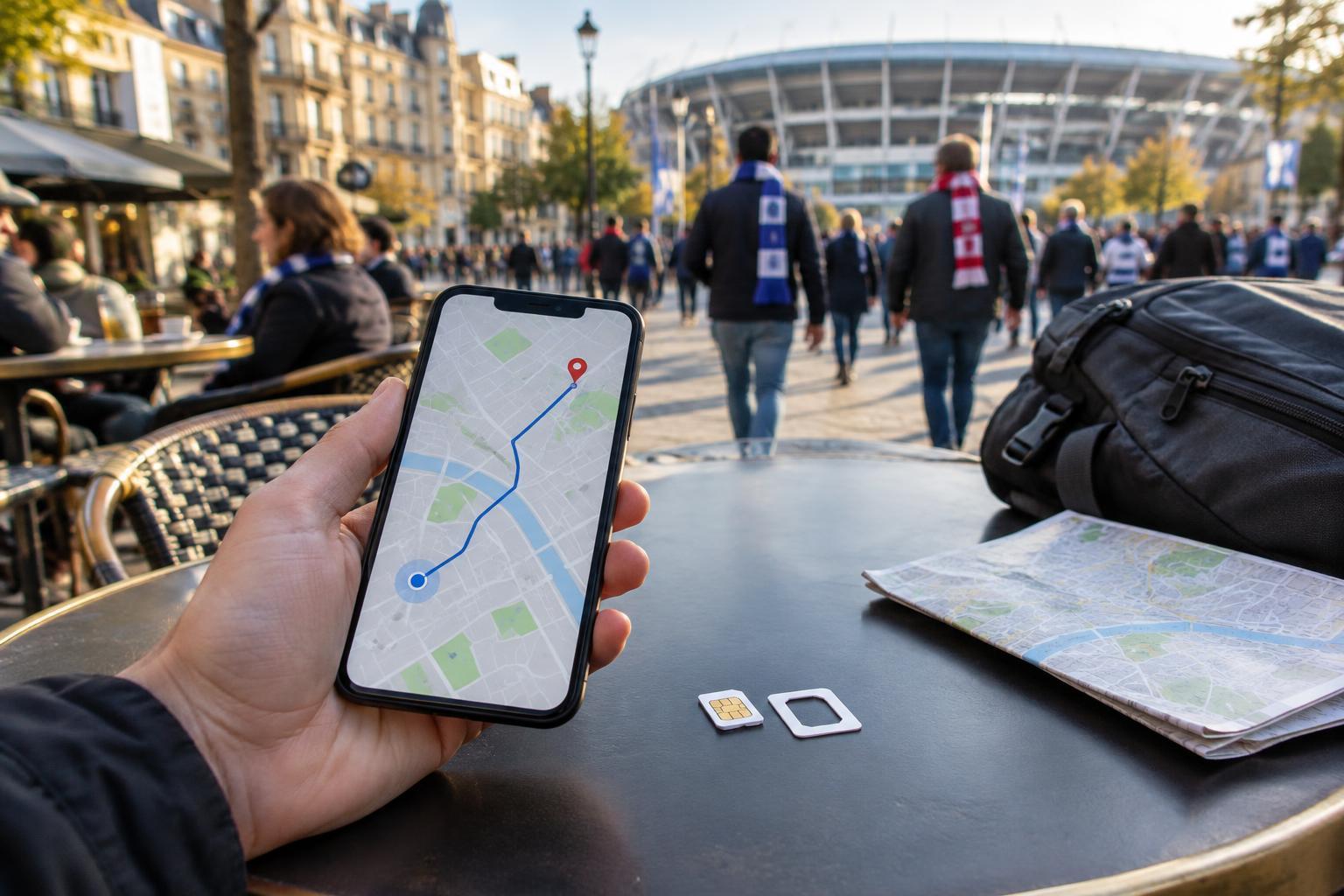
A local physical SIM can make sense if you will spend most of the trip in one country and want a plan intended for use there. It may also offer a local number, though inclusions vary. The trade-off is setup time: you need a compatible, unlocked phone, a place to buy the SIM and a way to activate it. Some sellers or providers may require identification, so check the purchase requirements for your destination.
For a fast-moving itinerary, a local SIM may be less convenient than it first appears. Its allowance might not cover your next country on the same terms, and changing SIMs can temporarily take your usual number out of service. Keep your home SIM somewhere secure if you remove it. If you depend on SMS codes to access bookings or accounts, work out how you will receive them before making the swap.
Set up a backup before match day
Whichever option you choose, prepare for a patchy connection around busy transport hubs and stadiums. Download offline maps for the cities you will visit, save accommodation details and keep essential booking information accessible without data where permitted. If entry uses a mobile ticket, follow the issuer’s instructions: some tickets must be opened in an app and may not work from a screenshot. Charge your phone before travel days and pack a suitable charging cable and power bank.
Finally, test your setup while you still have reliable Wi-Fi. Install an eSIM according to its activation instructions, confirm your phone’s data-line and roaming settings, and save your provider’s support details. A sensible choice is the one that covers your actual route, keeps any essential number reachable and leaves enough room in the budget for the rest of the trip.