Plan for the purchases a matchday brings
A football trip rarely involves one large payment and nothing else. You may buy a train ticket in the morning, stop for food near the ground, pay for transport after the match and pick up something from a small shop on the way back. Thinking through those ordinary purchases makes it easier to choose what to carry.
Do not assume every place will accept the same payment method. Card acceptance can vary between cities, venues and individual traders. Stadium rules may also differ from those of nearby businesses. Before you leave, check the payment information published by the places you expect to use, especially the stadium and any transport service you plan to rely on. Treat that information as a guide, not a reason to travel with only one way to pay.
Carry cash for gaps, not for everything
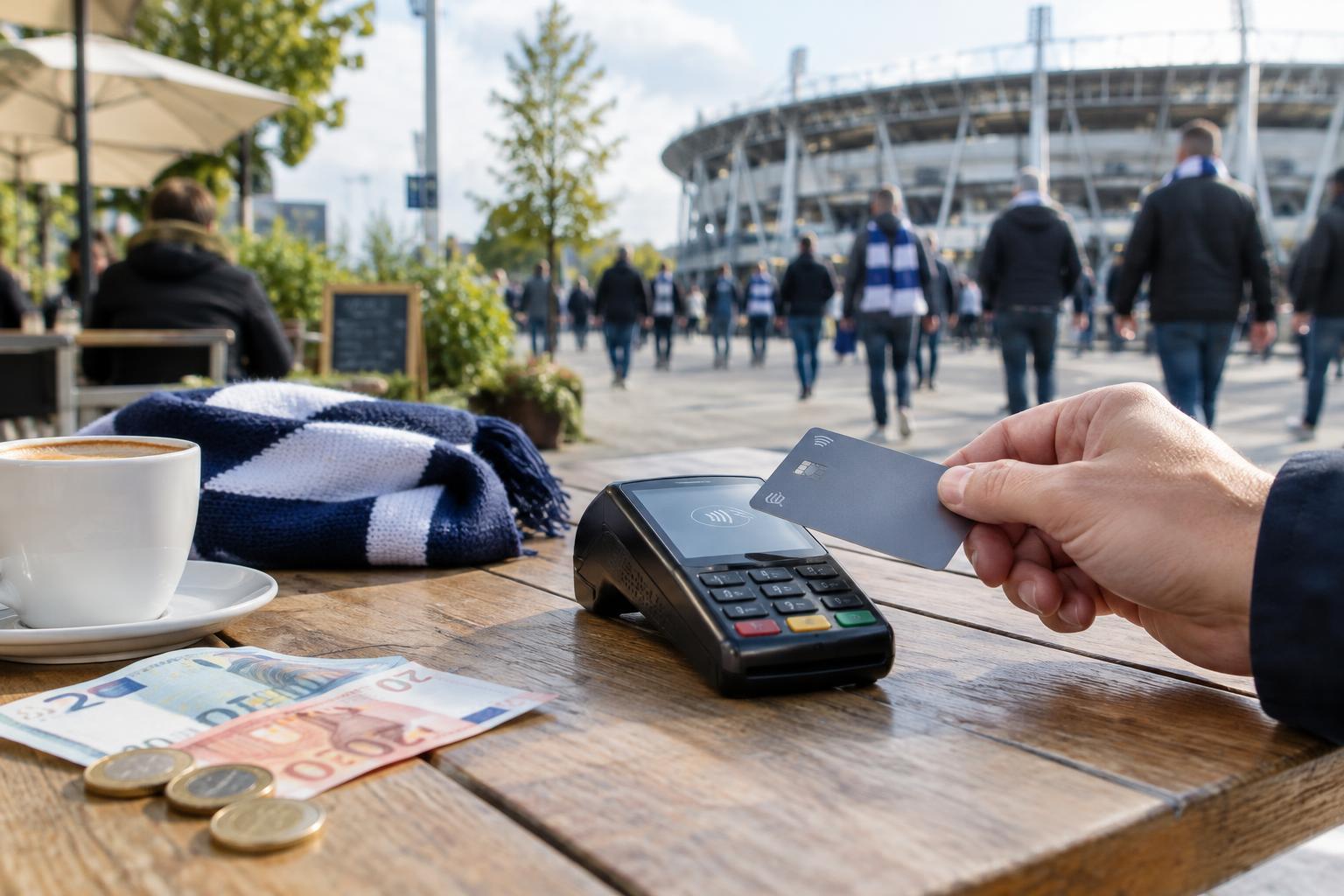
A modest amount of local currency is useful when a card terminal is unavailable, a small purchase is cash-only or you need to pay quickly without sorting out a declined transaction. Cash can also help you keep a simple limit on incidental spending. You do not need to carry your entire trip budget in notes; an amount suited to a meal, a short journey and a few small purchases is often a more manageable backup.
Work out which currency your destination uses before departure. If you exchange money or withdraw it after arrival, look at the displayed fees and exchange terms before confirming. Keep smaller notes where practical, since a trader may struggle to make change for a large one. Split your cash between a readily accessible pocket or wallet and a more secure place, and avoid taking more to the match than you are comfortable carrying in a crowd.
Get your cards ready before you leave
Check that your card is valid for the full trip and that you know its PIN. Contactless payments can be convenient at busy counters, but a terminal may occasionally ask you to insert the card and enter the PIN instead. In your banking app or account settings, review any controls for overseas purchases, cash withdrawals and payment notifications. If you are unsure whether travel needs to be registered with your provider, ask before departure.
Consider taking a second payment method and keeping it separate from your everyday wallet. If one card is lost, damaged or temporarily declined, that separation gives you another option. Save the provider’s card-freezing and support details somewhere you can reach without the missing card. A phone wallet can be useful too, but it depends on your device having power and being accepted by the terminal; it works best as part of a plan rather than the whole plan.
Pay attention to currency and terminal prompts
When paying abroad, a terminal or cash machine may offer to convert the amount into your home currency. That can feel reassuring because you see a familiar figure, but the conversion terms may differ from those used when you pay in the local currency. Read the screen rather than tapping through automatically, and check your card provider’s foreign transaction and withdrawal fees in advance. The cheapest option depends on your card and the terms offered at the point of payment.
At a crowded counter, take a moment to confirm the amount and currency before you tap. Keep your card in sight where possible, and put it away before moving on. Payment alerts, if your provider offers them, can help you notice an unexpected charge. You can also keep receipts for larger purchases until you have checked your account. None of this needs to slow down every coffee purchase; it is simply a useful routine when you are paying in unfamiliar surroundings.
Make a simple matchday payment plan
The easiest system is one you can remember when the streets are busy and your group is moving. Carry one accessible card, a small amount of local cash and a separate backup payment method. Charge your phone before leaving your accommodation, particularly if it holds your transport ticket, directions or mobile wallet. If you are travelling with others, agree how you will handle shared costs such as taxis or food before everyone heads in different directions.
Finally, check what you will actually be allowed to bring into the ground. Bag restrictions can affect where you carry a wallet, and a venue’s payment policy can shape how much cash you need that day. Preparing for a few ordinary problems—a flat phone, a rejected tap or a cash-only purchase—lets you spend less time troubleshooting payments and more time enjoying the trip.