Start with the stadium, not the postcard
Paris can look compact on a map, but a football trip may take you well beyond the streets you expect to explore as a visitor. The first planning question is which ground you are visiting. Parc des Princes is in western Paris, near the edge of the 16th arrondissement. Stade de France is north of the city in Saint-Denis. Both are reachable by public transport, but they call for different routes and different amounts of time.
Before choosing a hotel or arranging a pre-match meal, note the stadium entrance on your ticket or event information. A ground may have several approaches, and the closest station on a map is not always the most convenient for your gate. Treat journey estimates as a starting point rather than a promise: walking through a busy station, finding the right exit and moving with a crowd all add time.
Getting to Parc des Princes
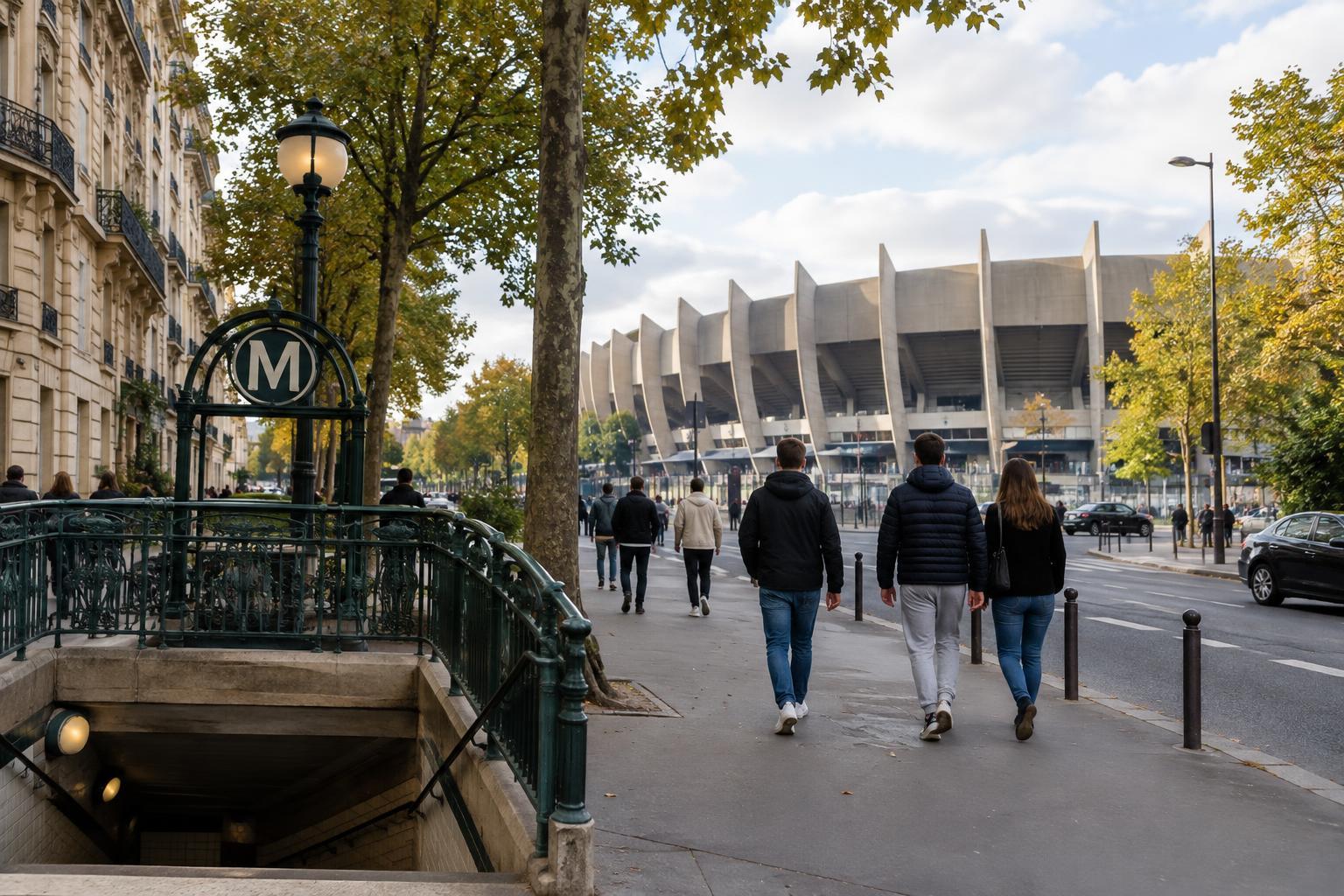
Parc des Princes stands in the Porte de Saint-Cloud area, west of central Paris. Porte de Saint-Cloud on Métro line 9 is a useful station for many approaches to the ground. Porte d’Auteuil on line 10 may also suit your route or stadium entrance. If you are staying elsewhere in the city, work backwards from those stations and check whether your journey involves a change of line.
The area around the stadium is more residential than the postcard centre of Paris. That makes it worth deciding where you want to spend the hours before a match. You could explore another neighbourhood first, then travel west with a generous buffer, rather than expecting every part of the day to happen beside the ground. On arrival, follow event signs and staff directions; matchday access arrangements can differ from an ordinary day.
After the game, nearby platforms can be crowded. If you do not need to leave immediately, a short walk away from the busiest station entrance may make the journey feel less rushed. Check your onward route before kickoff, especially if you have a late connection.
Planning for Stade de France and Saint-Denis
Stade de France is in Saint-Denis, outside the central Paris districts where many visitors stay. It has several rail approaches, including La Plaine–Stade de France on RER B, Stade de France–Saint-Denis on RER D, and Saint-Denis–Porte de Paris on Métro line 13. Each involves a walk to the stadium. The best choice depends on your starting point, your entrance and any service changes on the day.
Do not assume that travelling to Stade de France is simply the same as crossing central Paris on the Métro. RER trains have different stopping patterns, and a route that looks direct may require you to identify the correct platform or train. Check the journey shortly before setting out, then allow time to orient yourself after leaving the station. For the return, save your hotel address and a backup route offline in case mobile reception is slow in a crowd.
If you want to spend time in Saint-Denis before the event, plan that as a deliberate stop rather than an accidental wait outside the stadium. Check opening hours for anywhere you hope to visit, and leave enough time to pass through the event’s entry checks.
Build a day that leaves room to enjoy Paris
A good football itinerary has three anchors: where you will spend the daytime, when you need to reach the stadium, and how you will get back. Group daytime stops in one area instead of crossing the city repeatedly. For a Parc des Princes visit, you might finish your sightseeing on the western side of Paris; for Stade de France, consider which RER or Métro connection is easiest from your last stop. The quickest-looking route is not always the calmest one if it involves several changes.
Pack for a day on foot: comfortable shoes, a charged phone, a small layer for changing weather and only what the venue permits. Check the event’s bag rules and entry details directly before travelling, since they may vary. Keep your transport payment method accessible, but put valuables away before joining a dense queue.
Finally, resist scheduling a tight dinner reservation or departure immediately after the match. Leaving a full stadium takes time, and the journey is part of the experience. With a clear route and a little flexibility, you can give both the football and the city the attention they deserve.