Start with the people, not the picture
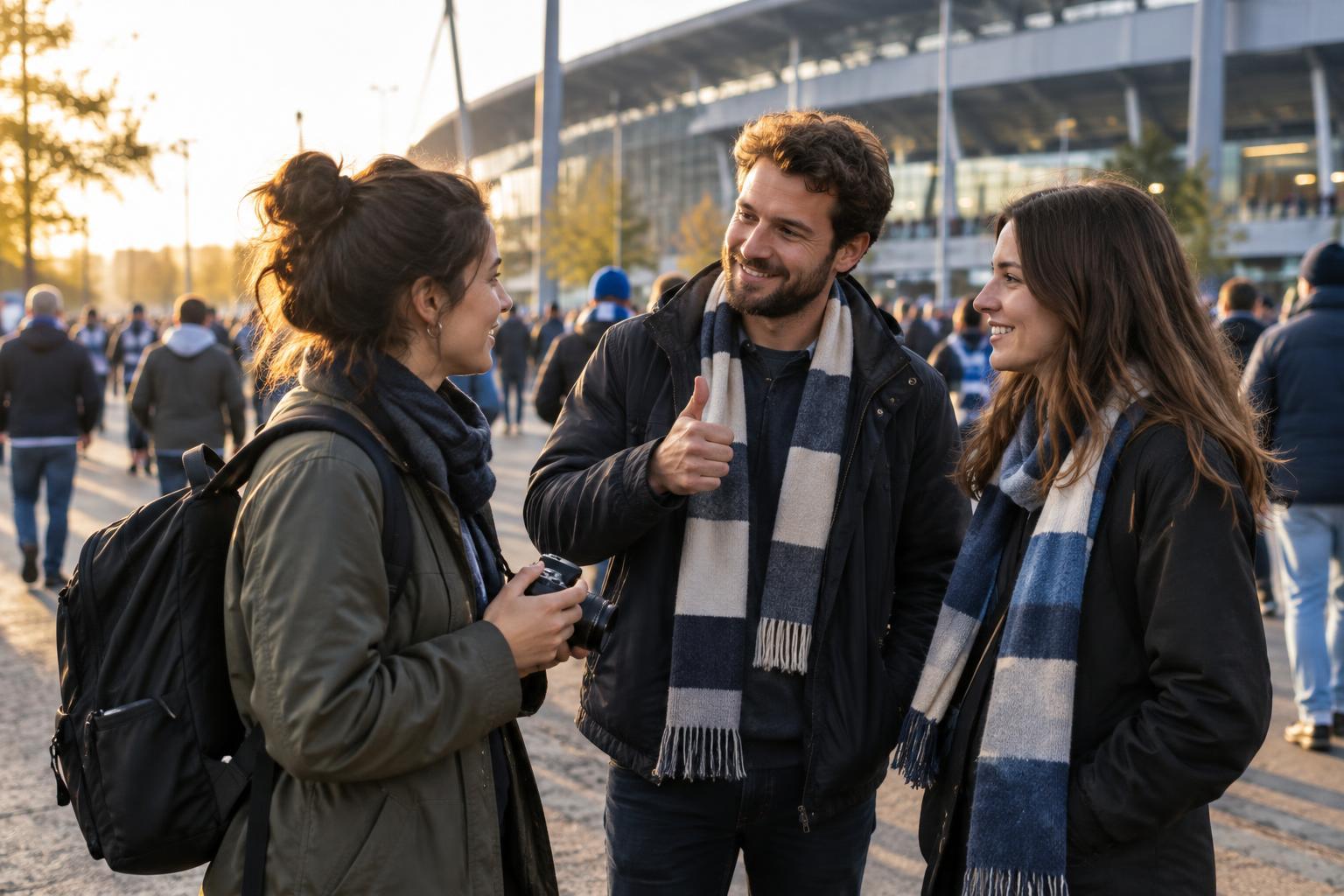
A football trip can fill a camera roll before you reach the ground: scarves outside a café, friends greeting each other at a station, a crowd moving towards the turnstiles. Those images may help you remember the day. For the people in them, though, it is an ordinary part of their lives, not a scene arranged for a visitor. That difference is worth keeping in mind whenever you lift a camera.
A useful starting question is whether you are recording the atmosphere or making a particular person the subject. A wide view of a street or stand is different from a close-up of someone’s face, clothing or reaction. The more identifiable and central a person is, the more reason you have to ask first. A warm expression, a shared team colour or an eye-catching banner is not, by itself, permission.
Make asking easy, and accept the answer
When someone is the focus of a photograph, approach without blocking their way and ask plainly: “Would you mind if I took a photo?” If you hope to publish it in a travel story or on social media, say so before taking it. A person might be happy to pose for a private souvenir but not want the image shared with strangers. Do not treat a smile at the camera as agreement to every later use.
Give people room to say no. A quick refusal, a turned shoulder or an uncertain look is enough reason to lower the camera. There is no need to persuade them or ask why. If a photo has already been taken and someone asks you to delete it, doing so is usually the simplest way to show respect. When language is a barrier, gestures can help, but uncertainty is a reason to leave the portrait untaken rather than guess.
Group scenes need care too. One person agreeing cannot speak for everyone beside them. If a group is small enough for individual faces to be the point of the image, check that everyone is comfortable. Otherwise, step back and photograph details or the wider setting without singling anyone out.
Protect privacy beyond the stadium gate
Supporter culture often extends into streets, trains, pubs and neighbourhood squares. These spaces can feel public without feeling like a photo opportunity to the people using them. Avoid photographing private conversations, someone eating, or a person resting between parts of a long matchday. Be especially cautious around children: ask a parent or guardian before taking a focused picture, and consider whether the image needs to be taken at all.
Think about what a picture reveals when posted online. A face, location and timestamp together can identify where someone was. A ticket, travel document, phone screen or name badge may expose information the person did not mean to share. Before publishing, check the background as carefully as the subject. Cropping, blurring or choosing another frame can preserve the memory without passing on unnecessary details.
Rules about photography can vary by venue and event, so read the conditions that apply where you are. Permission to enter with a camera does not settle the separate question of whether a photograph is considerate. Venue rules and personal boundaries both matter.
Know which moments are better left unrecorded
Some moments call for help, space or discretion rather than a lens. Put the camera away around medical incidents, distress, arguments and confrontations. An emotional reaction after a match may look like a powerful image, but a stranger’s disappointment or vulnerability is not automatically yours to keep. Avoid turning intoxication or embarrassment into a souvenir, even if others nearby are filming.
Cameras can also change what is happening. Pushing forward for a close shot may obstruct a walkway, interrupt a chant or draw unwanted attention to someone trying to pass quietly. If taking the picture would require you to crowd a person, cross a barrier or ignore a request from staff, let it go. Missing a photograph is a small cost compared with making the space less comfortable or safe for others.
Bring home a fuller story
Respectful photography can make a football travel notebook more interesting, not less. Photograph the routes you walked, the approach to the ground, hand-painted signs, scarves laid out for a group picture or the view from your seat where photography is permitted. These details can recall the mood of a day without relying on an unsuspecting stranger’s face.
After the trip, edit with the same care you used while shooting. Ask whether each image tells a fair story and whether the people in it would reasonably expect to be shared. Keep images you are unsure about for yourself, or leave them out. The best record of supporter culture is not necessarily the largest collection of close-ups; it is one that remembers the people who made the experience possible as people.