Start with the stadium, then shape the day
Porto is compact enough to make sightseeing and football part of the same day, but its hills can make distances feel longer than they look on a map. The two stadiums most visitors are likely to seek out are FC Porto’s Estádio do Dragão, east of the historic centre, and Boavista FC’s Estádio do Bessa, west of it. They suit different approaches: use the Metro for the Dragão, and consider a walk through the Boavista district for the Bessa.
Before building an itinerary, confirm the fixture, venue, kick-off time and entry arrangements through the club’s official channels. Match details and access procedures can change. Check the entrance printed on your ticket rather than assuming that the nearest side of a stadium is where you need to go. If you hope to take a stadium tour, check its availability separately; match days and other events may affect visits.
Getting to Estádio do Dragão
The Metro is the simplest starting point for many visitors heading to Estádio do Dragão. The station named Estádio do Dragão serves the ground, so the last part of the journey is a short walk rather than a cross-city search. From central Porto, Trindade is a useful interchange. Check the destination shown on the platform and train, as not every service on a shared stretch of track continues to the stadium.
For a gentle pre-match walk, spend time around Avenida dos Aliados, São Bento station or the streets near Bolhão, then join the Metro instead of trying to walk the entire way. There are interesting everyday streets between the centre and the ground, but the route is less direct and less scenic than Porto’s best-known riverside walks. Allow extra time near kick-off for station queues, crowds outside the ground and finding the correct gate.
After the match, the stadium station may be busy. If you are not in a hurry, wait nearby for the first rush to ease rather than expecting an immediate train. Keep your return plan flexible, especially if the match finishes late: check the operating information for the day rather than relying on a timetable remembered from an earlier trip.
Walking towards Estádio do Bessa
Estádio do Bessa sits within the Boavista area rather than beside Porto’s riverfront landmarks. Casa da Música makes a useful orientation point: from there, a walk along and around Avenida da Boavista leads into the stadium’s neighbourhood. The final turns depend on your assigned entrance, so check your route before leaving a café or Metro station. Give yourself more time than a map’s walking estimate if you want to stop or if match-day foot traffic is heavy.
This approach offers a different view of Porto from the tiled churches and narrow lanes of the historic centre. Broad avenues, residential blocks and local businesses make the walk feel like a journey into an ordinary city district. It is a good route for travellers who enjoy arriving on foot, but it is not necessary to walk all the way from Ribeira. That longer route includes a significant climb and could leave you tired before the game.
If you are visiting both stadiums on one trip, treat them as separate outings rather than trying to fit both into a hurried pre-match afternoon. Time spent finding entrances and crossing the city is time you cannot spend enjoying either neighbourhood.
A sightseeing walk that fits around football
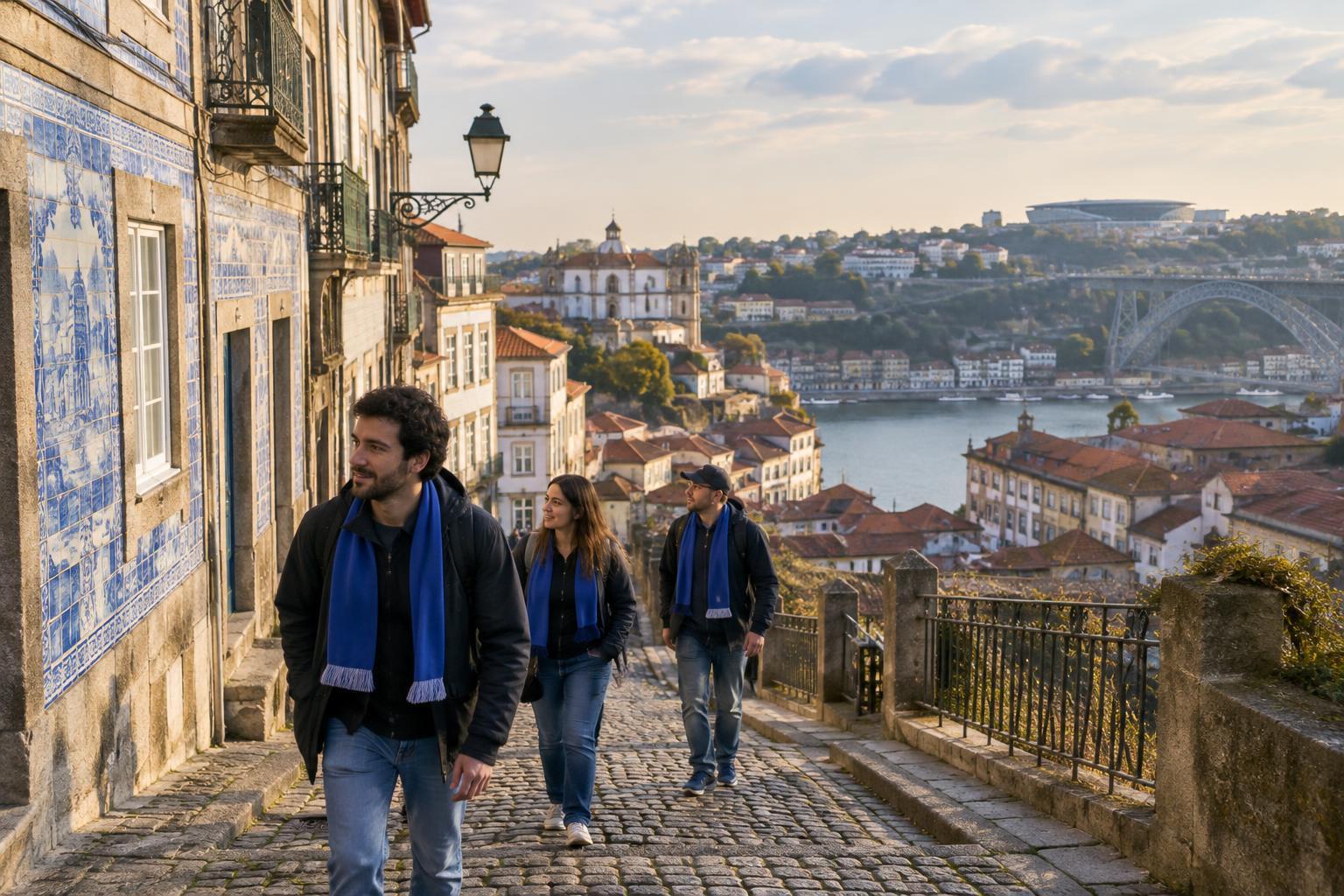
For a first look at Porto, a manageable central walk links São Bento station, Avenida dos Aliados and the streets around Clérigos before descending towards Ribeira and the Douro. It combines major landmarks with plenty of chances to pause. The route is particularly useful on a morning before an evening match, when you can explore without watching the clock at every turn.
Remember that a downhill stroll to the waterfront means an uphill return. If you cross to Vila Nova de Gaia for a view back towards Porto, allow time to get back across the river and reach your stadium transport. You do not need to see every viewpoint on match day. Choose one area to explore properly, then leave a comfortable buffer for food, travel and stadium entry.
Keep the match-day plan light
Comfortable shoes matter in Porto: paving can be uneven, and steep streets reward a slower pace. Carry only what you need, check the stadium’s bag rules, and be ready for changing weather. A small amount of flexibility is just as useful. A crowded Metro platform, a longer-than-expected climb or an inviting café can all alter the timing of a good day without spoiling it.
The best Porto football itinerary is not the one that covers the most ground. It gives you a clear route to the match, time to notice the city along the way, and an easy option for getting back afterwards.