Get your bearings before choosing a route
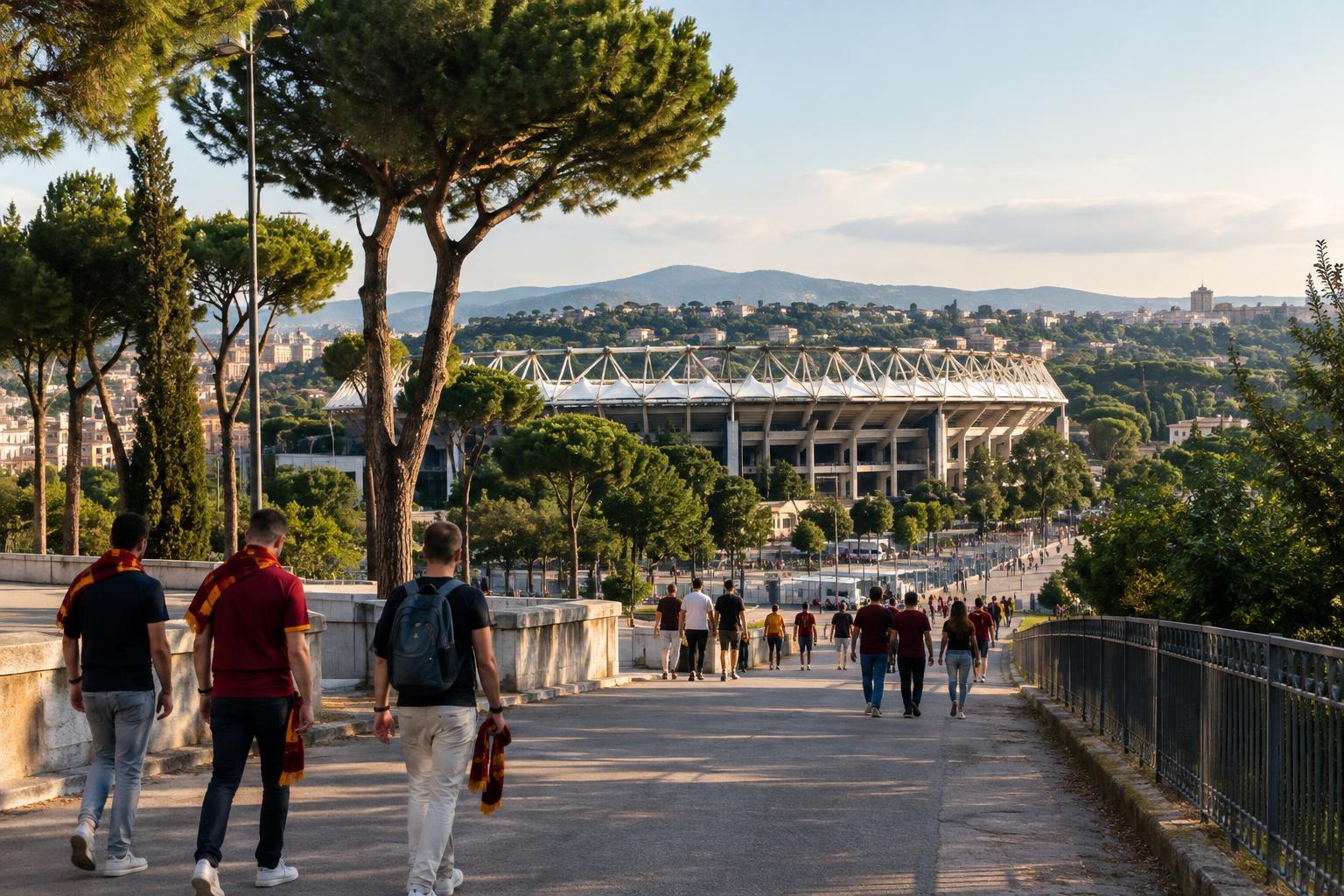
The Stadio Olimpico is in the Foro Italico sports complex, north of Rome’s historic centre and beside the Tiber. It is a home ground for both Roma and Lazio. Although the stadium is a major city landmark, it does not have a metro station at its gates. Expect the last part of most public-transport journeys to be on foot.
Start with your actual entrance, not just a map pin for the stadium. Your ticket or event information may assign a sector and gate, and approaching from the wrong side can mean a long walk around the perimeter. Before setting out, check the event organiser’s access instructions alongside a current public-transport map. Routes, stops and traffic arrangements can change on matchdays.
Reaching the stadium by public transport
One common approach is to take Metro Line A to Flaminio, then use a connecting tram towards Piazza Mancini when that service is running. From the Mancini area, you cross the Tiber and walk towards the Foro Italico. Check the day’s service before relying on this connection: tram routes can be affected by works or event arrangements, and vehicles are likely to be busy close to kick-off.
Buses also serve the surrounding districts, but the most useful line depends on where you start and which entrance you need. A journey planner is more helpful than memorising a single bus number. If you are staying near a Metro Line A station, you may find it simpler to combine the metro with a bus or a longer walk rather than make several changes.
A taxi or ride-hail vehicle can reduce the walking distance earlier in the day, but it is not necessarily the fastest choice immediately before or after a match. Crowds and traffic controls may keep vehicles away from the entrance you want. If you plan to be dropped off, choose a meeting point outside the busiest stadium streets and allow time to walk from there.
Make the walk part of the plan
Walking to the Olimpico can be a good option if you enjoy seeing the city change from central streets to riverside avenues and the broad spaces around the Foro Italico. The final approach is more open than the lanes of central Rome, but distances can be deceptive on a phone map. Bridges, crossings and the position of your gate all affect how long the walk feels.
Wear shoes you would be comfortable standing in as well as walking in. In warm weather, carry water for the journey if permitted under the event’s entry rules; in rain, an extra layer is more useful than assuming the whole route or your seat will be sheltered. Keep your phone charged, but save the name of your entrance and a return-route meeting point somewhere you can access without mobile data.
Build a day that leaves room for Rome
A match at the Olimpico works best as one part of a Rome day, rather than an appointment squeezed between tightly timed attractions. You could spend the earlier hours in a neighbourhood convenient for your route, eat well before the busiest pre-match period, and then travel towards the ground with a generous buffer. That leaves space for a missed connection, queues and finding the correct gate without rushing.
If you want a pre-match gathering place, look for cafés or restaurants along your chosen approach rather than assuming there will be a quiet option immediately beside the stadium. Roma and Lazio matches can bring different supporter routines, and the atmosphere varies by fixture. Be considerate when photographing people and follow local directions around crowded areas.
Staying close to a Metro Line A stop can offer a straightforward starting point for many sightseeing and stadium journeys, though accommodation near the ground may suit someone prioritising a short walk after the match. Compare the return trip as carefully as the outward one, especially if your plans continue elsewhere that evening.
Prepare for entry and the journey back
Before matchday, read the specific event rules for identification, bag size, permitted items and entry times. Do not assume that a policy from another stadium—or even another event at the Olimpico—will apply. Travel light if you can: it makes security checks and a crowded trip home less awkward. Anyone who needs step-free access or other assistance should confirm the appropriate entrance and arrangements with the event organiser in advance.
After the final whistle, nearby stops and roads may be crowded. Decide beforehand whether you would rather join the first wave towards transport or walk a little farther before starting your journey. If travelling with others, agree on a meeting place away from the gates in case you are separated. A flexible return plan lets you enjoy the match without making the last train, bus or connection the most stressful part of your Rome visit.