Start with the experience you want
Choosing where to watch a football match is partly about sightlines, but it is also about how you want to spend the next couple of hours. Do you hope to join songs throughout the game, concentrate on every passage of play, or enjoy the occasion without feeling pressed to participate? There is no correct answer. A memorable matchday might mean singing until your voice fades, or quietly taking in the stadium from a comfortable seat.
Stand names alone rarely tell the whole story. Atmosphere can change from one block to the next, and the character of an area may depend on the home club, the fixture and who has gathered there. Before choosing a ticket, look for the stadium’s seating map and any section descriptions provided by the club or venue. They are more useful than assuming that every end stand is loud or every side stand is calm.
What to expect in a singing section
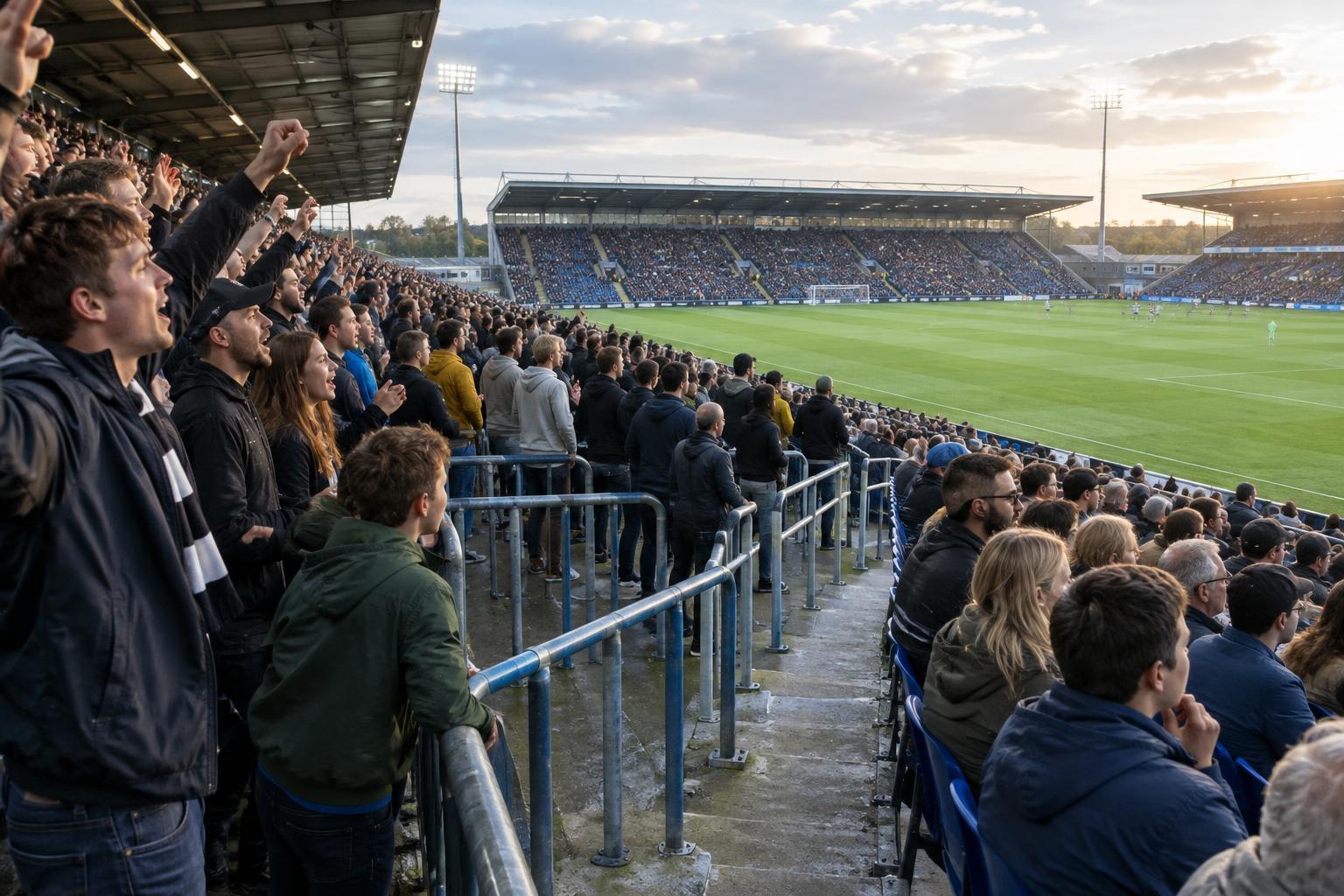
A singing section is often where a group of supporters works to keep chants going, sometimes with flags or coordinated displays. It can be an exhilarating place to feel part of the crowd. It can also be noisy, visually busy and less suited to someone who wants an uninterrupted view. People nearby may stand for long stretches even if the ticket is for a seat, subject to the venue’s rules.
Joining in does not mean you need to know every word. Listening, clapping when it feels natural and following the lead of regular supporters are all reasonable ways to take part. Check any local guidance on flags, bags and displays rather than bringing something you assume will be allowed. If you are visiting as a neutral or following the away team, make sure you understand the ticket’s home or away designation. A home singing section is not the place to visibly support the visitors.
The advantages of a seated stand
A seated stand can be a good choice if you want to follow the shape of the game, talk with a companion or manage your energy across a long travel day. Seats along the side of the pitch may offer a broad view, while those behind a goal can bring you close to moments of sudden excitement. Neither position guarantees a particular mood: a seated block may be lively, and some people will still stand briefly when play becomes dramatic.
Consider more than the angle shown on a seating map. An upper tier can involve stairs, height and a sense of distance; a lower row may put you closer to the action but behind advertising boards or other spectators. If you need step-free access, accessible seating or a specific companion arrangement, use the venue’s published information and booking process. A standard seat in a quieter-looking stand is not a substitute for confirming those needs.
Understanding standing areas
Some stadiums have designated standing areas, sometimes with rails or other features intended to organize the space. Their layout and rules vary by venue and competition, so check what your ticket actually permits. Do not assume that a standing area has an unrestricted view from every position, or that you can move freely to a different spot once inside. Arriving in good time can make it easier to find your place without pushing through a settled crowd.
Think honestly about how long you are comfortable being on your feet. A standing area may be ideal if you enjoy movement and close involvement, but tiring if you have been walking around a host city all day. Footwear matters more than a carefully planned outfit. Wear shoes you can stand in, keep the belongings you carry manageable and check the venue’s bag policy before leaving for the match.
Make a choice that leaves room for the unexpected
If this is your first visit to a stadium, decide which matters most: participation, a reliable place to sit, a particular view or an easier route in and out. Then compare that priority with the actual section details available when booking. Travelling with others? Agree on expectations first. One person’s dream of joining every chant may be another person’s idea of an exhausting afternoon.
Wherever you end up, allow time to find your entrance, follow steward directions and give the people around you room to enjoy the match in their own way. A good atmosphere is not confined to the loudest block. It comes from understanding the setting you have chosen and being comfortable enough to notice what makes that ground, and its supporters, distinctive.