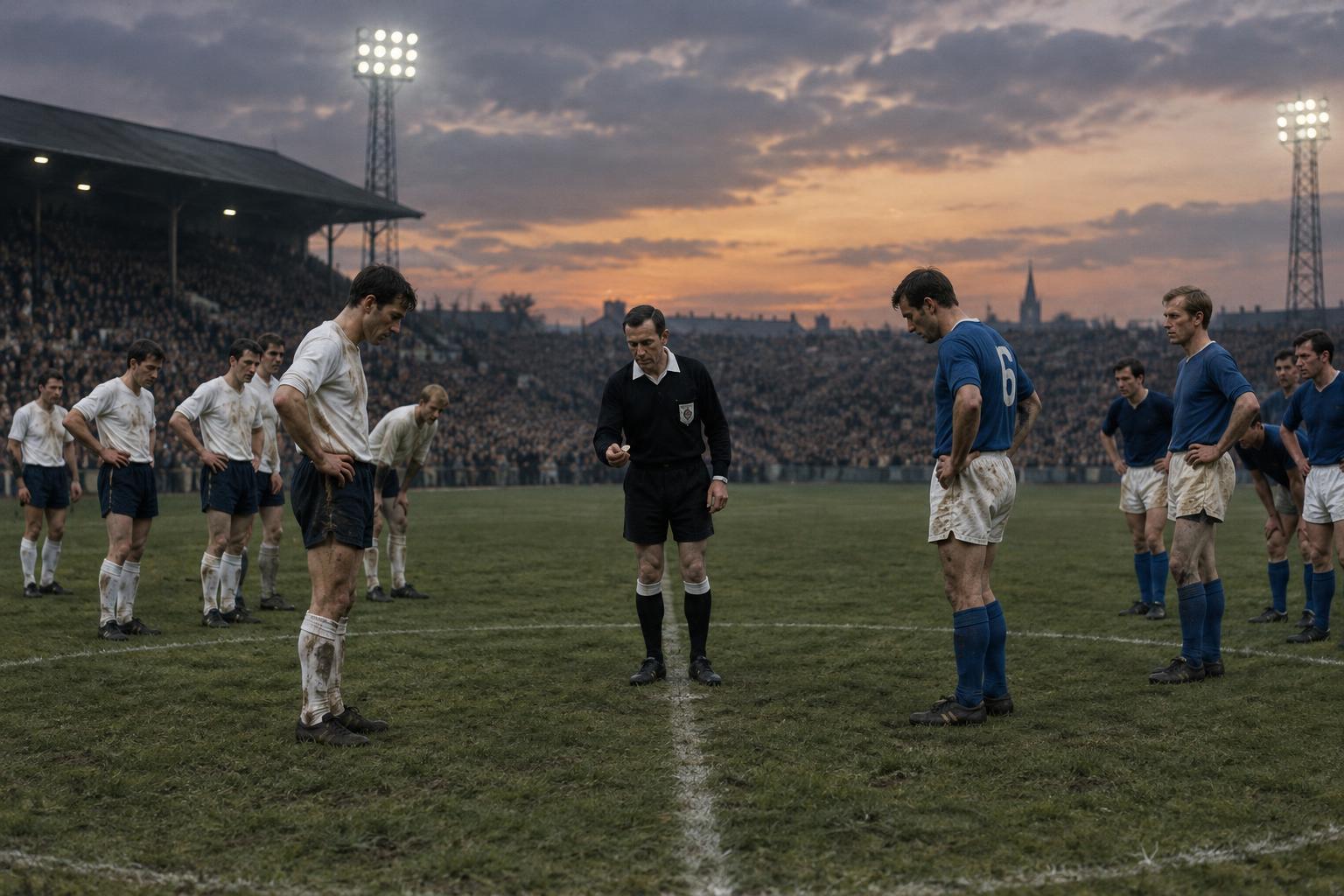
When the finals fit inside one country
The first European Championship finals were much smaller than the tournament familiar to many supporters today. In 1960, France hosted a four-team final stage. Spain followed in 1964, then Italy in 1968, Belgium in 1972 and Yugoslavia in 1976. Qualifying matches had already taken place elsewhere; the host country provided the setting for the decisive games, not every match in the competition.
That format made the finals relatively compact. A visitor could build a trip around a handful of fixtures rather than a month of matches across many cities. Yet “single-country host” never meant “single-venue event.” Host cities offered different stadiums and local settings, giving travelling supporters a reason to see more than one part of the country.
Expansion changed the venue map
In 1980, Italy hosted the first eight-team final tournament. The larger field called for more matches and made the choice of host cities more consequential. France hosted the eight-team edition in 1984, West Germany did so in 1988, and Sweden followed in 1992. Each tournament still had one host country, but supporters following a team could face a more varied route between stadiums.
The finals expanded to 16 teams when England hosted in 1996. France’s 2016 edition expanded the field again, to 24. With each step, a host needed to accommodate more fixtures, teams and visiting supporters. For a football traveller, that changed what it meant to “visit the tournament”: a trip might focus on one city, follow a team between several cities, or combine a match with time in places that were not hosting games.
The arrival of shared hosts
Belgium and the Netherlands staged the first European Championship finals shared by two countries in 2000. Austria and Switzerland shared hosting in 2008, followed by Poland and Ukraine in 2012. These tournaments kept a defined group of host cities but placed them on both sides of an international border.
Shared hosting widened the possible travel routes without making every supporter’s journey a cross-border one. Someone attending only matches in one host city could plan a straightforward stay; someone following a team might need to compare train or flight connections, journey times and entry requirements. The distinction matters when looking back at venue lists. Two stadiums may belong to the same tournament yet sit within different transport networks and travel rules.
A tournament spread across the continent
The edition named Euro 2020 took a different approach. Played in 2021, it staged matches in cities across Europe rather than in one host country or a pair of co-hosts. Its venue map included cities such as Rome, Amsterdam, Budapest, Baku and London. That made it an unusual chapter in the competition’s hosting history, not simply a larger version of the earlier shared-host model.
The contrast became clear with Euro 2024, which returned to a single host country: Germany. These two editions show that the tournament’s growth has not produced one permanent venue formula. A host arrangement is a choice about how matches are distributed, and it shapes the practical experience of attending them as much as the list of stadiums does.
How to read an old venue list
Historic host lists are a useful starting point for understanding a tournament, but they need context. Check whether a list covers the final tournament or the wider qualifying competition. Then look at the format: four-team finals, eight-team finals and larger editions placed different demands on their venues. A city’s presence on a map also does not tell you which teams played there or how often it hosted matches.
For a trip inspired by tournament history, treat the old venue map as a guide to places, not as a current travel plan. Stadiums can be rebuilt, renamed or replaced, while transport links and visitor arrangements can change. The lasting appeal is the chance to connect football memories with a city on the ground—whether the competition once belonged to one country, crossed a shared border or stretched across the continent.