Start with the rules for your specific match
There is no single bag policy for every football stadium in Europe. A venue may set a general entry policy, while a competition or match organiser may publish additional restrictions. Rules can also differ between a league fixture and another event at the same ground. Treat advice from a previous visit—or from someone who attended a different match—as a useful prompt to check, not as a guarantee.
Begin with the home club’s or venue’s official visitor information, then look at the match organiser’s guidance and any entry instructions sent with your ticket. Search for pages labelled stadium access, prohibited items, ground regulations or frequently asked questions. If the information conflicts, contact the club, venue or organiser before travelling. Keep a copy of the relevant guidance on your phone in case mobile reception is poor near the ground.
Measure the bag you plan to carry
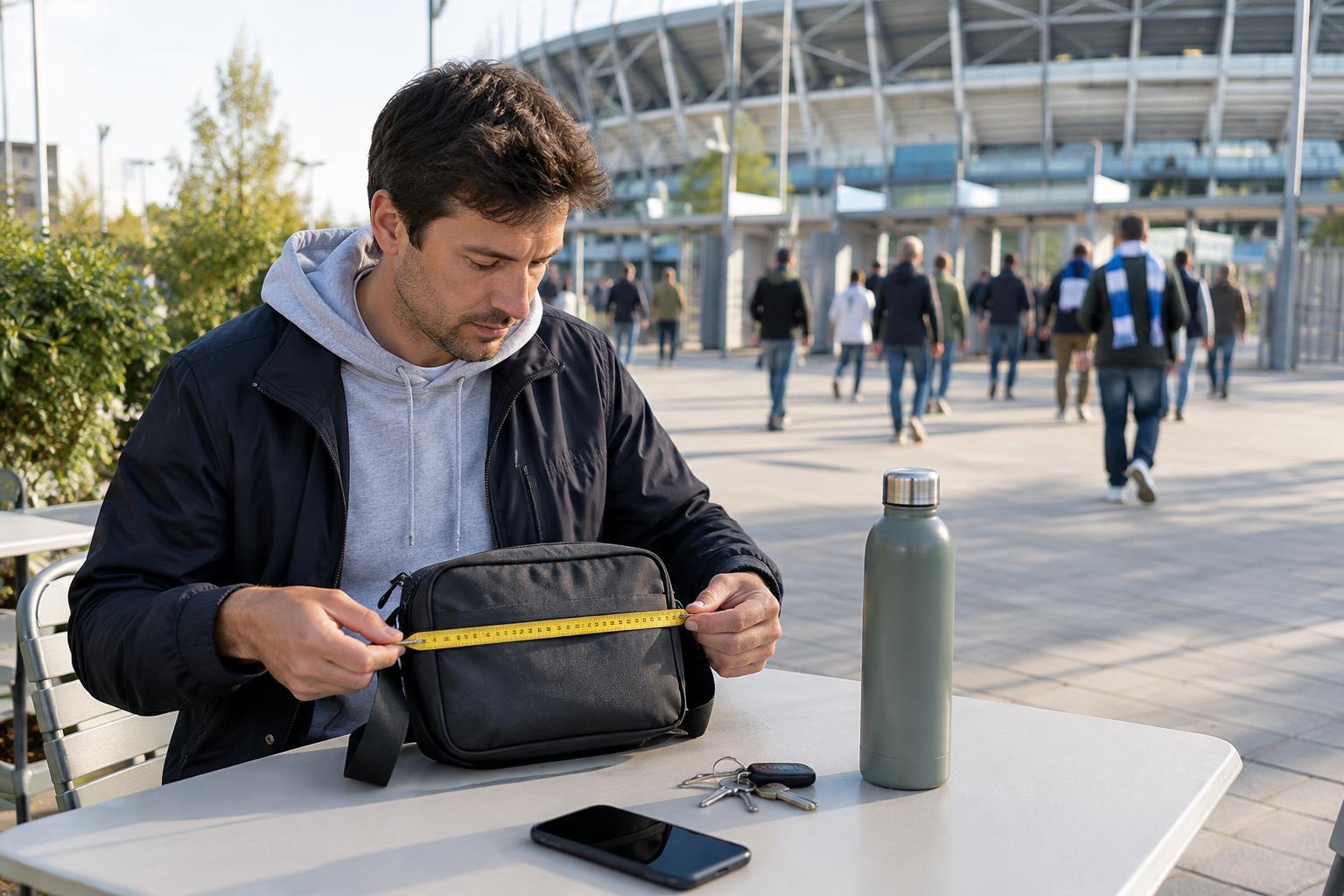
If a policy gives maximum dimensions, check the bag’s height, width and depth rather than relying on a description such as “small backpack.” Measure it when packed: an overfilled soft bag can be larger than it looks when empty. Include bulging pockets and anything clipped to the outside. A bag sold as cabin luggage is not necessarily suitable for stadium entry.
Read the wording closely. Some policies limit dimensions; others specify a type of bag or discourage bags altogether. Do not assume that a clear bag, a foldable tote or a child’s bag is exempt unless the match guidance says so. If the limit is unclear, taking fewer belongings is usually simpler than hoping staff will accept a borderline bag at the gate.
Think beyond the bag itself. A scarf, light layer, phone, keys and payment card may fit in coat pockets, but pocket contents can still be checked during entry. Pack so that you can show items without unpacking everything on the pavement.
Check the prohibited-items list item by item
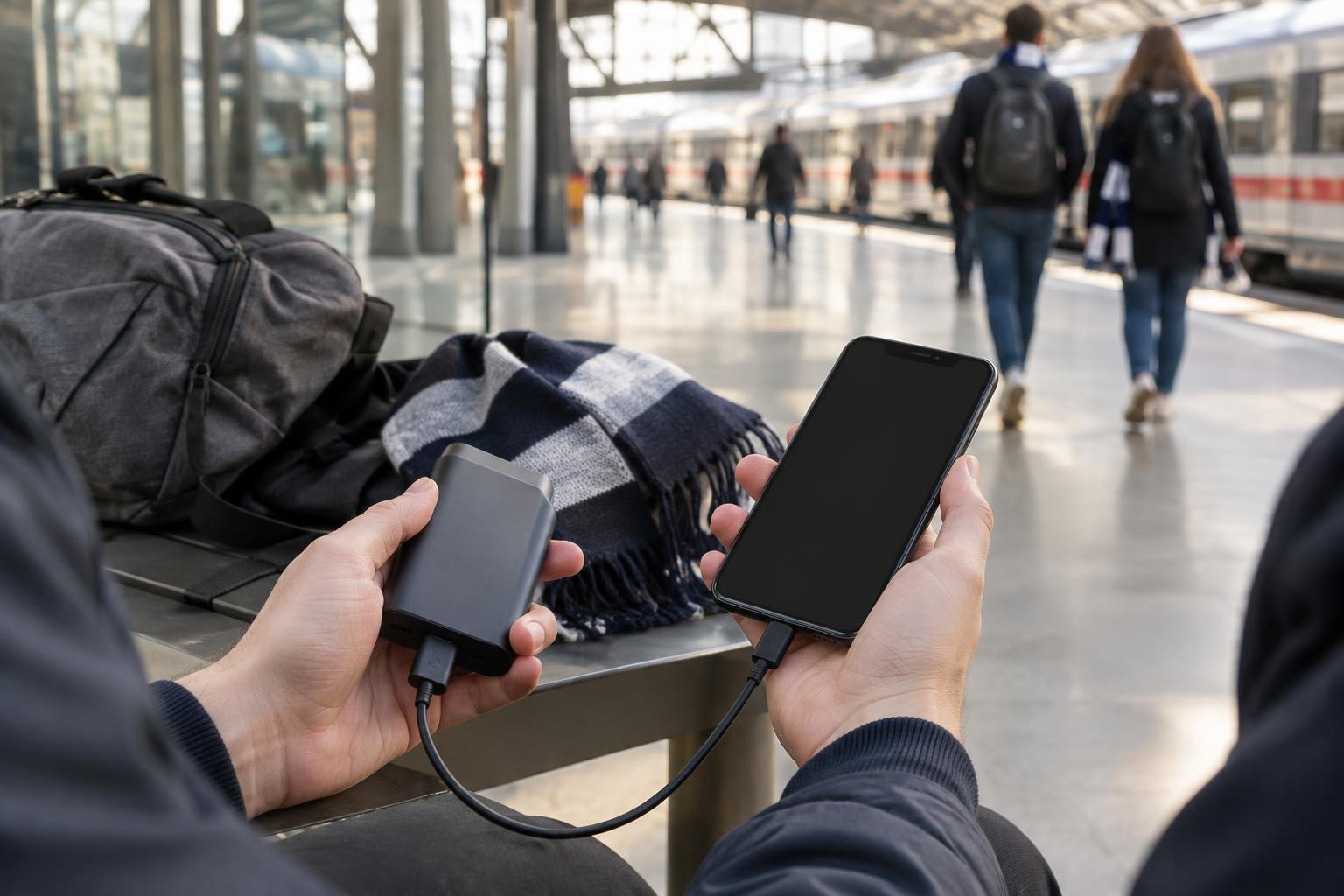
A size-compliant bag does not mean its contents are allowed. Review the prohibited-items list while you pack, especially if you are coming straight from a train, airport or day of sightseeing. Items worth checking include bottles and cans, food, umbrellas, camera equipment, power banks, chargers, flags and poles. Permission for one item does not imply permission for a similar-looking one: a compact umbrella and a large pointed umbrella, for example, may be treated differently.
Also check any conditions attached to permitted items. A venue may distinguish between personal photography and professional equipment or set requirements for flags and banners. If you need to carry an essential item for a medical or accessibility reason, use the venue’s published contact route in advance to ask about its entry process. Gate staff may need to follow a procedure, and arranging that conversation before matchday can prevent a rushed discussion in the queue.
Plan where anything else will go
If you will have a suitcase or a larger day bag, make a storage plan before setting off for the stadium. Your accommodation may be able to hold luggage; transport hubs and independent storage providers are other possibilities in some cities. Check opening hours, collection deadlines, location and any booking requirements. Do not count on a stadium cloakroom or lockers unless the match information confirms they are available.
Allow enough time to leave your bag, travel to the ground and pass through security. Storage that looks close on a map may be inconvenient once you account for the route to your entrance. If an item is refused at the gate, you may not have time to find somewhere safe for it and return before kick-off. Never leave belongings unattended outside the stadium.
Do one final check before you leave
Revisit the official match information shortly before you travel, then empty and repack your bag against the published list. Put your ticket, identification if required, phone and any essential items somewhere easy to reach. Check which entrance you should use and give yourself time for a bag inspection without assuming every queue will move at the same speed.
The aim is not to find a bag that will work at every European ground. It is to arrive at this match with a bag—and only the contents—that its entry rules allow. That small bit of preparation makes the journey from city streets to your seat much less stressful.