More than matchday decoration
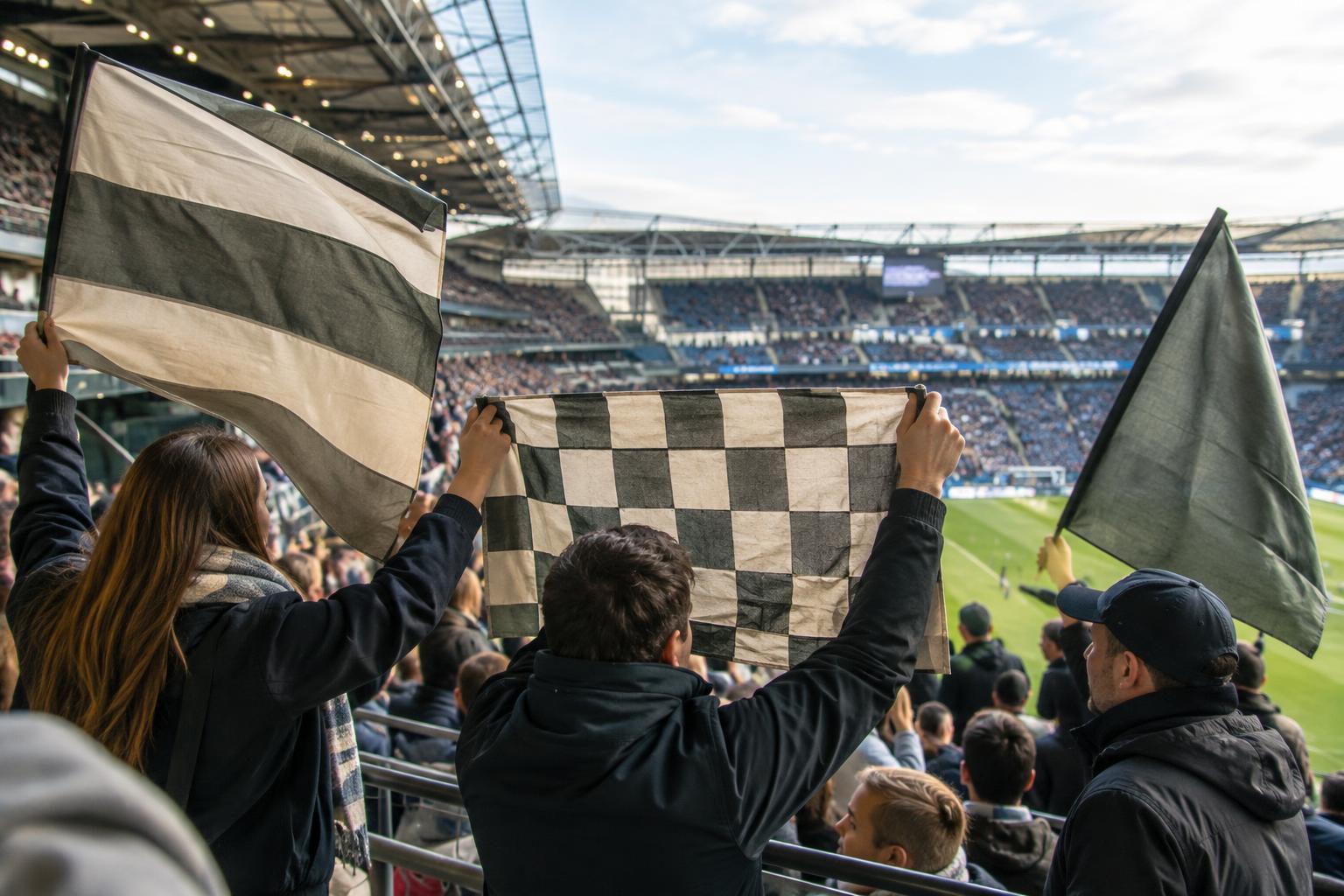
A flag can show where a group has travelled from, celebrate a club or mark a friendship between supporters. A banner may carry a short message, a nickname or a tribute to someone important to a fan community. These displays help give a stand its character, but their meanings are not always obvious to a visitor. The same colours may represent a club, a town or a supporters’ group, and a symbol can have a history that extends well beyond football.
Approach an unfamiliar design with curiosity rather than assuming it speaks for everyone nearby. Some flags belong to individuals; others are made and cared for by a group over many seasons. If you want to understand one, a polite question at an appropriate moment is more useful than a confident guess.
Reading common designs without overreading them
Club crests, team colours and city names are straightforward ways to show allegiance. National or regional flags can express a traveller’s roots or a connection to a team, though their meaning may vary by place and person. A banner naming a neighbourhood or distant town often says, in effect, “we made the journey.” Dates, portraits and short dedications may commemorate supporters or moments in a club’s history.
Other designs need more care. Political imagery, historical emblems and slogans can carry sharply different associations across borders. Even a phrase intended as a joke may be misunderstood once it is seen out of context. If you are making a banner for a trip, favour a message you can explain simply and would be comfortable displaying among people who do not know you. Avoid using another group’s name, artwork or memorial imagery without permission.
Display etiquette in a shared stand
Good etiquette starts with remembering that the stand is a shared space. A flag held up briefly during a song is different from a banner that blocks someone’s view for the whole match. Pay attention to the people behind you, and lower a display if it obstructs play or makes it difficult for others to enjoy the game. Keep aisles, stairs, entrances and safety signs clear, even if a spot looks convenient for tying fabric.
Ask before attaching anything to a rail or placing it over an existing display. Supporters may have informal arrangements about where regular banners go, and covering one can create needless friction. In an away section, be especially mindful that space may be tight and visitors may be working with unfamiliar surroundings. Stewards and ground staff have the final say on where an item can be displayed; if asked to move or remove it, do so calmly.
Courtesy also applies beyond the stand. Ask before taking a close photograph of a person posing with a banner, particularly if it bears a name or dedication. You can admire the atmosphere without treating every supporter’s display as a prop for your own trip.
Check ground rules before packing
There is no single set of rules that covers every stadium or competition. Grounds may set limits on banner size, flagpoles, attachment methods and the materials permitted inside. Some require larger displays to be approved in advance or brought through a designated entrance. Restrictions on offensive content, commercial messages and items that pose a fire or safety risk may also apply. Being able to carry a flag on public transport does not guarantee you can take it through a stadium gate.
Before travelling, look for the venue’s current spectator guidance and any information issued with your match arrangements. If a rule is unclear, contact the club or venue rather than relying on what was allowed at a different ground. Pack a display so it is easy to inspect and carry, and have a plan for storing it if entry is refused. Never assume you can leave an unwanted pole or banner at the gate and collect it later.
Make the display fit the trip
If you are creating something new, start with a lightweight, manageable size rather than the largest fabric you can carry. Use lettering that is legible from a distance, and check how the message reads when the banner is folded, hung or photographed. Think about rain, crowded transport and the walk to the ground. A simple design that travels well often makes a better companion than an elaborate one that is difficult to handle.
Finally, separate the pleasure of bringing a flag from any expectation that you must display it. The right place may not be available, the rules may change between venues, or the people around you may need a clear view. A considerate supporter knows when to raise a banner, when to lower it and when to leave it packed away.