What a family section can and cannot promise
For a child, the first glimpse of a football pitch can be thrilling: the colours, the chants and the moment a crowd reacts together. A family section is often a sensible place to share that experience. Venues may set aside these seats with younger supporters in mind, and the people around you may be more accustomed to children asking questions, needing a break or getting restless.
It is still part of a live football crowd, not a quiet room. Goals can bring sudden shouting, nearby supporters may stand, and emotions can run high even in an area described as family-friendly. The precise layout and rules vary by club, ground and fixture. Before choosing seats, check the venue’s current seating information and conditions rather than assuming every family section works the same way.
Choose seats for your child, not just the view
The best view on a seating plan is not always the easiest seat for a family. An aisle can make toilet or snack trips simpler, although it may also mean people passing throughout the match. Seats close to an exit may help if your child needs a short break. If they find heights uncomfortable, look carefully at how steep an upper tier appears; if they are small, consider whether adults standing in front could block their view.
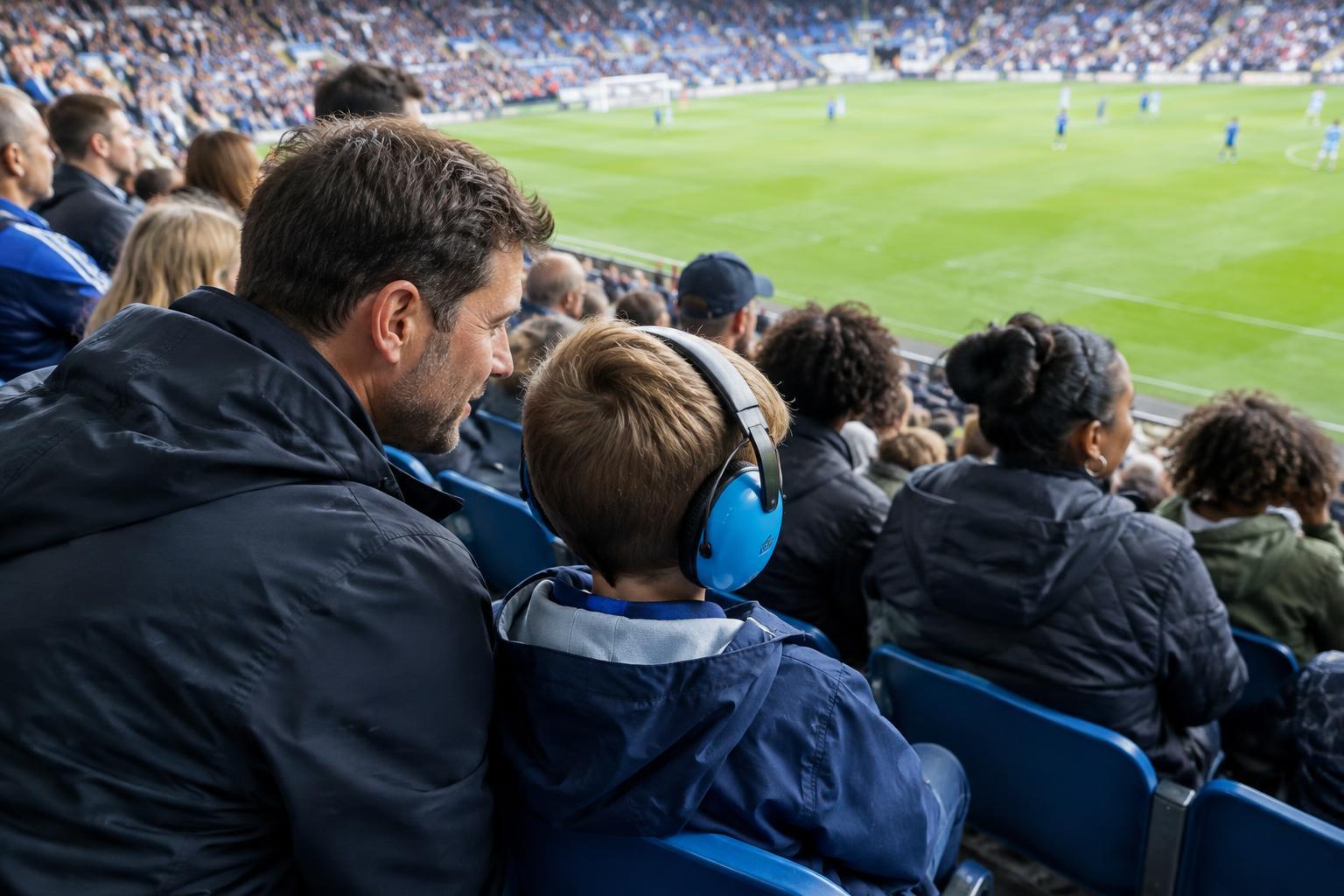
Think about the rest of the ground too. A family area may sit near louder stands, and sound carries unpredictably. If your child is sensitive to noise, hearing protection that fits comfortably may be worth bringing. Check any venue rules on bags, pushchairs, food and drinks before leaving home. If you need step-free access or other assistance, use the venue’s accessibility information to identify a suitable route and seating option.
Explain the atmosphere before you arrive
Children often cope better with surprises when they know what might happen. Describe the match as more than ninety minutes of play: there may be queues, ticket checks, a busy concourse, half-time crowds and a slow exit. Explain that supporters may sing for long stretches, celebrate loudly and express disappointment. You do not need to make the occasion sound intimidating; the aim is to give your child words for what they will see and hear.
A simple plan helps. Agree on what your child should do if they need the toilet, feel overwhelmed or cannot see. Let them know they can ask for a break without spoiling the trip. For older children, choose an obvious meeting point and explain who to approach for help if you become separated, such as a clearly identifiable steward. Younger children should remain close to their accompanying adult in crowded areas.
Set a comfortable pace on match day
Leave enough time to find the entrance and seats without turning the walk into a rush. A child who has had time to look around, use the toilet and eat beforehand may find it easier to settle once play begins. Dress for the weather as well as the journey: an outdoor stand can feel different from the street outside, and a long period of sitting may make a cold day feel colder.
During the game, follow your child’s attention rather than insisting they watch every passage of play. Point out a player they recognise, explain why the crowd is reacting or simply enjoy the shared moment. Some children love the spectacle but lose interest in the score; others want to know every rule. If the noise becomes too much, stepping into an appropriate concourse area for a few minutes may be more useful than asking them to endure it.
Share the space with other supporters
Family sections work best when everyone remembers that supporters experience the game differently. Children can join in with songs and celebrations while learning to be considerate of people nearby. Encourage them to keep walkways clear, avoid kicking the seat in front and wait for a suitable pause before moving along a row when possible. Adults can set the tone by keeping their own reactions respectful.
It is also fine if your family’s ideal match day looks different from someone else’s. Leaving a little early, taking several breaks or choosing a calmer seat next time does not make the outing a failure. Afterward, ask your child what they enjoyed and what felt difficult. That conversation is often the most useful guide to whether a family section—and another live match—is right for them.