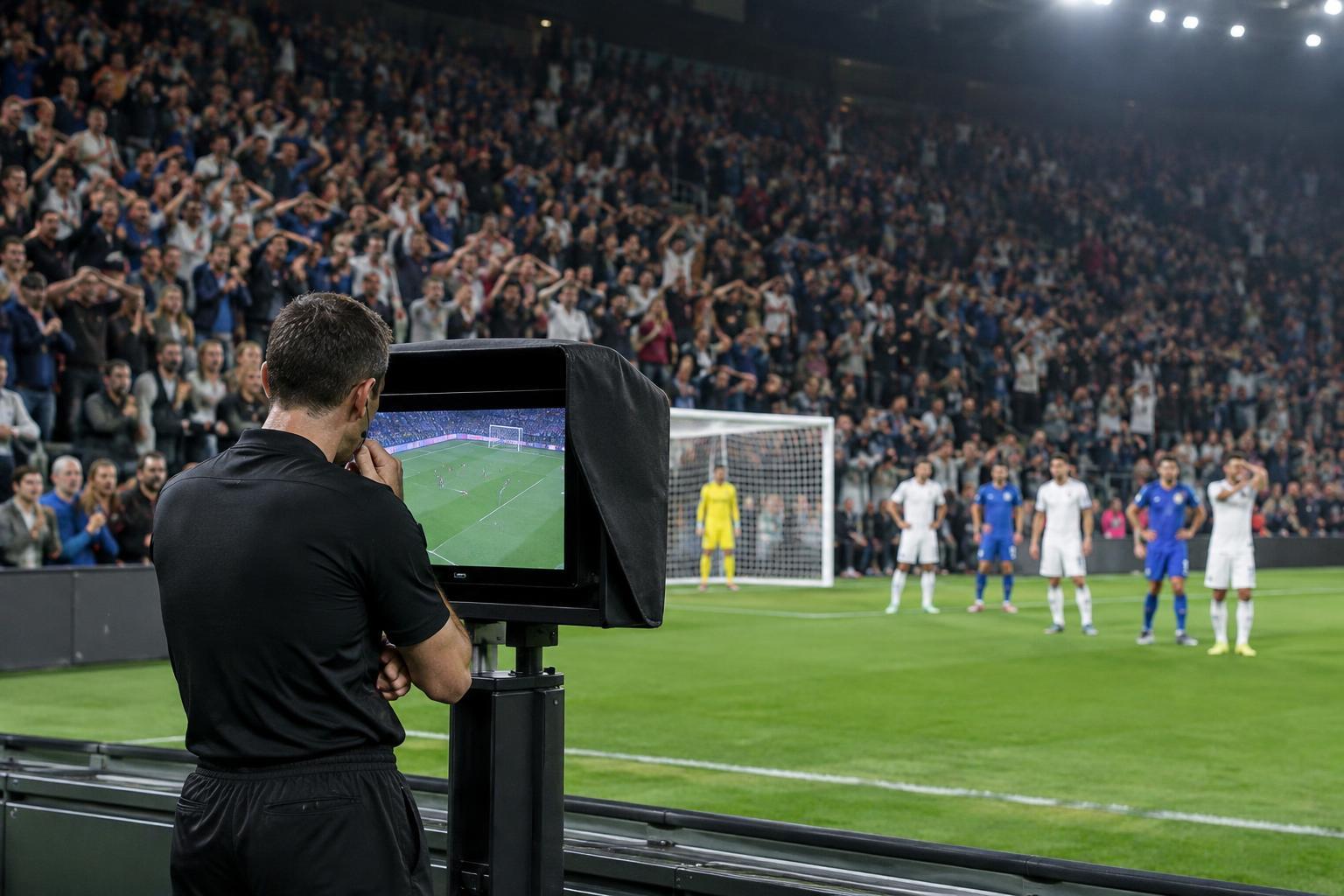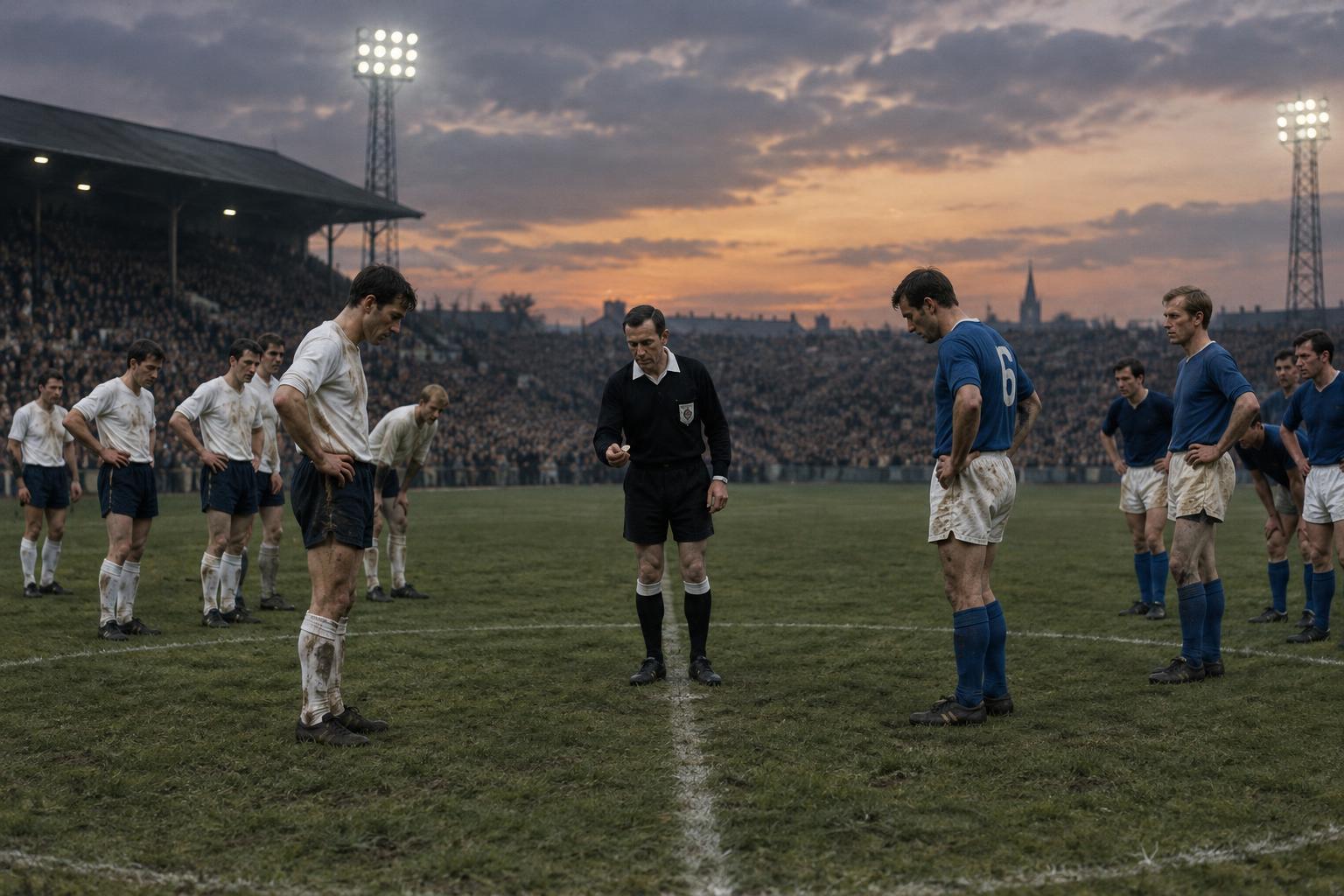
A simple tiebreaker with a lasting impact
For much of European club football’s history, a two-legged tie carried an extra calculation. Teams still tried to score more goals than their opponents across the home and away matches. But if the aggregate score was level, the team that had scored more of its goals away from home advanced. An away goal did not count as two goals in the match or in the aggregate score. It mattered only as a tiebreaker.
Imagine a team losing the first leg 2–1 away, then winning the return leg 1–0 at home. Each side has scored two goals overall, but the first team has scored once away while its opponent has scored none. Under the old rule, the first team would go through. For supporters, that made a single goal on the road feel unusually valuable—and made a home side’s clean sheet especially precious.
Why European competitions adopted it
UEFA introduced the away-goals rule in the 1965–66 European Cup Winners’ Cup and later extended it to other club competitions. It offered a way to settle drawn ties without routinely requiring a replay at a neutral venue. In an era when long-distance travel could be slower and more demanding, an additional match was a substantial undertaking for clubs and supporters alike.
The rule also reflected an assumption that scoring away was harder. Visiting teams had to adapt to unfamiliar grounds and conditions, while home sides enjoyed the comfort of their own stadiums. Giving away goals tiebreaking power was intended to reward that achievement and encourage visiting teams to attack rather than concentrate entirely on defending.
Whether it consistently produced more attacking football is harder to say. The incentive could work in either direction: an away side might push for a goal, while a home side might become cautious about conceding one. What is clear is that it gave European ties a distinctive rhythm. A goal could change not just the score but which team would advance if the aggregate remained level.
How it shaped nights in the stands
The rule was most noticeable in the second leg, when everyone knew the first-leg score. A team leading 1–0 at home might appear comfortable until its visitor scored. Depending on the earlier result, that goal could force the home side to score again. Supporters learned to follow two contests at once: the match unfolding in front of them and the aggregate tie across both venues.
That arithmetic was part of the experience of following a club abroad. A travelling supporter could celebrate a goal not only because it levelled the evening’s match, but because it transformed the return leg. Equally, a late home goal could undo what had seemed a valuable away result. The rule made venue matter even when the two matches produced the same total number of goals.
It could also be confusing, particularly when a tie went to extra time. Under the old arrangements, away goals could still affect the outcome after extra time, even though only one team played those extra minutes at home. That asymmetry became one of the arguments raised against retaining the rule.
Abolition and the way ties work now
UEFA abolished the away-goals rule for its club competitions from the 2021–22 season. Its decision followed debate about whether home advantage remained as strong as the rule assumed and whether the tiebreaker sometimes encouraged home teams to play too cautiously. People can reasonably disagree about its effects: it created memorable tactical decisions, but it could also make a goal’s value depend heavily on where it was scored.
In UEFA club knockout ties now, if the aggregate score is level after the second leg, the teams play extra time. If they are still level, a penalty shootout decides who advances. Goals scored away from home count once, just like goals scored at home; they no longer provide a separate tiebreaker.
The change has simplified the arithmetic without removing the drama of a two-legged tie. For anyone revisiting an older European match, though, the away-goals rule remains essential context. A result that looks level on aggregate may have been a clear victory under the rules of its time. Understanding that distinction helps explain the celebrations, the caution and the sudden shifts in mood that marked generations of European football.