What counts as a tifo?
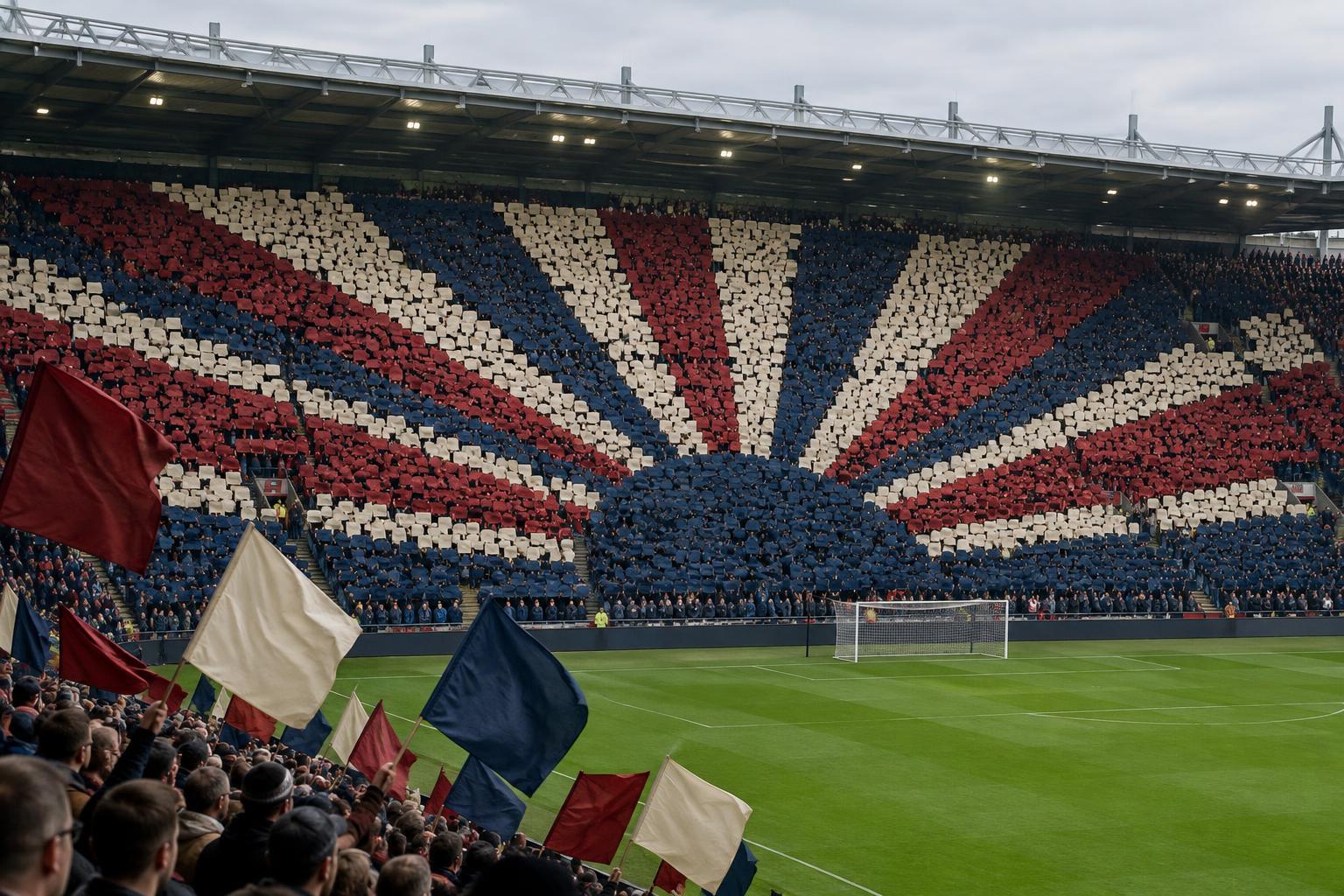
A tifo is a coordinated visual display made by football supporters, usually revealed as teams enter the pitch or just before a match begins. It might be a painted banner covering several rows, coloured cards held overhead, flags moving across a stand, or a combination of these. For a brief moment, thousands of individual seats become one picture.
The word can be used broadly, but not every flag or scarf raised at a match is a planned choreography. A large display depends on people acting together: holding the right colour in the right place, lifting material on a cue, or leaving a banner visible long enough for the image to read. Its impact comes as much from that shared effort as from its size.
How a display takes shape
Most large displays begin with an idea that fits both the occasion and the stand. Supporters may want to celebrate a club anniversary, honour a figure from its past, welcome the team, or answer a rival’s display. Organisers then have to turn that idea into something visible from across the ground. Bold shapes and short words often work better than fine detail, especially when flags are moving and people are still finding their seats.
The practical work can be extensive. Volunteers may sketch the design, measure sections of the stand, paint fabric, prepare cards, raise funds and arrange how materials will be distributed. A card display needs a placement plan; a large banner needs a safe way to unfurl and remove it. Organisers also have to work within stadium rules and coordinate access where required. What looks spontaneous from the opposite end is often the result of many quiet hours before matchday.
Execution depends on the crowd. Instructions might be printed on seats or passed along by supporters in the section. If some people lift their cards early, choose a different colour, or leave a gap, the finished image changes. That fragility is part of the spectacle: the display exists only because people agree to make it together.
Reading the meaning without assuming too much
Tifo can express pride in a neighbourhood, a city, a club’s colours or a remembered match. It can also carry grief, protest, rivalry or a pointed message to a club’s leadership. A familiar local landmark may mean something quite different to home supporters than it does to a visitor seeing it for the first time. Chants and banners around the display can offer clues, but they may not tell the whole story.
It is worth resisting the urge to assign one meaning to every image. A crest or historical reference may carry several layers of significance, and supporters within the same stand may not all interpret it alike. If you want to understand a display, start with what it actually shows and where it appears. Conversations with local fans can add context, provided you listen rather than ask someone to speak for an entire fanbase.
Experiencing a tifo as a visiting fan
If you are travelling for a match, get to your place in good time if you hope to see a pre-match display. Pay attention to any instructions in your section and follow stewards’ directions. In a stand preparing a card mosaic, a sheet left on your seat may be part of the design rather than a souvenir. Hold it when asked, and avoid taking materials away before the display is over.
It is natural to want a photo, but try not to make your screen someone else’s view. A quick picture after the reveal may be less disruptive than filming continuously with your phone raised. Keep aisles and exits clear, and do not handle ropes, poles or large fabric unless organisers have asked you to help. Rules for flags and other materials vary by stadium, so a visiting supporter should not assume that something permitted elsewhere will be allowed at this match.
The most rewarding way to watch is to take in the whole stand before zooming in on a detail. Notice when the image appears, how long people hold it, and what happens as it comes down. A tifo is not just a backdrop for the teams: it is a short-lived performance by the people around them.
Why the work matters
A choreographed display can give supporters a way to tell their own story in a space shared with players, officials and visitors. Its materials may be simple—paint, fabric, paper and time—but assembling them at stadium scale takes trust and cooperation. Even an imperfect display can be meaningful to the people who made it, because they know the work behind the image.
For travellers, tifo is a reminder that football culture cannot be understood only through the action on the pitch. The stand has its own history, habits and voices. Watching carefully, respecting the people making the display, and staying curious about its context will give you more than a photograph of the final picture.