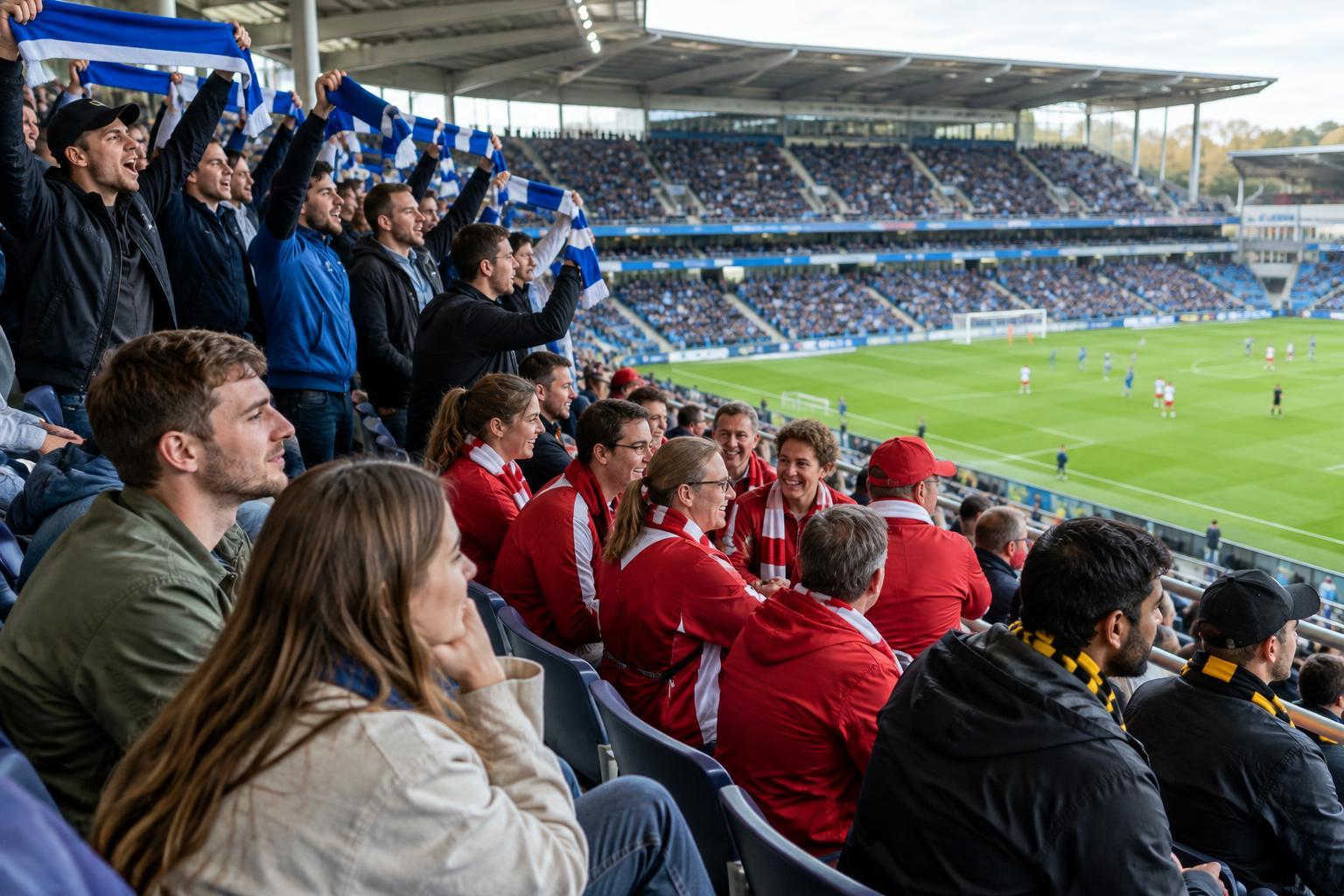
One team, many kinds of support
A stadium crowd can look united when everyone celebrates a goal, but the people in it may have very different relationships with the team. Some plan their weeks around home and away matches. Others organise a local group, follow from another country or attend when time and money allow. None of these habits, on their own, measures how much someone cares.
For a football traveller, recognising those differences makes matchday easier to understand. The singing section, a supporters’ club gathering and a quieter seat along the touchline can each offer a rewarding experience. Expectations vary by club, city, competition and even by stand, so it helps to observe before assuming that one style represents the whole fanbase.
What ultras do
Ultras are typically highly organised supporters who put sustained energy into the atmosphere around a team. Their activities may include leading chants, preparing banners, coordinating colours and creating large visual displays. Many travel regularly and spend considerable time planning what fellow fans see and hear on matchday.
Ultra groups are not identical. Their organisation, relationship with the club and attitudes towards visitors differ from place to place. Nor should the word be treated as a synonym for trouble: a dramatic display or loud, continuous singing tells you little about any individual’s behaviour. Equally, a visitor should not assume every ultra-led area is designed for sightseeing. People there may expect others to stand, sing or leave space for flags.
If you want to experience that atmosphere, choose your place with care and follow the venue’s rules. Avoid handling banners, joining a display without an invitation or blocking someone’s view to take a photo. Listen to the chants before trying to join in; some references depend on local history that a visitor may not know.
What supporters’ clubs offer
A supporters’ club gives fans a way to follow their team together beyond the stadium. Groups may arrange watch parties, shared travel or regular meetups. Some have a formal connection with a football club, while others are independent. A group based far from the team’s home city can be just as important to its members as one that meets near the ground.
These clubs often provide a welcoming starting point for a travelling fan, but their events are not automatically open to everyone. Check any membership requirements and ask before turning up with a large group. If a gathering is open to visitors, introduce yourself, respect the organisers’ arrangements and avoid treating long-standing members as a source of free travel or ticket services.
The value of following at your own pace
Casual fans might watch highlights, follow a few players, attend an occasional match or simply enjoy the shared feeling of a big game. Some are new to football; others have followed a team for years without being able to attend often. Work, family responsibilities, distance, cost and accessibility can all shape how someone takes part.
A quieter style of support is still support. You do not need to know every chant or own a collection of shirts to appreciate a match. For many travellers, choosing a seat with a clear view and room to take in the surroundings is more enjoyable than standing in the loudest section. It is reasonable to decide what kind of experience suits you rather than trying to prove that you belong.
Finding your place on matchday
Before travelling, look at the seating information provided by the venue and note whether your area is intended for home or away supporters. Follow entry rules and steward directions, and be mindful that customs around standing, colours and filming may differ. If you are unsure whether an area welcomes neutral visitors, choose a less intense section instead of making assumptions.
Once there, pay attention to the people around you. Join a chant if you understand it and feel comfortable, but give others space to support the team in their own way. Ask before photographing someone closely, especially around group displays or family areas. A little curiosity, combined with respect for boundaries, lets you enjoy the variety of football culture without expecting every fan to experience the game as you do.