Decide what you want from the visit
A stadium can be worth visiting even when no match is scheduled. You might want to see the pitch from the stands, learn how a club became part of its city, or simply take in the streets and cafés around the ground. Those are different experiences, and they do not always require the same ticket or amount of time.
Before building a day around a stadium, decide what matters most to you. A guided tour is often the best fit for seeing spaces beyond the usual spectator route. A museum gives you more time with the club’s story. A walk around publicly accessible areas can be rewarding if you prefer an informal stop or have limited time. At some grounds, you can combine all three; at others, public access may offer little more than a view of the exterior.
Choose a tour for access and a guide’s perspective
Stadium tours commonly follow a set route through selected parts of the ground. Depending on the venue, that might include a stand, media area, players’ tunnel or dressing room. The appeal is not just getting through a door: a guide can explain how the building works and draw your attention to details you might otherwise miss. Tour routes vary, though, and a space shown in promotional photographs may be unavailable on the day.
Check whether the tour is guided or self-guided, how long it lasts, and whether it includes museum admission. Look at the operator’s own description of the route rather than assuming every stadium offers the same behind-the-scenes access. Maintenance, private events and match preparation can affect availability, so leave some flexibility in your plans and check the booking details shortly before you travel.
A tour can feel rushed if you mainly want to study displays or take photographs. It may also be less convenient for a group that needs to move at its own pace. If step-free access, seating breaks, a particular language or a quieter visit matters to you, ask the venue about those needs before booking.
Choose a museum for the club’s wider story
A club museum is usually the better choice for visitors who enjoy context as much as architecture. Displays may cover former players, local rivalries, supporters, changing kits or the development of the ground. The strongest reason to go is the chance to connect what you have seen in the city with the football played there, rather than treating the stadium as an isolated landmark.
Museum admission does not necessarily include a stadium tour, and the reverse is not guaranteed either. Check what each ticket covers and whether the museum has separate opening hours. If you have only a short window, consider which you would regret missing: the view into the ground or the time to explore its history. A museum can also be a useful alternative when a tour is sold out or the route is restricted, provided it is open independently.
Make the most of public access without assuming entry
Not every satisfying stadium visit needs a paid activity. The approach to a ground can reveal how it sits in its neighbourhood: the routes supporters take, the scale of the stands and the gathering places nearby. Some venues also have publicly accessible shops, cafés or exterior displays. Others offer few facilities outside scheduled visits.
Treat gates, service roads and entrances marked for staff or ticket holders as boundaries, even if they appear quiet. A view through an open gate is not an invitation to enter. If you are unsure where visitors may go, ask a staff member rather than following someone inside. Keep photographs considerate, particularly around security points, workers and other visitors. Public access works best as a flexible part of a wider neighbourhood walk, not as a promise that you will see the pitch.
Build a realistic stadium stop into your trip
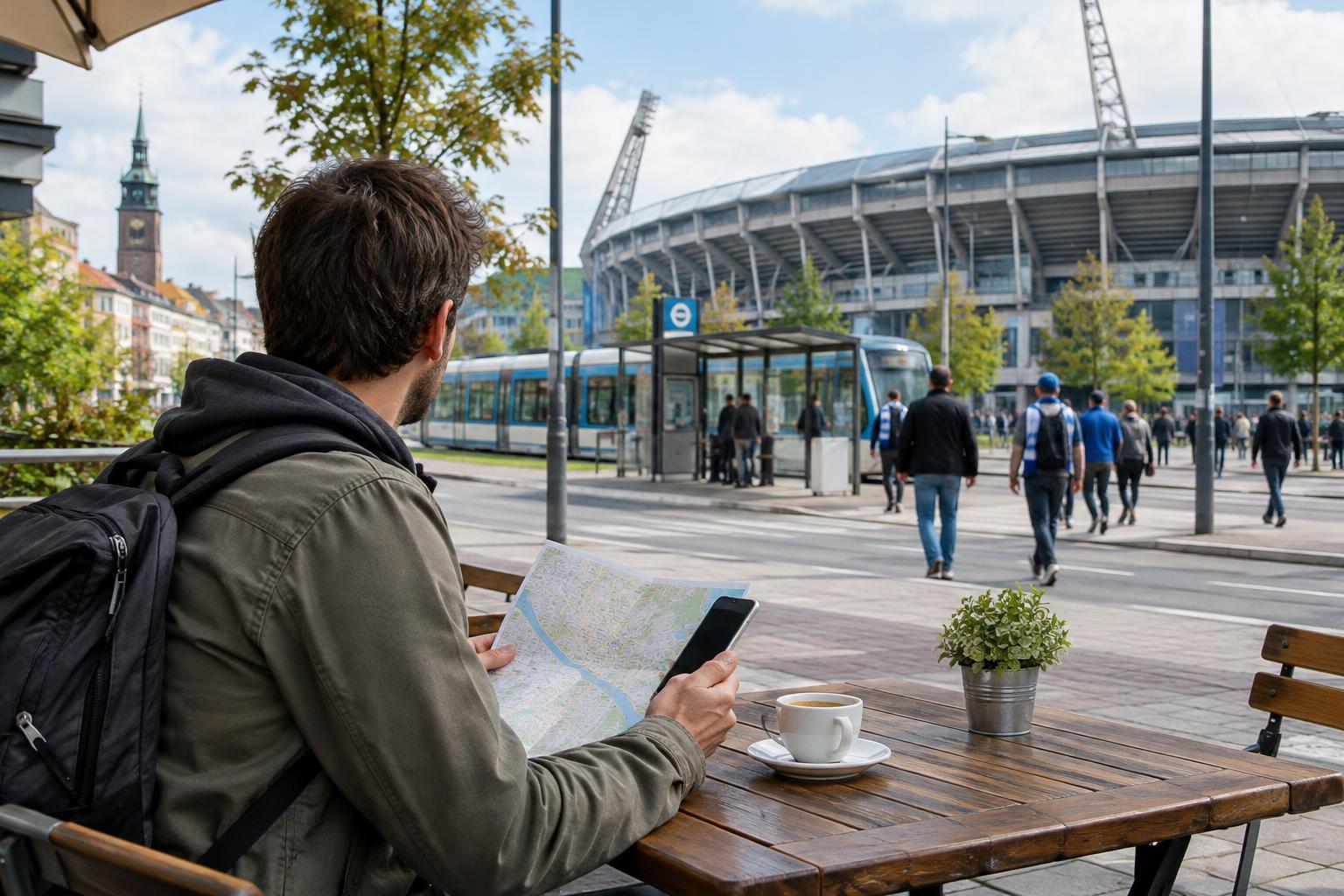
Start with the venue’s official visitor information to compare admission options, booking requirements, opening hours, bag rules and accessibility arrangements. Then check the journey from your accommodation, including the walk from the nearest transport stop. A stadium that looks close on a map may have entrances on only one side, so allow time to find the correct visitor entrance.
Give yourself a buffer rather than scheduling a tour immediately after a train arrival or just before another timed booking. If you are visiting with someone who is less interested in football, agree on the aim beforehand: a full tour, an hour in the museum or a brief walk around the outside. That simple choice can turn a stadium stop from an obligation into a shared part of the trip.
Finally, leave room for the place beyond the turnstiles. Even without a match, a stadium visit can tell you something about a club’s relationship with its surroundings. The most useful plan is one that lets you enjoy what is genuinely accessible, rather than chasing an imagined version of matchday.